Comparison guide
Cold-Pressed Juice vs Smoothies: Fiber, Equipment & Effort
Cold-pressed juice separates liquid from much of the pulp; an unstrained smoothie blends the edible produce and keeps its fiber. Choose juice for a thin drink or a smoothie when retaining the whole ingredient matters. This comparison covers equipment, texture, produce use, and cleanup so you can start with the machine you already own.
On this page
The direct answer: different tools for different moments
A cold-press juicer separates liquid from pulp. A blender combines the edible ingredients into an unstrained drink. The practical choice is whether you want a thin juice or want to keep the blended produce, and whether you already own a suitable machine.
Start with what you have. If you own only a blender, an unstrained smoothie is a useful option without buying a juicer. If you already have a juicer and want a thin produce drink alongside food, use one of the beginner recipes below. Either drink can contain very different amounts of sugar, energy, and other nutrients depending on ingredients and portion.
What actually differs mechanically
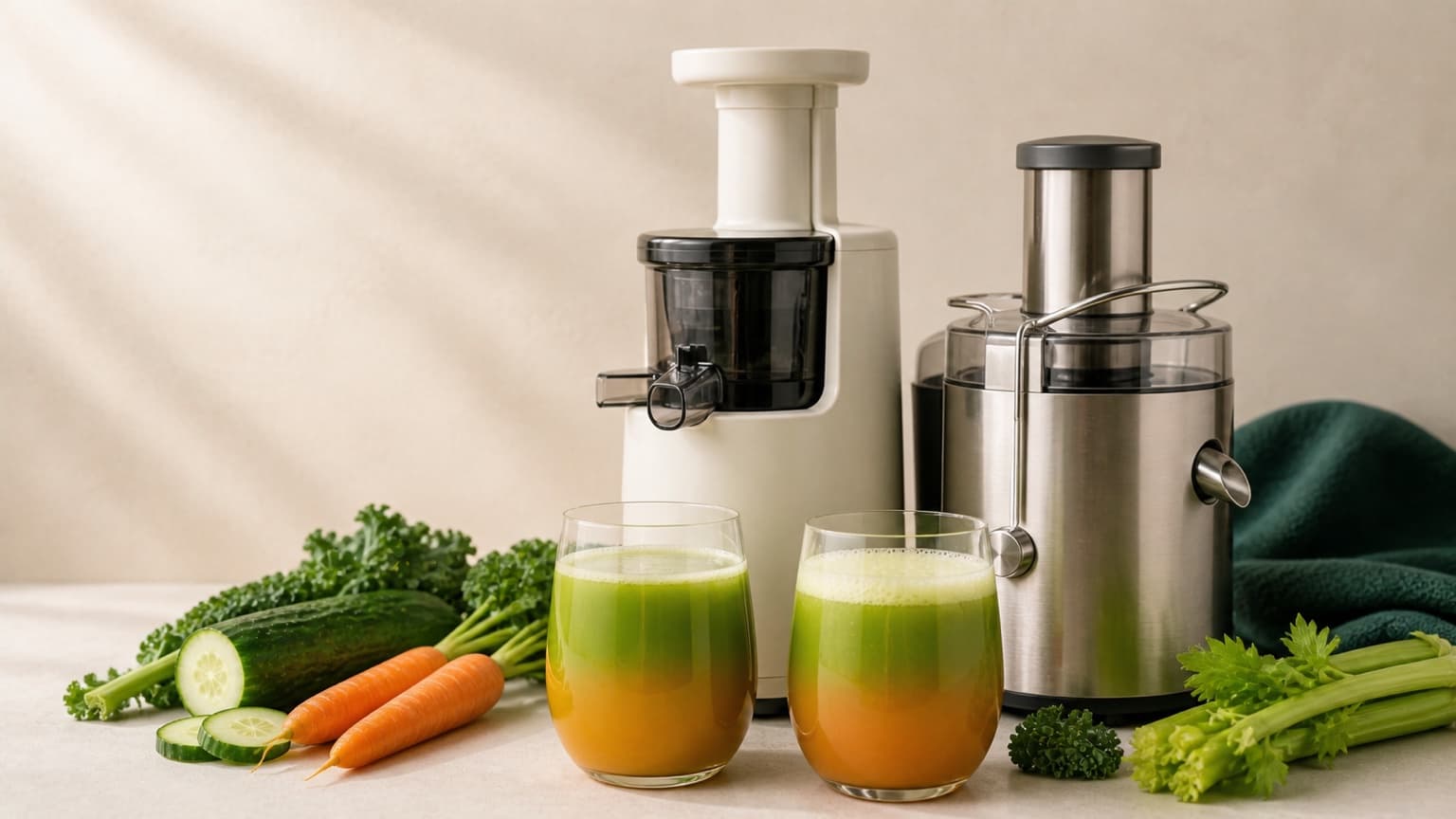
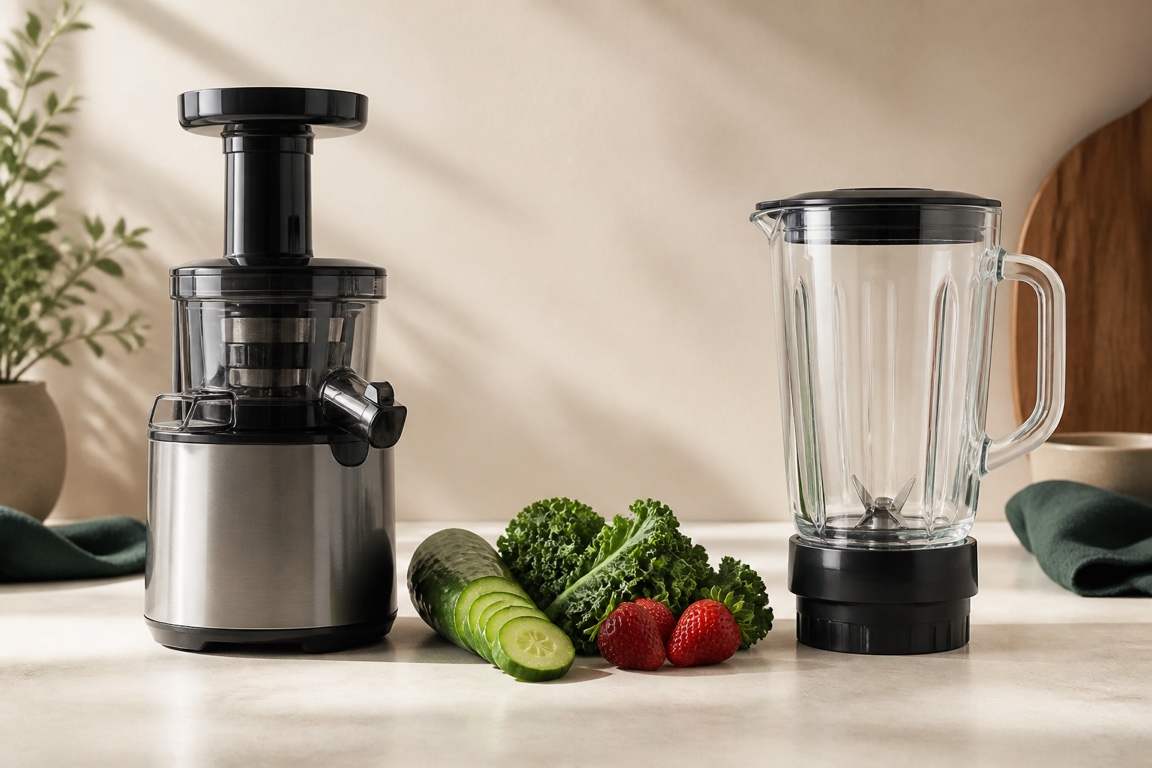
A cold-press juicer crushes produce against a screen with a slow auger, squeezing liquid out and ejecting the solids as pulp. A blender does the opposite of separating: its blades shear everything — skin, flesh, seeds — into one suspended puree, and nothing leaves the jar.
That single mechanical difference drives everything else in this comparison: what ends up in the glass, how it feels to drink, what it costs per serving, and how each one behaves in the fridge overnight.
The fiber difference, plainly
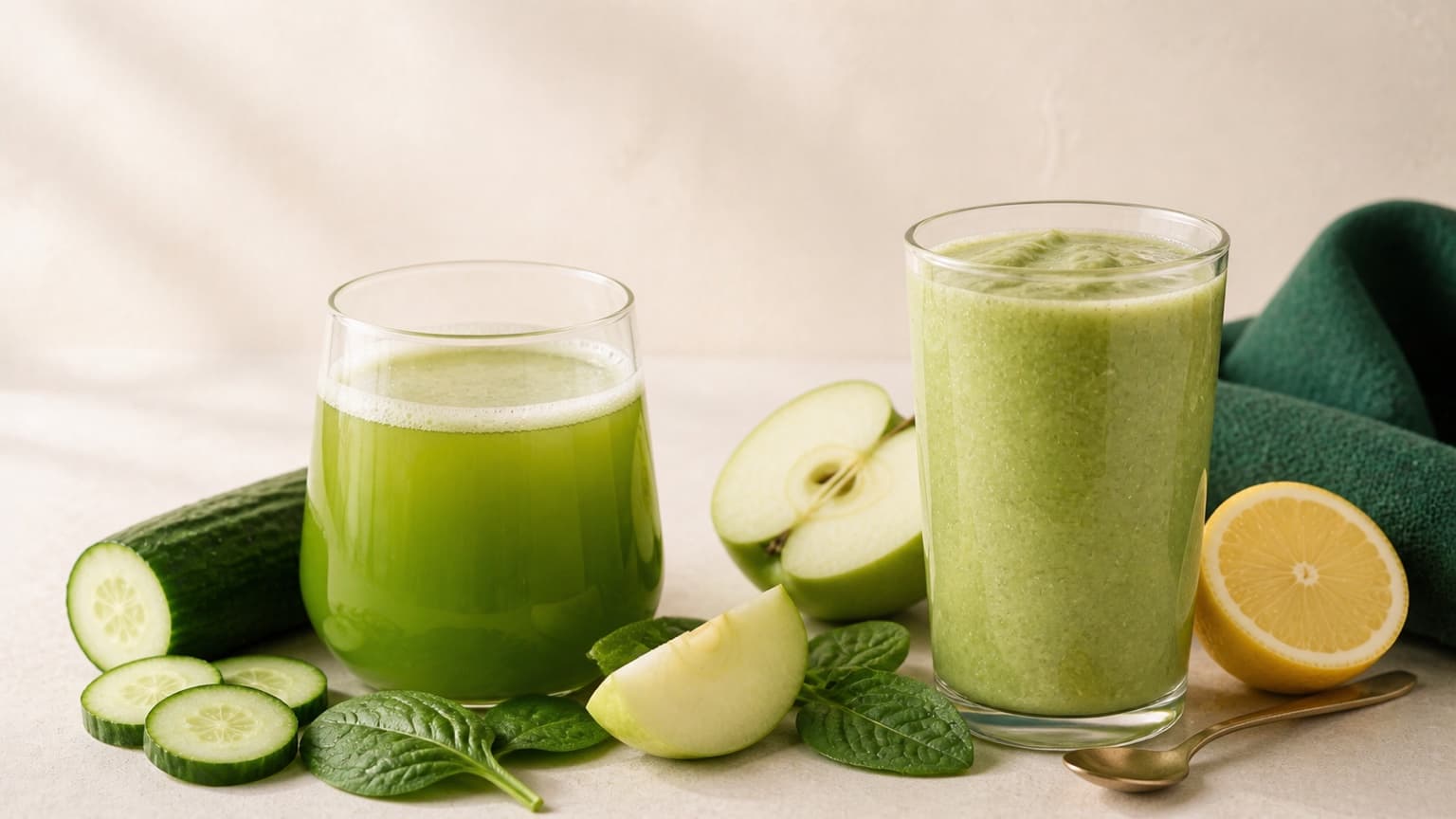
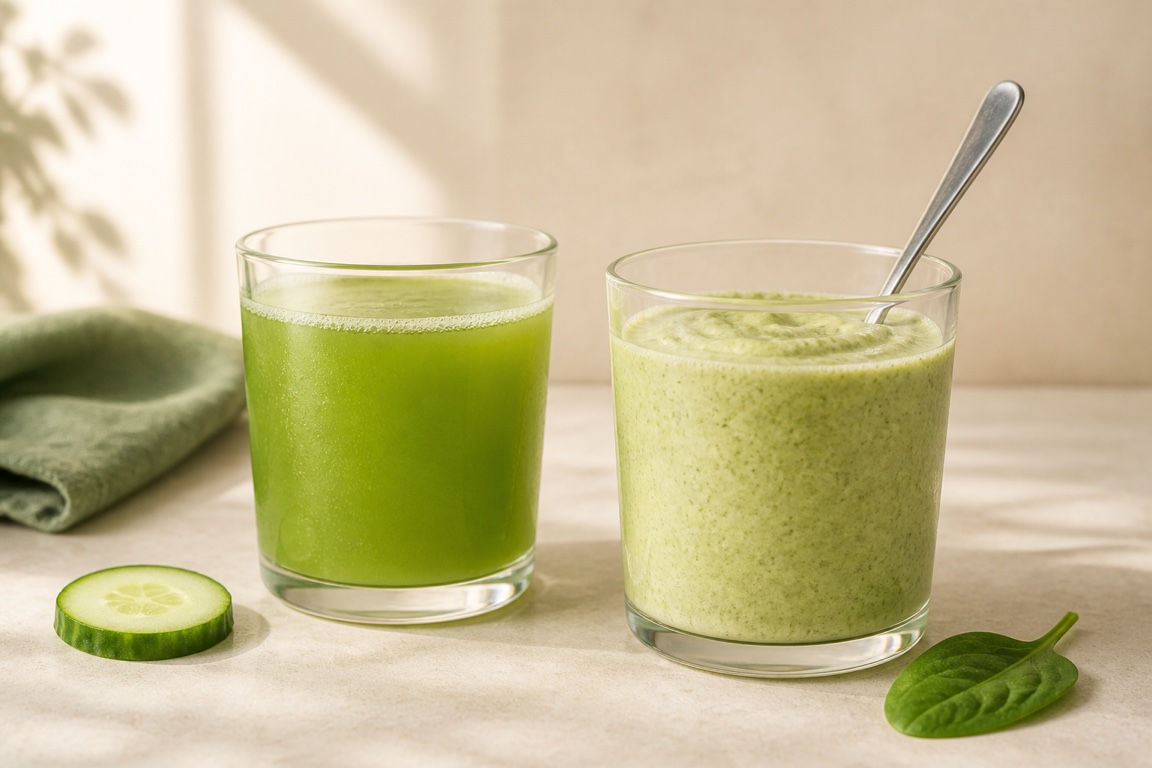
Juicing removes much of the fiber from whole produce — it leaves with the pulp. A smoothie keeps all of it, because the whole ingredient is blended into the drink. That is the honest core of the juice-versus-smoothie debate, and it is not a flaw in either direction; it is the design.
In practice it reads as texture and staying power: pulp-free juice drinks light and disappears quickly, while a blended smoothie is more filling by texture. If keeping the whole ingredient in the drink matters to you, blend; if you want the light, crisp glass, press.
Adding some fresh pulp back to juice changes its texture, but does not restore a measured amount of fiber. This site has not measured fiber retention for that method. If retaining the edible whole produce is your priority, choose an unstrained blend instead.
Texture and the drinking experience
Juice is usually thin and easy to pour. Smoothie texture depends on the produce and added liquid: frozen fruit can make a thick blend, while more liquid makes it pourable. Texture alone does not determine whether a drink is a nutritionally complete meal.
Juice may settle into layers; smoothies may thicken, settle, or change color. These are recipe-dependent quality changes. Refrigerate either promptly, and never use normal appearance or smell as proof of safety. Neither method of preparation pasteurizes raw produce.
Cost, prep, and cleanup, honestly
Compare cost using the ingredients and portions you will actually make. Juicing removes pulp, so produce weight does not equal drink volume. A smoothie retains more of the edible input and may use frozen produce, but added ingredients also affect price. There is no measured cost comparison for these recipes here.
For effort, compare the instructions for your exact machines. A juicer commonly has a screen, collection bowl, auger, and other removable parts to wash. A blender has a jar, lid, and sometimes a removable blade assembly. Neither should be judged on a quick rinse alone; record prep, processing, washing, and drying space over your own first few batches.
- Produce use: check the recipe weights and actual finished volume; no universal juice-to-smoothie ratio applies.
- Active prep: wash and prepare the edible produce for either method; machine feeding and blending times vary.
- Cleanup: compare removable parts, access to the screen or blades, and manufacturer washing instructions.
- Pantry flexibility: a blender may handle frozen fruit, oats, or nut butter; follow each machine’s approved ingredient list.
Which fits which moment?
Match the drink to the slot in your day instead of declaring a winner:
The table is the whole comparison at a glance — and the pattern it shows is complementary, not competitive.
- Around a workout: a smoothie can be the snack itself; juice suits people who want something light and cold instead of food.
- Breakfast: if the drink is breakfast, blend; if it sits next to breakfast, press.
- Produce use: use sound produce for either method and discard rotten produce. Blending or pressing does not make spoiled food safe.
- Guests and slow mornings: a bright, clear glass of juice feels like an occasion in a way a smoothie rarely does.
| Dimension | Cold-pressed juice | Smoothie |
|---|---|---|
| Texture | Thin and pourable | Variable thickness; retains blended edible produce |
| Fiber | Much of the fiber leaves with the pulp | Everything you add stays in the drink |
| Produce flexibility | Wants fresh, firm, high-water produce | Can handle suitable frozen or ripe produce; discard rotten produce |
| Prep and cleanup time | Feeding plus washing the screen and removable parts | Blend plus cleaning jar, lid, and blade assembly as directed |
| Storage behavior | Separates into layers; shakes back together | May thicken or separate; depends on ingredients |
| Equipment | A dedicated juicer | Any decent blender |
| Best moment | Light refreshment, guests, firm-produce cleanup | Drinkable meals and post-workout snacks |
General patterns from home equipment — exact times and textures vary by machine and recipe.
Can one machine do both?
Not really — and it helps to know which direction fails. A juicer cannot make a smoothie: the pulp it removes is exactly what a smoothie is made of, though fresh-pressed juice does make an excellent smoothie base in place of water or ice. A blender, on the other hand, can fake juice: blend the produce with a splash of water, then strain it through a fine mesh or a nut-milk bag.
Blending with a little water and then straining is a way to try a juice-style drink before buying equipment. Straining adds cleanup and removes some pulp and fiber; it does not duplicate every juicer’s output. Follow your blender’s instructions and choose sound, washed produce. An unstrained smoothie is also a reasonable endpoint if it fits your preferences.
Frequently asked questions
Is cold-pressed juice healthier than a smoothie?
Different, not better — it depends what you want from the glass. Juice is light and pulp-free because juicing removes much of the fiber from whole produce; a smoothie keeps the whole ingredient and drinks more like a small meal. Choose by texture, moment, and preference rather than a universal ranking.
Which is better for breakfast?
Whether a smoothie suits breakfast depends on its ingredients and portion, not just its thickness. An unstrained blend retains the edible produce; juice can accompany a meal. Compare what you actually add, and keep whole fruit and vegetables in your routine rather than assuming either drink is a complete meal.
Can you make smoothies with a juicer?
No — a juicer removes the pulp that gives a smoothie its body, so there is no way to get a thick blended texture out of one. What works instead is using fresh-pressed juice as the liquid base in a blender smoothie, which adds flavor without the ice-water dilution.
Why does juice cost more than a smoothie?
Juicing leaves pulp behind, so equal weights of produce do not create equal drink volumes. However, price depends on local produce costs, recipe choices, and portion size. We have not measured a universal cost difference. Compare your receipt and actual servings before deciding which is cheaper for you.
Which keeps longer, juice or a smoothie?
Both are perishable and should be refrigerated promptly. Juice may separate and a smoothie may thicken or settle, but neither change is a reliable safety test. Choose small batches you will finish soon, follow cold-storage guidance, and discard a drink with unsafe or uncertain storage history.
Keep exploring
Related ingredients
Recipes to try
Planning tools & products
This website provides general recipe and nutrition education only and is not medical advice. Calories are estimates. Fresh raw juice is perishable — refrigerate promptly and discard questionable juice. Use juices as part of a normal eating routine, not as a cleanse, fast, or meal-replacement program.