Lower-sugar guide
Low Sugar Juice Recipes: A Vegetable-Forward Guide
Low sugar juice recipes start with vegetables instead of fruit: a cucumber, celery, or romaine base, a citrus accent for brightness, and herbs for interest. Instead of cutting sweetness all at once, swap one sweet ingredient per batch for a milder one and let your taste adjust. The result is a glass that reads crisp rather than dessert-sweet.
On this page
The direct answer: vegetable-forward with citrus accents
A low sugar juice recipe is mostly a structural choice: build the glass from vegetables — cucumber, celery, romaine, zucchini, tomato — and use citrus as an accent rather than fruit as a base. Lemon and lime add brightness and aroma while reading far less sweet than apple or pineapple, so the finished juice tastes crisp and complete instead of stripped-down.
A useful mental model is salad logic. You would not make a salad that is three-quarters fruit, but a juice recipe can drift there without anyone noticing. Build the glass the way you build a good salad — vegetables as the structure, something bright as the dressing, fruit as the garnish — and the sweetness mostly sorts itself out.
Everything on this page is preference framing, not a health protocol: these are lower-sugar options for people who simply want their juice less sweet. If you are managing a medical nutrition plan, work with a qualified clinician or dietitian for personal guidance.
Why fruit-heavy juice creeps up on you
Juicing concentrates. Two apples, a handful of grapes, and an orange make a perfectly reasonable fruit bowl — pressed into a single glass, they make a very sweet drink you would never assemble on purpose. Because the pressing happens out of sight, the glass does not look like three pieces of fruit. It just looks like juice.
Sweetness also normalizes quietly. When every batch leans on apple, your palate recalibrates, yesterday's sweet becomes today's baseline, and recipes drift sweeter over time. I only noticed it when I wrote down a week of my own recipes: every single 'green' juice had two apples in it, and the one without them tasted shockingly plain — for about three days, until it did not.
Watch for the same drift in bottled juice: many store blends lead with apple or grape precisely because sweet sells, and your homemade recipes end up quietly competing with that baseline.
The swap method: change one ingredient per batch
Going vegetable-forward overnight is how people end up hating celery. The gentler path is one swap per batch: keep the recipe you already like, replace its sweetest ingredient with a milder stand-in, and let your taste settle for a few batches before the next change. One change at a time also tells you which swap did the work — change three things at once and a disappointing glass teaches you nothing.
The interactive version of this table lives at /tools/lower-sugar-juice-swap-tool, and the printable matrix with a full week of combinations is part of the Low-Sugar Juice Swap Matrix.
| Instead of | Try | What changes |
|---|---|---|
| A whole apple | Cucumber plus a squeeze of lemon | Volume and crispness stay; the glass drinks clean instead of sweet |
| Pineapple base | Lime plus one thin pineapple wedge | The tropical aroma stays as an accent instead of a dessert |
| Two oranges | One orange plus celery | Citrus brightness stays; sweetness drops a clear tier |
| Carrot-heavy base | Celery base with one carrot | Keeps body and color with a more savory, less sweet edge |
| A whole beet | Half a beet plus cucumber and lime | Earthy depth and color stay; the jammy finish lightens |
| Watermelon base | Cucumber plus mint | The same cooling, refreshing character with far less sweetness |
Taste-first swaps in the spirit of the lower-sugar swap tool — adjust amounts to preference.
Qualitative sweetness tiers for juicing produce
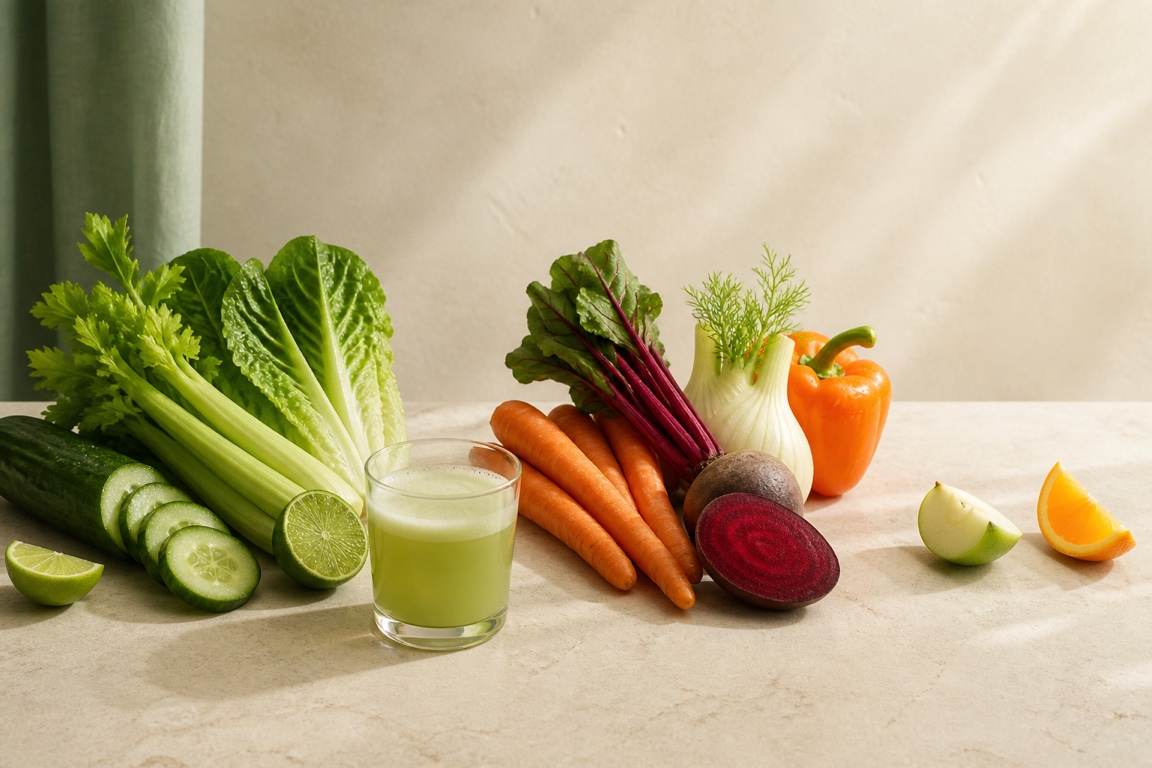
You do not need gram tables to plan a lower-sugar week — broad tiers are enough, because the goal is how the glass tastes, not a nutrition audit. Common juicing produce sorts cleanly into three working tiers:
A reliable lower-sugar formula straight from these tiers: two parts from the lower tier, one part from the moderate tier, and a wedge from the sweeter tier only if the glass needs a finish.
| Tier | Produce examples | Role in the glass |
|---|---|---|
| Lower | Cucumber, celery, romaine, spinach, zucchini, lemon, lime | Bases and brighteners — build most of the recipe here |
| Moderate | Carrot, beet, tomato, bell pepper, fennel | Body, color, and a gentle sweet edge in supporting amounts |
| Sweeter | Apple, pear, pineapple, mango, orange, watermelon | Accents and finishers — measure in wedges, not whole fruits |
Qualitative flavor tiers for planning, not nutrition data — individual produce varies.
Building a lower-sugar week
A week works better than a resolution. Rotate bases so no single flavor wears out its welcome, and keep one familiar accent in play while your palate adjusts.
Shop once for the whole week: two cucumbers, two heads of celery, a bag each of romaine and spinach, a few tomatoes, a bell pepper, lemons, limes, mint, and a single green apple. That one basket covers all seven days — and buying the sweeter tier in exact amounts keeps it from sneaking into the glass as an impulse.
Batch notes help more than willpower: write down which glasses you finished and which you abandoned, then build the next week from the finishers. The lower-sugar recipe hub at /juice-recipes-for/lower-sugar is stocked with options if a base stops working for you.
- Days 1–2: cucumber base with lemon and mint — the easiest landing spot.
- Days 3–4: celery base with lime and a green apple wedge. Plain celery juice drinks almost savory, like a chilled broth with a lightly salty edge, so the wedge earns its keep here.
- Day 5: tomato and bell pepper with celery — a savory glass that resets what you expect juice to taste like.
- Days 6–7: green juice built two-to-one on romaine and spinach with lemon — by now it will taste brighter than it did on day one.
When a little fruit earns its place
Vegetable-forward is a direction, not a purity test. A thin wedge of pear can make a celery juice finish clean; half a green apple can carry a batch of bitter greens you would otherwise pour out; a few berries can turn a cucumber glass into something you would serve a guest.
After a few vegetable-forward weeks, you may find half a pear reads as dessert. That is the swap method working, not your taste going strange. And if a glass needs more than a wedge to be drinkable, the problem is usually balance rather than sweetness — check the bitterness fixes in the green juice flavor guide before reaching for more fruit. Three habits keep fruit in the accent seat:
- Add fruit last, after tasting the vegetable base on its own.
- Slice it: a wedge is a decision, a whole fruit is a default.
- Prefer tart over tropical — green apple and berries lift a glass; mango takes it over.
Frequently asked questions
What is the lowest sugar vegetable to juice?
Cucumber and celery sit at the least-sweet end of common juicing produce, alongside leafy greens like romaine and spinach and mild vegetables like zucchini. They taste crisp, watery, or gently savory rather than sweet, which is why this guide builds lower-sugar recipes on them as two-part bases.
Can juice ever be low sugar?
Juice can be a lower-sugar option when it is built from vegetables with citrus accents instead of fruit bases. Pressing concentrates whatever you put in, so the recipe decides the result: a cucumber, celery, and lemon glass reads crisp, while an apple and orange glass reads like dessert.
What fruits are lowest in sugar for juicing?
Lemon and lime are the standouts — they behave more like seasonings than fruit and read tart, not sweet. Cranberries are sharply tart, and berries generally read less sweet than tropical fruit like pineapple or mango. Use any of them as accents over a vegetable base for the least-sweet result.
How do you make juice less sweet?
Dilute and brighten. Press extra cucumber or celery into the batch to shrink the fruit's share, then add lemon or lime — acidity reads as the opposite of sweet. For the next batch, swap the sweetest ingredient for a milder one from the same flavor family and keep everything else the same.
Is celery juice low in sugar?
Qualitatively, yes — celery sits in the lower sweetness tier of juicing produce, and a plain celery glass drinks savory and lightly salty rather than sweet. Many people soften it with cucumber, lemon, or a thin apple wedge; those additions nudge sweetness up only slightly when kept to accent size.
Keep exploring
Planning tools & products
This website provides general recipe and nutrition education only and is not medical advice. Calories are estimates. Fresh raw juice is perishable — refrigerate promptly and discard questionable juice. Use juices as part of a normal eating routine, not as a cleanse, fast, or meal-replacement program.