Flavor guide
How to Make Green Juice Taste Better
To make green juice taste better, fix the ratio before you add anything sweet: build on a mild base like cucumber, keep strong greens to a third or less of the glass, and finish with a brightener like lemon or ginger. Most bad green juice is a proportion problem, not a kale problem — and brighteners beat sugar every time.
On this page
The direct answer: ratio first, brighteners before sugar
If your green juice tastes bad, the fix is almost never more apple. Start with the ratio: build the glass on a mild, high-water base like cucumber or romaine, hold strong greens to about a third of the mix, and finish with a brightener — lemon, lime, ginger, or mint. Acidity and aroma reset a harsh glass in a way sweetness never quite does; sugar mostly papers over bitterness with dessert.
That is the whole method. The rest of this guide turns it into a ratio you can build on, a greens ladder so kale stops ambushing you, and a fix-it table for the batch that already tastes like a mowed lawn.
A starting ratio framework: 2:1:½
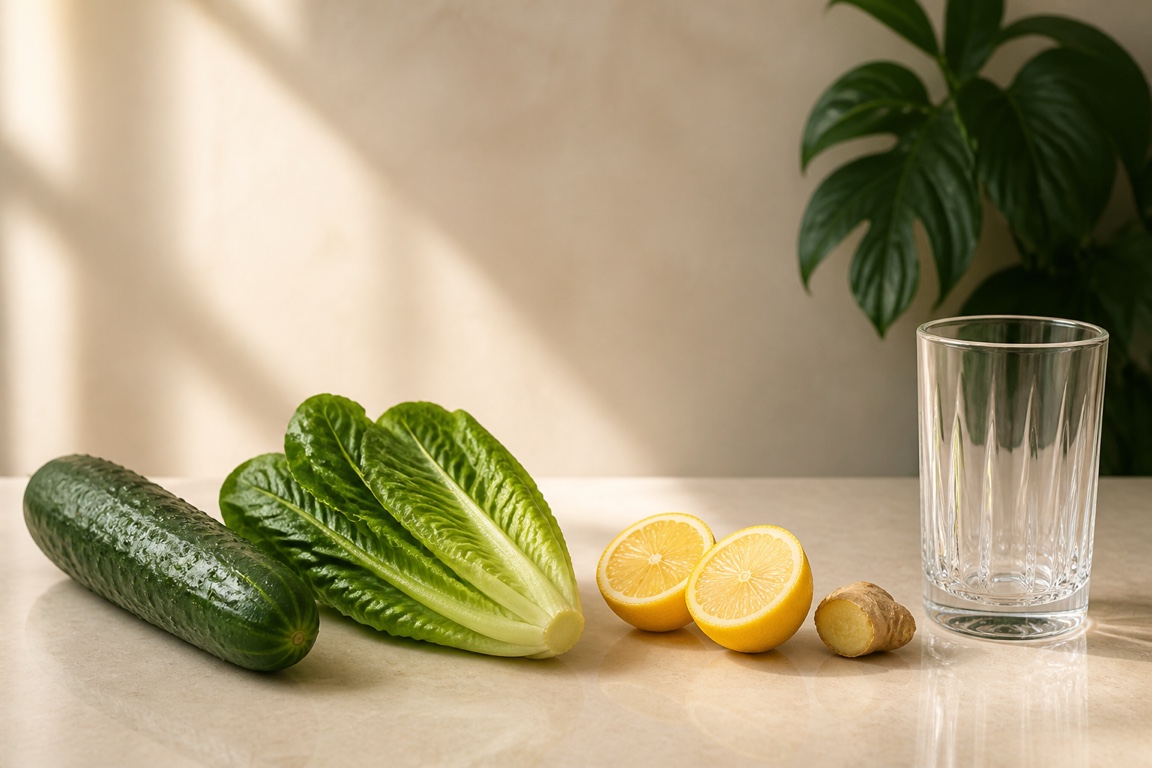
Work by feel, not grams. For every two parts mild base, add one part leafy greens and about half a part brightener. In practice that looks like one whole cucumber, a couple of big handfuls of romaine or spinach, and half a lemon — with an optional thumb of ginger or a small handful of mint as the aromatic.
The proportions matter more than the exact ingredients. You can swap celery for cucumber or chard for spinach and the glass stays balanced; what breaks it is inverting the ratio so greens outweigh the base. Whenever a batch of mine drinks harsh, the cause is almost always that the greens crept past the one-part line.
- 2 parts mild base: cucumber, celery, romaine hearts, or zucchini.
- 1 part greens: spinach, romaine leaves, chard, then kale as your taste adapts.
- ½ part brightener: lemon or lime, plus ginger or mint if you like aroma.
- Optional accent: a thin wedge of green apple or pear, added last and only if needed.
Choose milder greens before kale
Greens sit on a clear intensity ladder, and most green juice tastes bad because someone started at the top. Romaine is gentle and almost neutral; spinach is soft with a light mineral edge; chard sits in the middle; kale and collards bring real bitterness; mustard greens and wheatgrass are for people who already know they like them.
My first kale-heavy batch taught me this the hard way: two bunches of kale to a single cucumber drinks like cold, bitter tea. If you want kale juice that does not fight you, halve the kale, strip the leaves off the thick center stems — the stems carry a lot of the bitterness — and let romaine or spinach make up the difference.
There is no prize for skipping rungs. A glass you finish, built on romaine today, does more for the habit than a heroic kale glass you abandon after two sips.
Brighteners that work: lemon, lime, ginger, mint
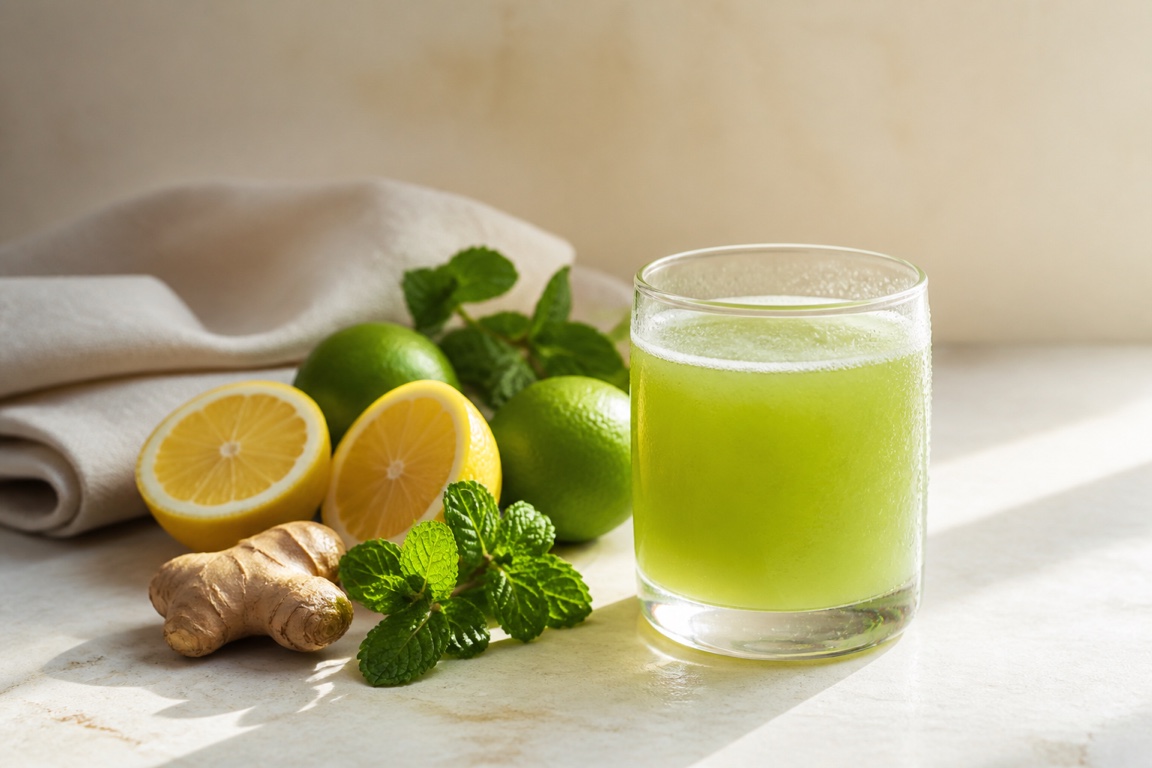
Brighteners are the difference between green juice you tolerate and green juice you look forward to. Half a small lemon once rescued a romaine-spinach glass I was ready to pour out — the bitterness did not disappear, but the acidity reframed it, the way a vinaigrette reframes bitter salad leaves.
Start with half the brightener you think you need, taste, then add. Citrus is easy to correct upward and impossible to remove.
- Lemon: the most reliable fix — it cuts bitterness and lifts flat, watery juice.
- Lime: sharper and more aromatic than lemon; excellent with cucumber and mint.
- Ginger: a small thumb adds warmth that redirects the palate away from bitterness, and it is easy to overdo.
- Mint: cools cucumber-based blends; a small handful goes further than you expect.
Green juice problems and measured fixes
When the same off-flavor keeps showing up, stop guessing and match the symptom to its cause. The table below covers the five most common complaints; each has a dedicated deep-dive page with swaps and next-time formulas at /juice-problems/too-bitter, /juice-problems/too-earthy, /juice-problems/too-sweet, /juice-problems/too-flat, and /juice-problems/too-green.
If you would rather be walked through it, the juice flavor rescue tool asks what the glass tastes like right now and suggests a measured correction.
| Problem | Likely cause | Fix now | Deep dive |
|---|---|---|---|
| Too bitter | Kale, collards, or thick stems outweigh the base | Halve the greens, add cucumber, finish with lemon | Juice problems: too bitter |
| Too earthy | Beet or a heavy spinach share dominating the glass | Cut the earthy ingredient by half; add lime and ginger | Juice problems: too earthy |
| Too sweet | Fruit crept from accent to base | Stretch with cucumber and celery; sharpen with lime | Juice problems: too sweet |
| Too flat | No acid anywhere in the recipe | Add lemon or lime; a little ginger adds lift | Juice problems: too flat |
| Tastes like grass | Leafy share too high, often spinach or wheatgrass | Rebuild on the 2:1:½ ratio over a cucumber base | Juice problems: too green |
Fixes are starting points — adjust in small steps and taste between each change.
What not to do: drown it in apple
The most common 'fix' is to keep adding apple until the green disappears. It works, but you have not fixed the green juice — you have made apple juice with green coloring. Juicing removes much of the fiber from whole produce, so a glass pressed mostly from fruit drinks like a juice box, and the crisp vegetal character you wanted is gone.
Other dead ends worth skipping: doubling the strong greens to make the glass feel more virtuous, then never juicing again; masking bitterness with extra sweet roots until the recipe loses its shape; and skipping the taste test until the whole batch is bottled. Sweetness has a place in green juice — as a thin wedge at the end, not the foundation.
The apple habit also hides your progress. If every glass is sweet, you never find out that your palate has been quietly adjusting — most people who taper the fruit stop missing it within a couple of weeks, and the greens start tasting like the point instead of the obstacle.
Order of operations when a juice already tastes bad
Do not pour it out, and do not panic-press four apples into it. Rescue a finished glass in this order, tasting after each step:
I keep a cut lemon next to the juicer for exactly this reason — nine times out of ten the rescue ends at step two, and the note at step five is what stops the same mistake from happening twice.
- 1. Dilute: press extra cucumber or celery into the batch so every off-flavor's share shrinks.
- 2. Brighten: add lemon or lime — acidity corrects bitter, earthy, and flat at the same time.
- 3. Add an aromatic: ginger or mint redirects the palate; a little goes a long way.
- 4. Sweeten last: a thin wedge of apple or pear, pressed in only if steps one to three were not enough.
- 5. Take a note: write down what fixed it, then adjust the base recipe before the next batch.
Frequently asked questions
How do you make green juice taste less bitter?
Reduce the share of strong greens like kale, strip leaves off the thick center stems, and rebuild on a mild base such as cucumber or romaine. Then add acidity — half a lemon changes how bitterness reads. Save sweet fruit for a final small accent rather than the main fix.
What fruit makes green juice taste better?
Tart, pale fruit works best because it brightens without taking over: green apple, pear, and pineapple are the classics, and a thin wedge is usually enough. Citrus is even more useful — lemon and lime sharpen a green juice rather than sweeten it, which keeps the glass tasting fresh.
Why does my green juice taste like grass?
A grassy flavor usually means the leafy share is too high for the base, especially with spinach, parsley, or wheatgrass in the mix. Rebuild around two parts cucumber or romaine to one part greens, add half a lemon, and the same ingredients read crisp instead of mowed lawn.
Does lemon help green juice?
Yes — lemon is the single most reliable green juice improver. Its acidity balances bitterness from kale, cuts through earthy or grassy notes, and gives flat juice a clean finish. Start with half a small lemon per batch and adjust upward; it is much easier to add than to undo.
What is the best base for green juice?
Cucumber is the most forgiving base: high-water, mild, and refreshing. Romaine is a close second with a gentle green flavor, and celery suits people who like a savory edge. Whichever you choose, the base should be about two parts of the glass so the greens stay in balance.
Keep exploring
Recipes to try
Planning tools & products
This website provides general recipe and nutrition education only and is not medical advice. Calories are estimates. Fresh raw juice is perishable — refrigerate promptly and discard questionable juice. Use juices as part of a normal eating routine, not as a cleanse, fast, or meal-replacement program.