Storage guide
How To Store Fresh Juice
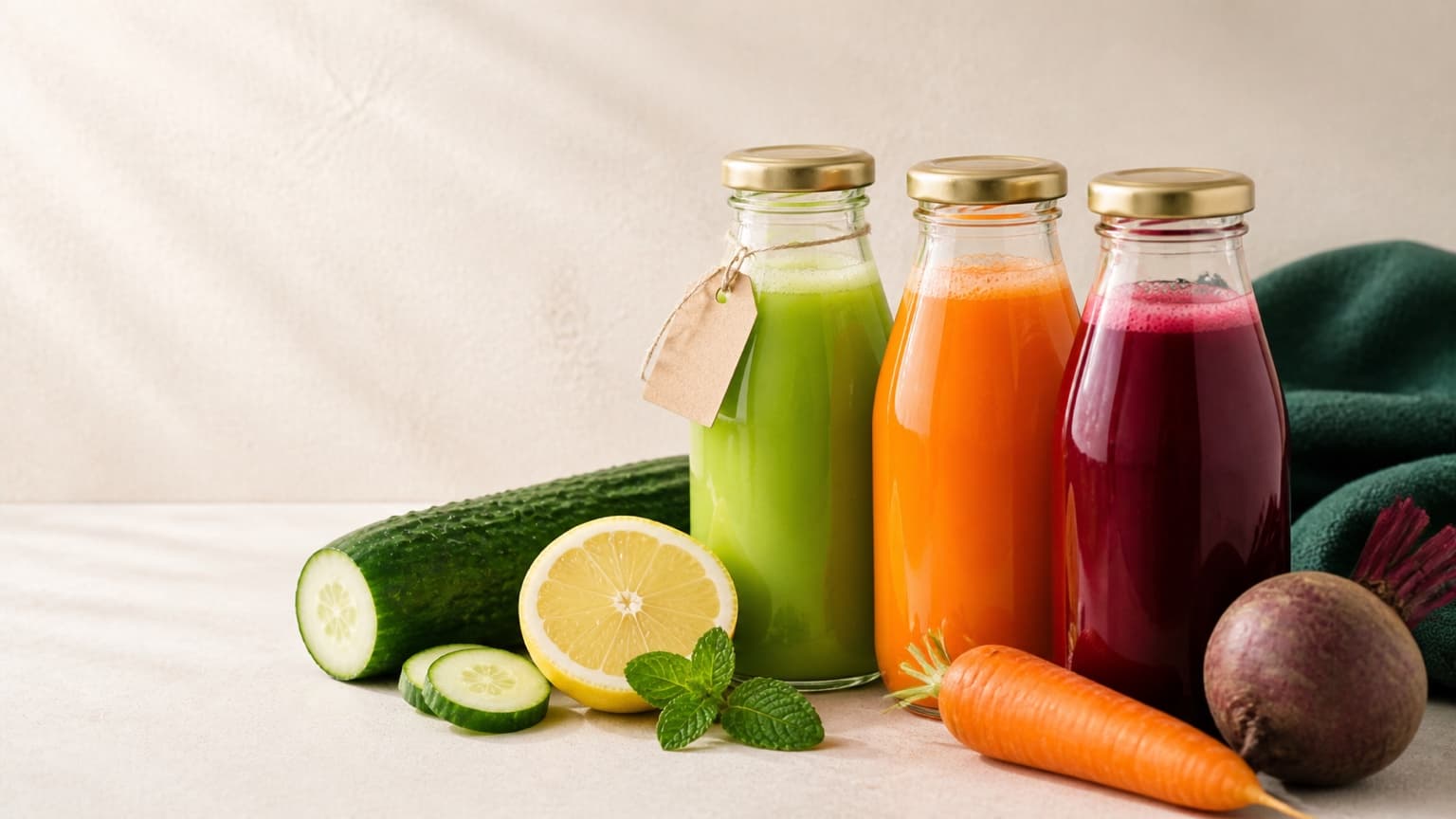
How to store fresh juice comes down to four habits: bottle it cleanly, refrigerate it right away, fill the container close to the top, and drink it within a short, conservative window. This guide covers the best containers, storing juice in mason jars, how to arrange the fridge, the freshness cues worth checking, and the small mistakes that quietly shorten a juice's life.
On this page
How long does fresh juice actually keep?
There is no single guaranteed shelf life for homemade cold-press juice. Because it is raw and unpasteurized, the most reliable habit is to drink it the same day you press it whenever you can, and to lean on the windows below as planning ranges rather than promises.
If you need to plan ahead, match your juice to its blend type. Delicate greens and herbs are best the same day, bright citrus blends often hold for about 24 to 36 hours, and root-forward blends can keep for roughly 24 to 48 hours when bottled full and chilled fast. Flavor holding up is not the same as a safety guarantee, so always trust your senses over the clock.
| Blend type | Practical window | Notes |
|---|---|---|
| Delicate greens and herbs | Same day | Leafy, grassy, and herb-forward juices fade fastest in flavor and color, so drink them soon after pressing. |
| Bright citrus blends | 24–36 hours | Citrus acidity helps hold brightness a little longer when the juice is bottled full and chilled promptly. |
| Root-forward blends | 24–48 hours | Carrot, beet, and other roots tend to keep their color and sweetness the longest of the common blends. |
Practical planning ranges for home juicing, not safety guarantees.
Start with clean bottles and equipment
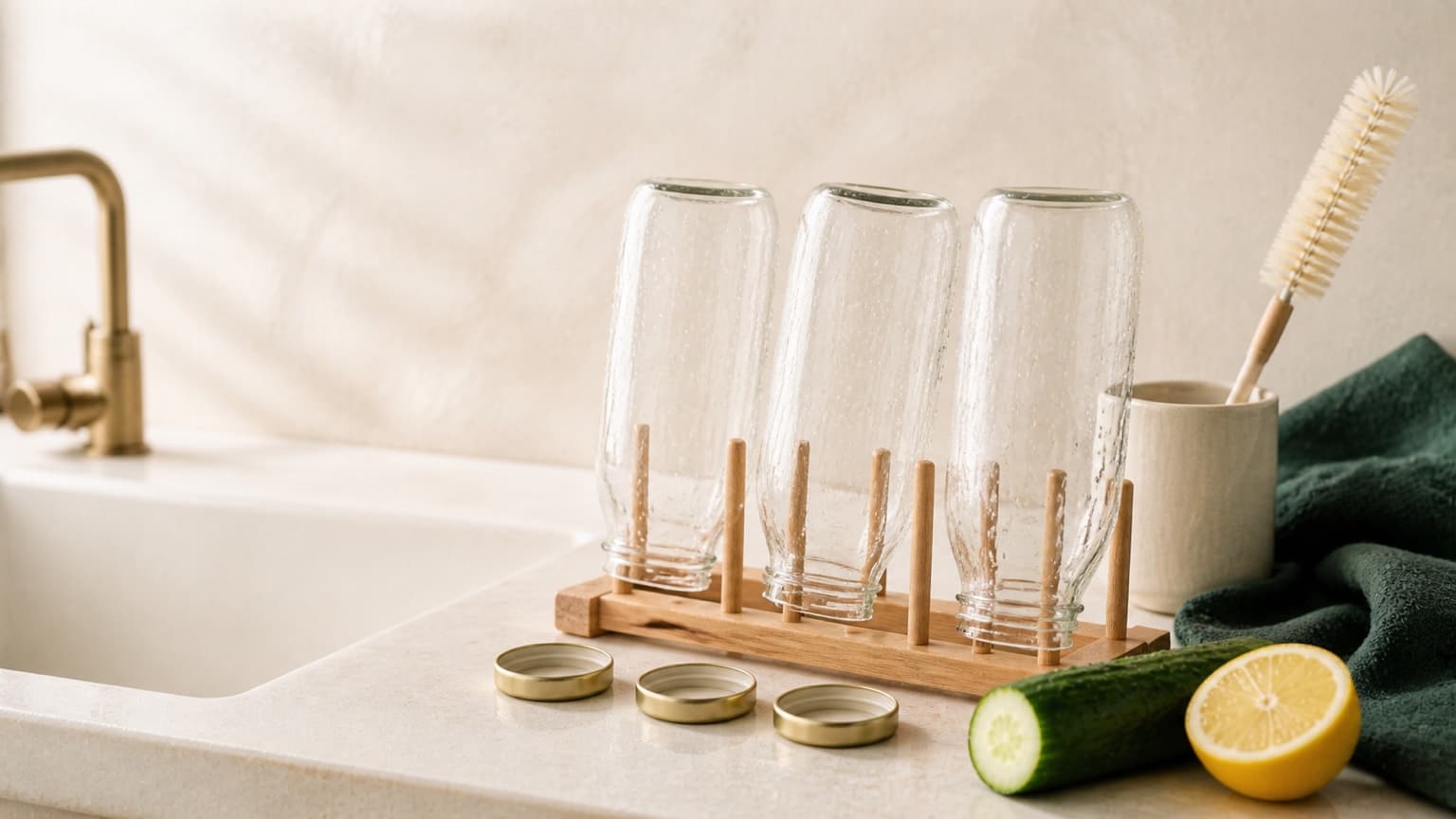
Storage quality starts before the juice exists. Wash bottles, lids, cutting boards, knives, and every juicer part in hot soapy water, then let them dry fully so you are bottling into clean, dry containers. The best way to store juice after juicing is to have the containers ready before you press, not scrambling for a jar while the juice warms on the counter.
Glass containers are popular because they are easy to label, inspect, and reuse, but the real requirement is simply a clean, food-safe, airtight container. Doing the cleanup first also means you can bottle and chill quickly instead of leaving juice sitting out while you scrub the machine.
Bottle and refrigerate promptly
Transfer juice into containers soon after pressing rather than letting it sit at room temperature. Fill each one close to the top when practical, cap it tightly, and move it into the coldest part of the fridge. The fastest way to keep juice fresh longer is simply to shorten the time between the juicer and the first cold hour.
Keep bottles cold until the moment you drink them, and avoid long stretches on the counter. If a bottle has been left out for an extended time, err on the side of caution and use sensory judgment before drinking rather than assuming the clock still applies.
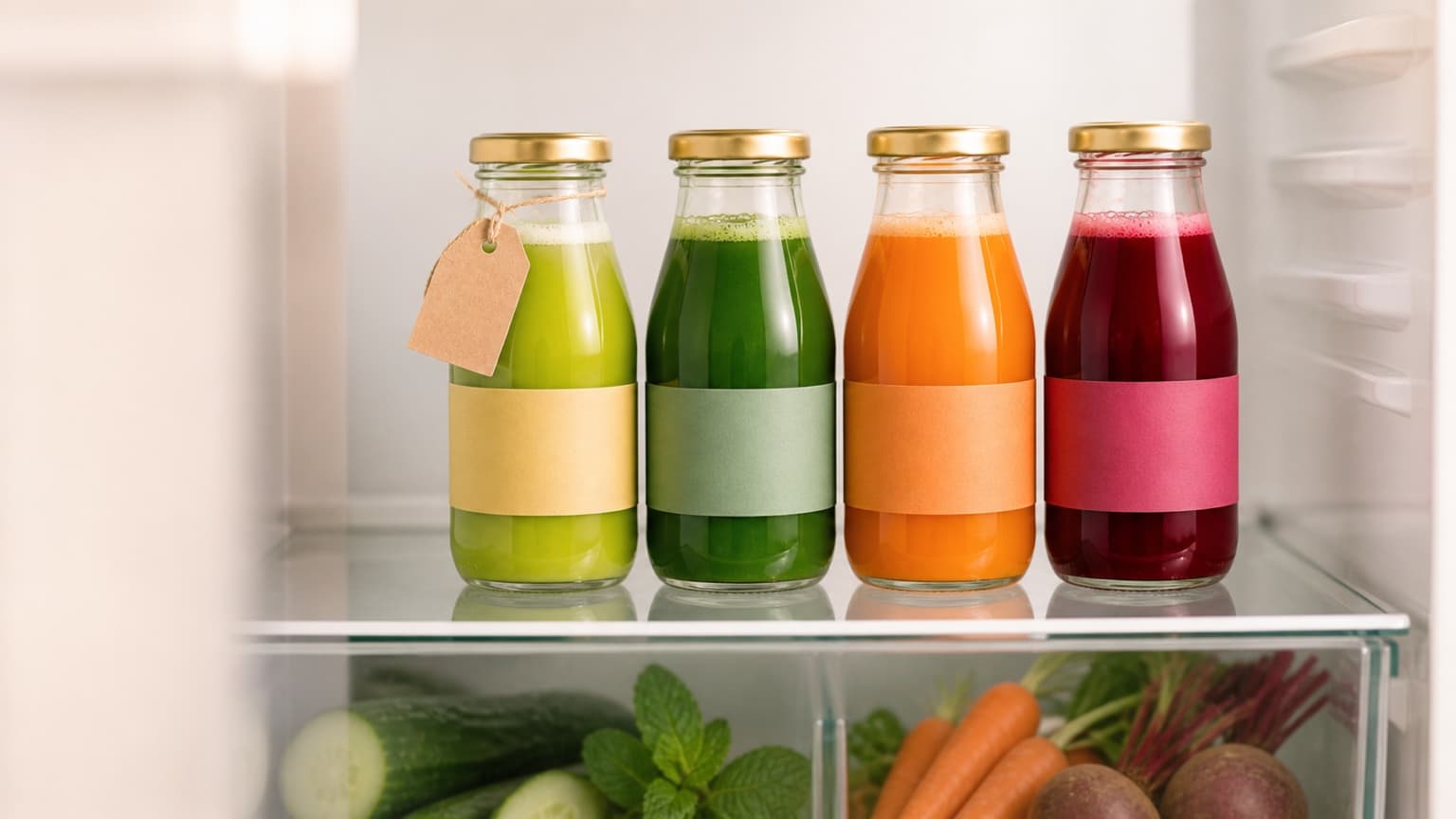
- Label each bottle with the recipe name and the date and time you pressed it.
- Reserve delicate green and herb juices for same-day drinking when possible.
- Drink root-forward or settling-prone recipes first if their flavor shifts as they sit.
- Shake or stir gently before serving — natural separation is normal, not a defect.
Which container is best: glass, mason jar, plastic, or stainless?
Any clean, food-safe, airtight container can work, but the details change how easy storage feels day to day. Airtight caps limit the air exposure that dulls flavor, and filling close to the top reduces the headspace that speeds oxidation. Beyond that, containers differ in whether you can freeze in them, whether they hold odors, and how easily they take a label.
Use the comparison below to pick what fits your routine. Glass is the default for most home juicers because it stays neutral and lets you see the juice; sturdy food-safe plastic is lighter for travel; stainless keeps juice cold but hides what is inside.
| Container | Airtightness | Freezer-safe? | Odor retention | Label-friendly? |
|---|---|---|---|---|
| Glass swing-top bottle | Excellent with an intact gasket | Only if explicitly marked freezer-safe | None — glass stays neutral | Yes; the smooth surface takes labels well |
| Glass mason jar | Good with a solid one-piece lid | Only wide-mouth straight-sided jars with headspace | None | Yes; flat panels and lids label easily |
| Food-safe plastic bottle | Good with a tight screw cap | Often yes when labeled for freezing | Can hold odors and stains over time | Yes, though labels may lift with condensation |
| Stainless steel bottle | Excellent, but you cannot see inside | Not recommended for freezing liquids | Low, though strong flavors can linger | Tape or wrap labels; you lose visual inspection |
Match the container to your plan; the right choice is the clean, airtight one you will actually fill to the top and chill. Practical guidance, not safety guarantees.
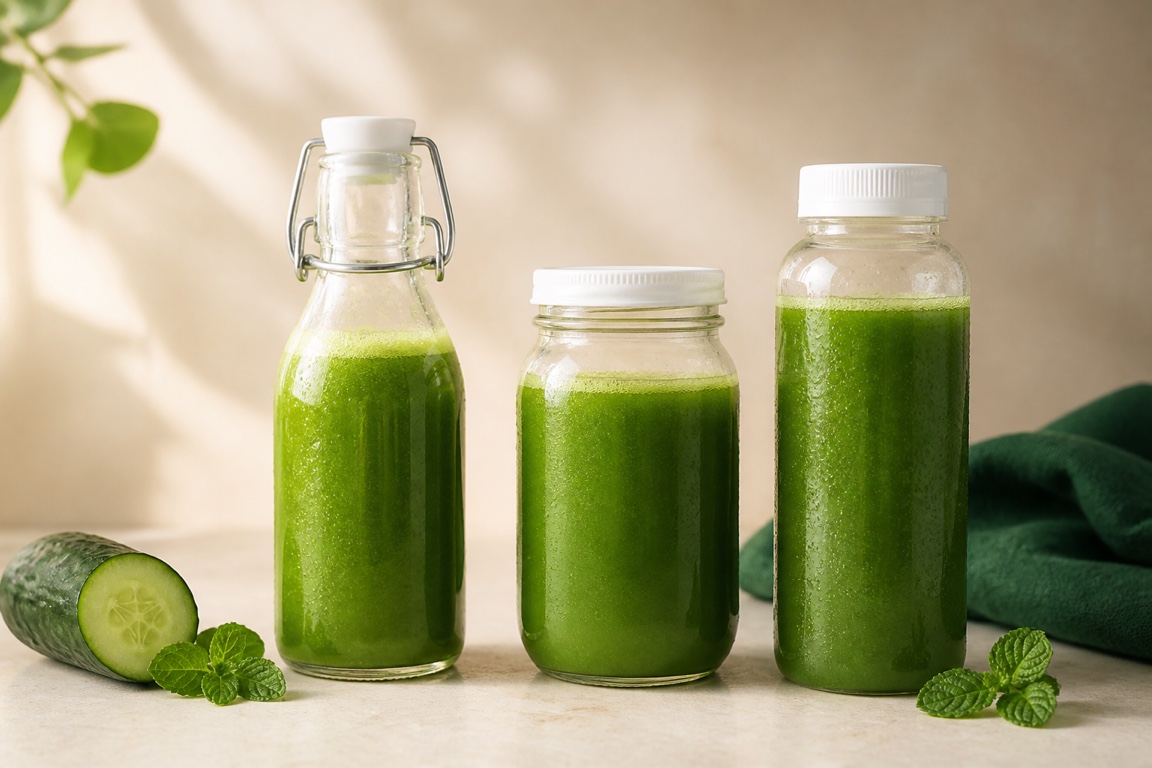
Storing juice in mason jars and arranging the fridge
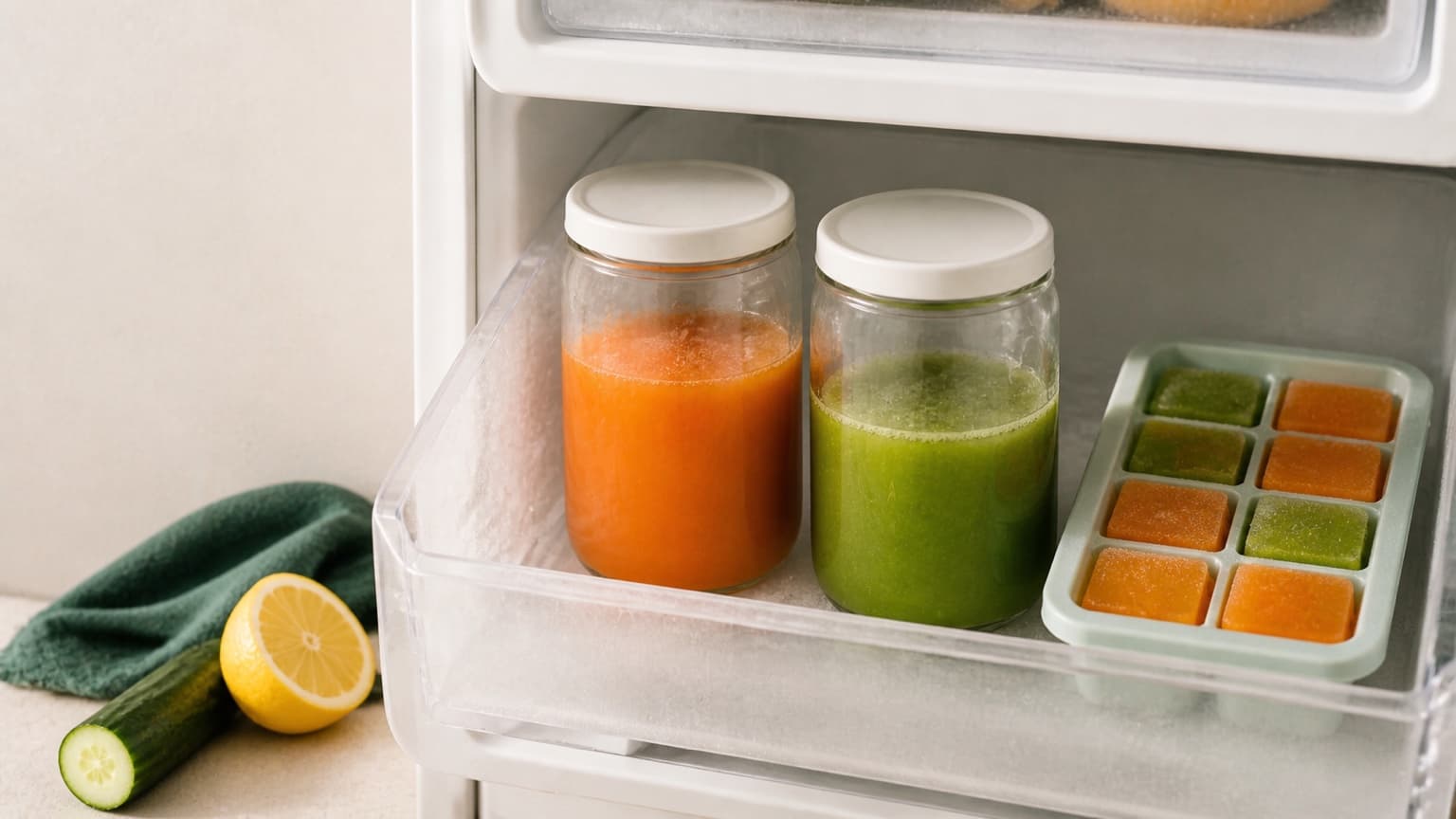
Mason jars are a favorite for good reason: they are cheap, durable, easy to label on the flat panel, and they seal well with a solid lid. The one rule worth repeating is to fill them close to the threads. I keep a row of pint jars in the door, and the ones I leave half-empty always taste flatter by the next day than the ones filled to the top, because all that trapped air is working against the juice.
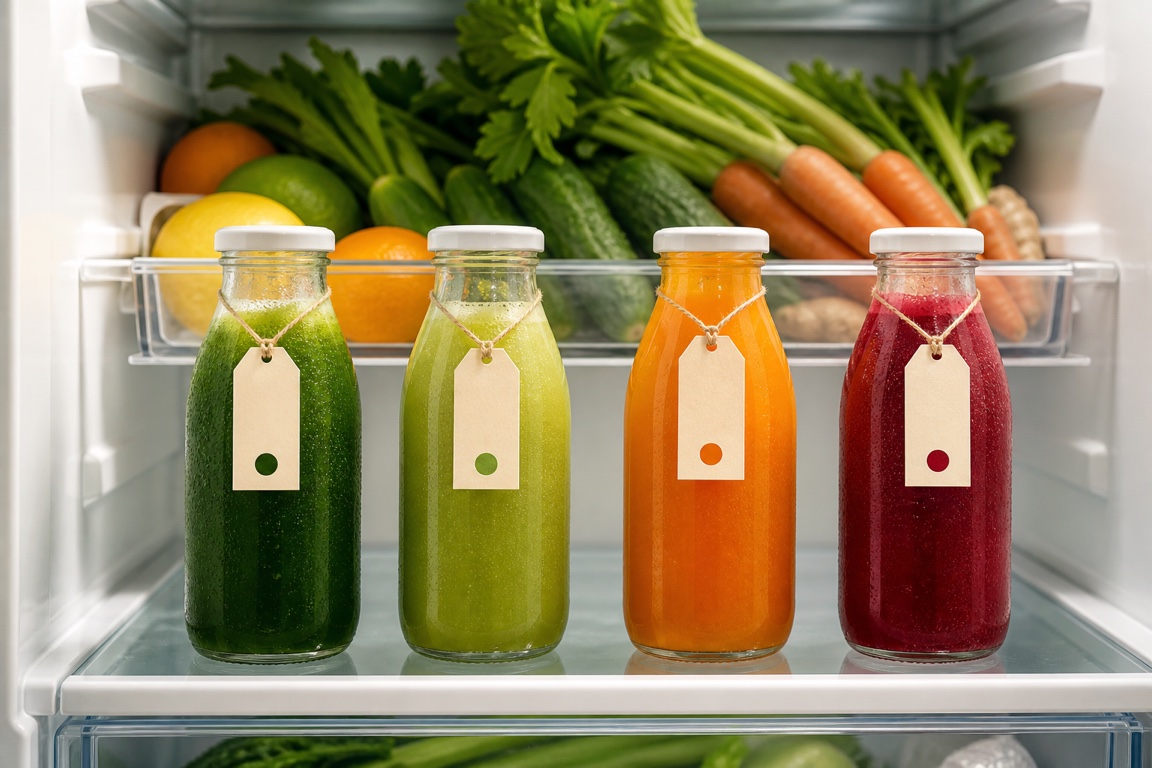
How you store juice in the fridge matters almost as much as the container. Keep bottles in the coldest zone, usually a back shelf rather than the door, and arrange them oldest to newest so the same-day greens get reached for first. A swing-top bottle of green juice in my fridge separates into distinct layers by the next morning; a five-second shake brings it right back, which is settling, not spoilage.
- Fill mason jars to the threads to cut down on headspace.
- Use one-piece lids for a tighter seal than two-piece bands give.
- Store bottles in the coldest part of the fridge, not the warmer door.
- Line bottles up oldest to newest so nothing hides at the back.
How to tell if juice has turned
Start with storage history and container condition before drinking stored juice. Sensory cues can tell you to discard a bottle, but a normal appearance or smell cannot prove safety.
Look for the changes below, and when something seems off or the storage history is uncertain, discard it without tasting it. The dedicated spoilage guide explains the full discard-first check.
- Storage: discard juice after uncertain refrigeration or extended time warm.
- Smell: a sour, fermented, or yeasty aroma is a clear signal to discard.
- Sight: a dramatic color change, cloudiness beyond normal settling, or any visible growth.
- Feel and sound: fizzing, pressure when opening the cap, or unexpected carbonation.
Common storage mistakes
Most storage problems are not exotic — they are small habits that quietly shorten a juice's useful life. A quick scan of the list below helps you avoid the ones people run into most often, and almost all of them trace back to air, warmth, or guesswork.
- Leaving juice on the counter while you finish cleaning the juicer.
- Bottling into containers that were not fully cleaned and dried first.
- Half-filling large bottles, which leaves a lot of air above the juice.
- Skipping labels, then guessing later about which batch is oldest.
- Making far more juice than you can realistically drink within a fresh window.
Plan storage before you shop
If you are making several recipes, decide on bottle count and fridge space before you buy produce. The grocery list generator can combine recipes into one shopping list and estimate how many bottles you will end up with, which keeps you from pressing more than you can drink fresh.
Planning ahead is the simplest way to avoid waste and guesswork later. Pair the list with a printable storage label so each bottle leaves the kitchen already marked with its recipe and time, and the rest of the storage routine almost runs itself.
Frequently asked questions
How long does fresh juice last in the fridge?
There is no guaranteed shelf life for raw homemade juice. Same-day drinking is the most conservative habit, and roughly one to two cold days is a cautious planning range for many blends. Lean shorter for delicate greens, longer for root-forward blends, and discard juice after unsafe storage, uncertain storage history, or spoilage cues without tasting it.
Is it better to store juice in glass or plastic?
Glass is usually the better default for home storage: it stays neutral, holds no odors or stains, and lets you inspect the juice and label it easily. Food-safe plastic is lighter and handy for travel but can pick up odors over time. Whichever you use, keep it airtight and fill it close to the top.
What is the best way to store juice in mason jars?
Fill mason jars close to the threads to limit headspace, seal them with a solid one-piece lid for a tighter close than a two-piece band, and refrigerate them right away in the coldest part of the fridge. Label the flat panel with the recipe and time, and drink delicate greens the same day.
How do I keep juice fresh longer after juicing?
Shorten the time between the juicer and the fridge, fill containers to the top so little air sits above the juice, keep bottles in the coldest zone, and match bottle size to one serving so you are not reopening the same juice. None of this is a preservative; it simply slows the oxidation that dulls flavor.
How do I know if my juice has gone bad?
Use your senses. A sour or fermented smell, fizzing or pressure on opening, unusual cloudiness or color change, or an off taste are all reasons to discard the juice rather than drink it. Natural settling that stirs back together with a shake is normal and not a sign of spoilage by itself.
Does adding lemon help juice last longer?
A little citrus can help some blends hold their color and brightness, but it is not a preservative and does not extend safe storage. Keep using clean containers, prompt refrigeration, a full fill, and a conservative drink-by window, and treat lemon as a flavor and color helper rather than a shelf-life tool.
Keep exploring
Recipes to try
Planning tools & products
This website provides general recipe and nutrition education only and is not medical advice. Calories are estimates. Fresh raw juice is perishable — refrigerate promptly and discard questionable juice. Use juices as part of a normal eating routine, not as a cleanse, fast, or meal-replacement program.