Storage guide
Can You Freeze Cold-Pressed Juice?
Can you freeze cold-pressed juice? Yes, and it is a useful planning move, but treat it as a flavor-and-convenience choice rather than a freshness guarantee. Use freezer-safe containers, leave headspace for expansion, label clearly, thaw in the fridge, and expect some separation and a flatter taste after thawing.
On this page
Can you freeze cold-pressed juice? Yes, with tradeoffs
You can freeze cold-pressed juice, and it is one of the few honest ways to give yourself a longer planning runway with raw juice. The catch is that freezing is a convenience choice, not a way to lock in just-pressed quality. Ice crystals change the texture, separation becomes more pronounced, and the bright top notes of a fresh green juice usually soften.
So the better question is not whether you can freeze it, but whether freezing fits what you want from that bottle. For a grab-and-go backup on a busy morning, it is genuinely useful. For the crisp flavor of a juice you just made, nothing beats drinking it fresh within its normal window. This guide covers when freezing earns its place, how to do it cleanly, and exactly what to expect when you thaw.
When freezing makes sense
Freezing works best when it is planned from the start, not used as a rescue step for juice that has already lingered in the fridge. If you press a large batch and know some bottles will not get used in their window, route those to the freezer immediately while the juice is at its freshest.
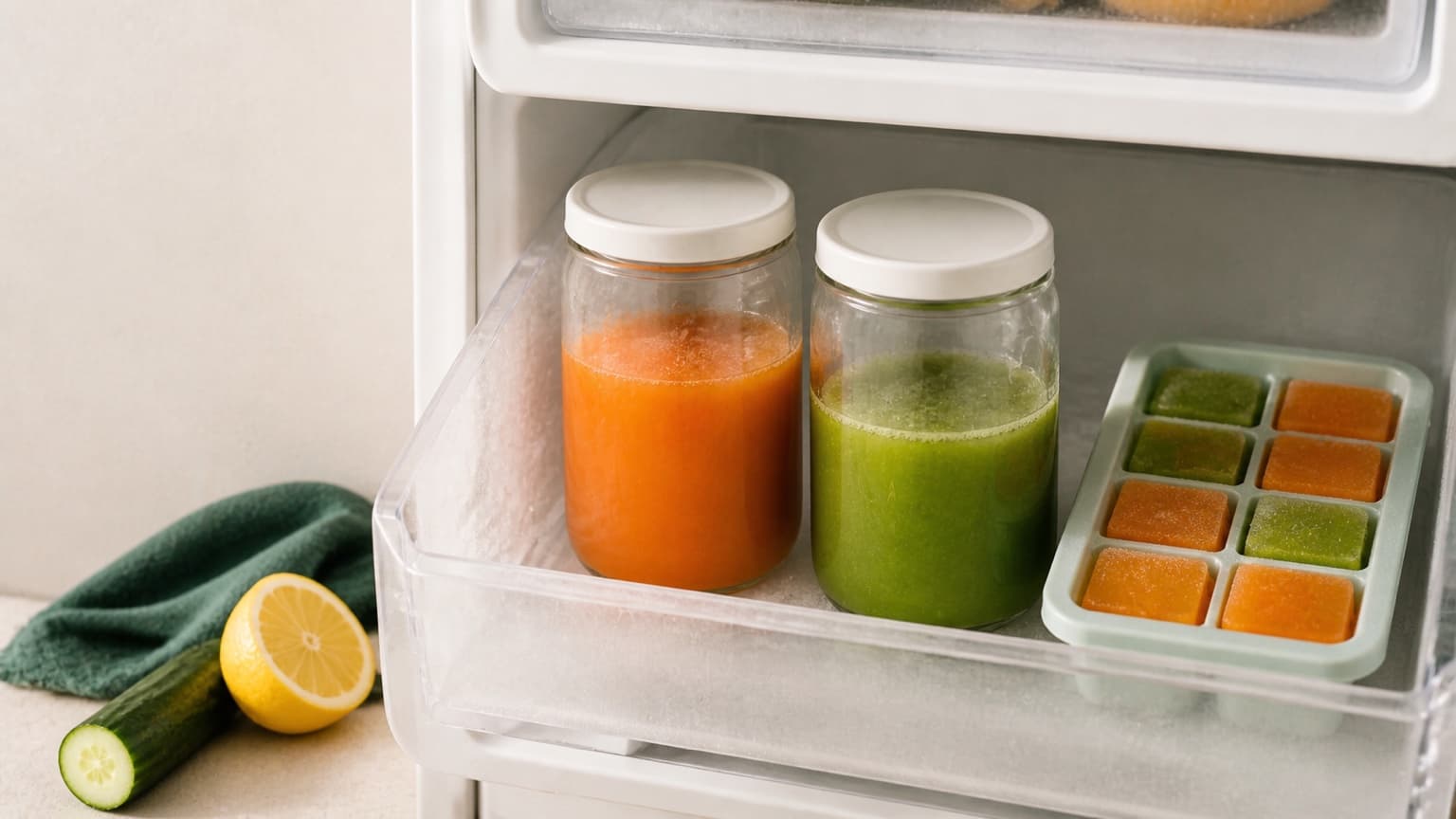
It also shines for portioning. A tray of frozen cubes lets you thaw a single serving instead of committing to a whole bottle, which is handy when you only want a small glass.
- You pressed more than you can drink in your blend's fresh window.
- You want a backup bottle ready for a rushed morning.
- You are batch-prepping and want single-serving portions on hand.
- You found a produce sale and juiced extra while it was fresh.
Choosing a container and leaving headspace
Liquid expands as it freezes, so the single most important rule is to leave headspace. Fill a freezer-safe container only most of the way and give the juice room to grow, or it can crack the container or pop the lid. A bottle I once filled to the very top cracked its lid in the freezer overnight, because the juice had expanded with nowhere to go; I now leave a clear inch every time.
Container choice matters just as much as headspace. Straight-sided, wide-mouth jars rated freezer-safe handle expansion far better than standard mason jars with sloped shoulders, which trap the expanding juice against a narrow neck and crack. Use the table below to match container to plan.
| Container | Freezer-safe? | Headspace to leave | Thaw notes |
|---|---|---|---|
| Freezer-safe glass jar (wide-mouth, straight-sided) | Yes, when labeled freezer-safe | About an inch below the threads | Thaw in the fridge; never shock cold glass with hot water. |
| Food-safe plastic bottle | Often, when marked for freezing | Leave the top inch empty | Thaw in the fridge; squeeze gently to loosen as it softens. |
| Silicone ice-cube tray | Yes | Fill each cavity just below the rim | Pop out cubes and thaw only the number you need. |
| Standard mason jar with shoulders | Risky — sloped shoulders can crack | Not recommended for freezing | Use a straight-sided freezer-safe jar instead. |
Follow each container maker's freezer instructions. Practical guidance for planning, not safety guarantees.
A step-by-step freezing workflow
A clean, quick workflow protects whatever quality you can keep. The aim is to get the juice cold and sealed fast, with the freezer portion separated before it ever reaches the fridge.
- Press your juice and decide up front which bottles are headed to the freezer.
- Pour into freezer-safe containers, leaving the headspace noted in the table above.
- Cap or seal tightly and wipe the outside so labels will stick.
- Label each container with the recipe name, prep date, and freeze date.
- Freeze promptly, laying trays flat so cubes set evenly before bagging them.
How to thaw frozen juice
The gentlest way to thaw frozen juice is slowly in the refrigerator. Move a bottle or a few cubes from the freezer to the fridge the night before, and let them come up to cold drinking temperature over several hours rather than rushing them at room temperature or in hot water.
Once thawed, shake or stir well, because separation is more dramatic after freezing than it ever is with fresh juice. Drink thawed juice promptly rather than letting it sit, and use the same sensory checks you would for any stored bottle before drinking.
What changes after freezing
Freezing changes the experience of the juice, and it is worth being clear about what shifts so you are not disappointed. Texture is the biggest tell: ice crystals break down the smooth body of fresh juice, so thawed juice can feel thinner and separate into layers that need a vigorous shake. Color can dull slightly, and the bright, grassy top notes of green and herb-forward juices tend to flatten the most.
This site treats frozen juice as a convenience and flavor topic, so we focus on texture, separation, and taste rather than making nutrient-retention claims. Root-forward and citrus blends generally come back more gracefully than delicate greens, which is the practical reason to choose what you freeze with some care.
- Texture thins and separates more than fresh juice does.
- Color may dull slightly, especially in green blends.
- Bright, grassy flavors soften; earthy and citrus notes hold up better.
- A firm shake after thawing brings most of the body back together.
The ice-cube-tray portioning trick
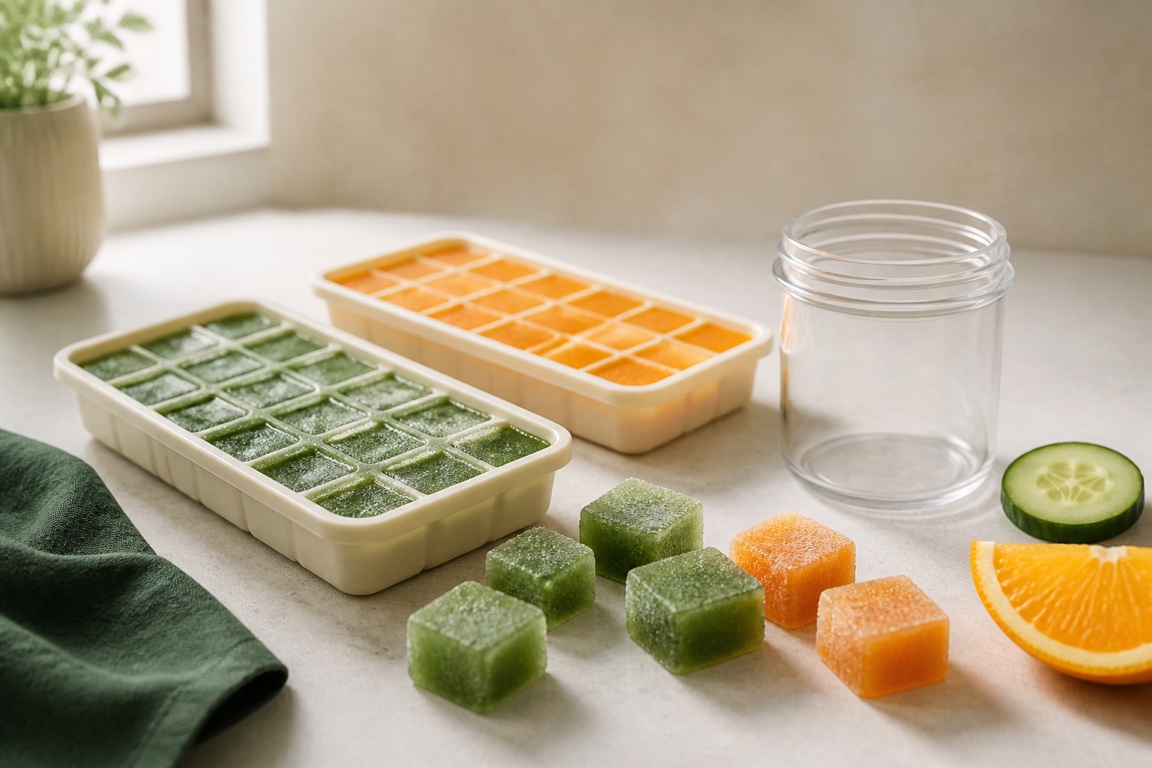
If you only ever take one idea from this guide, make it the ice-cube tray. Freezing juice in a silicone tray turns an awkward whole-bottle commitment into flexible single servings you can thaw a few at a time. I freeze carrot-orange juice this way, then decant the set cubes into a labeled freezer bag; two or three cubes thaw in the fridge overnight into about a small glass, and the color survives the trip noticeably better than my green juices do.
The trick also rescues odd leftover splashes. Rather than tossing the last inch of a batch, I pour it into the tray, and those cubes become a quick way to chill and lightly flavor a glass of water later. It is the lowest-stakes way to start freezing, since you risk only a cube or two while you learn how your favorite blends behave.
Frequently asked questions
How long does cold-pressed juice last in the freezer?
Frozen juice gives you a longer planning runway than the fridge, but it is still a quality estimate, not a safety promise. Many people keep it for a few weeks to a couple of months in freezer-safe containers. Label the freeze date and discard thawed juice after unsafe thawing, uncertain storage history, or spoilage cues. Never taste it to decide whether it is safe.
Can you freeze juice in glass?
Only in glass that is explicitly freezer-safe, ideally wide-mouth and straight-sided, with about an inch of headspace for expansion. Standard mason jars with sloped shoulders can crack as the juice expands against the narrow neck. When unsure, choose a silicone tray or a plastic container rated for freezing instead.
How do you defrost frozen juice?
Thaw it slowly in the refrigerator, moving a bottle or a handful of cubes from the freezer the night before. Avoid hot water and long stretches at room temperature. Once it is liquid, shake or stir well to recombine the separation that freezing causes, then drink it promptly rather than letting it sit out.
Is frozen juice still good for you?
Freezing changes flavor and texture, and this site does not make nutrient-retention claims about it. We treat frozen juice as a convenience option that helps you plan, not a substitute for fresh flavor. If you want the brightest taste, drink juice fresh within its normal window; freeze when convenience matters more.
Can you refreeze thawed juice?
No. Refreezing is not a habit we recommend, because each thaw degrades texture and flavor further and gives spoilage more chances to set in. Thaw only what you plan to drink, which is exactly why single-serving ice-cube portions are so useful. If you thawed too much, finish it promptly instead of refreezing.
Does frozen juice separate when thawed?
Yes, more than fresh juice does. Freezing breaks down the smooth body of the juice, so thawed bottles often show distinct layers. That separation is expected, not a sign of spoilage by itself. A firm shake or stir brings most of it back together; use your senses to judge freshness before drinking.
Keep exploring
Recipes to try
Planning tools & products
This website provides general recipe and nutrition education only and is not medical advice. Calories are estimates. Fresh raw juice is perishable — refrigerate promptly and discard questionable juice. Use juices as part of a normal eating routine, not as a cleanse, fast, or meal-replacement program.