Storage guide
How Long Does Cold-Pressed Juice Last?
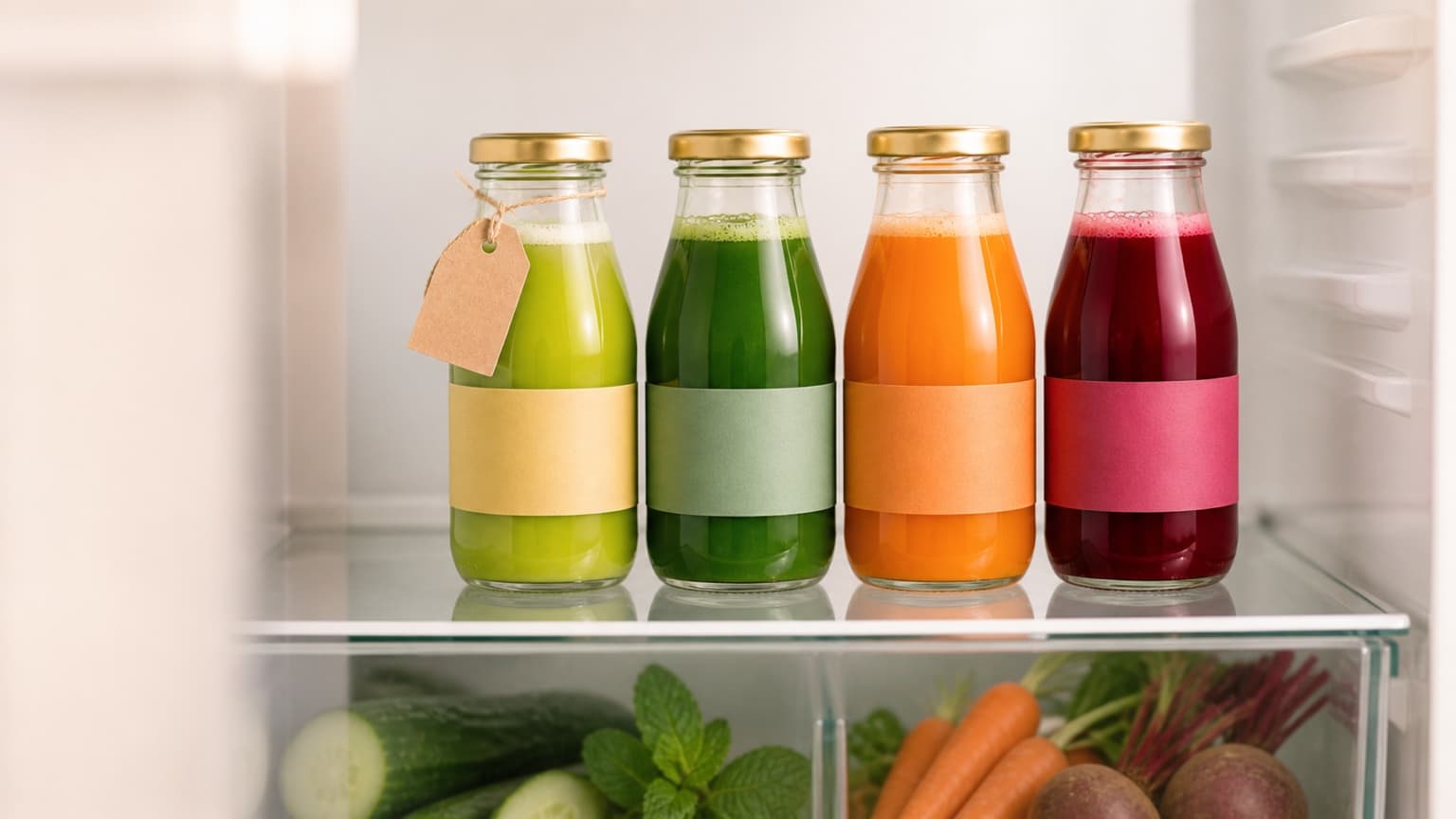
How long does cold-pressed juice last? Treat it as a perishable food: most home batches taste best the same day, while bright citrus blends often hold 24 to 36 hours and root-forward blends 24 to 48 hours when bottled cleanly and chilled fast. These are practical planning ranges, not safety guarantees. If storage history is uncertain or the juice shows spoilage cues, discard it without tasting.
On this page
What is the realistic shelf life at home?
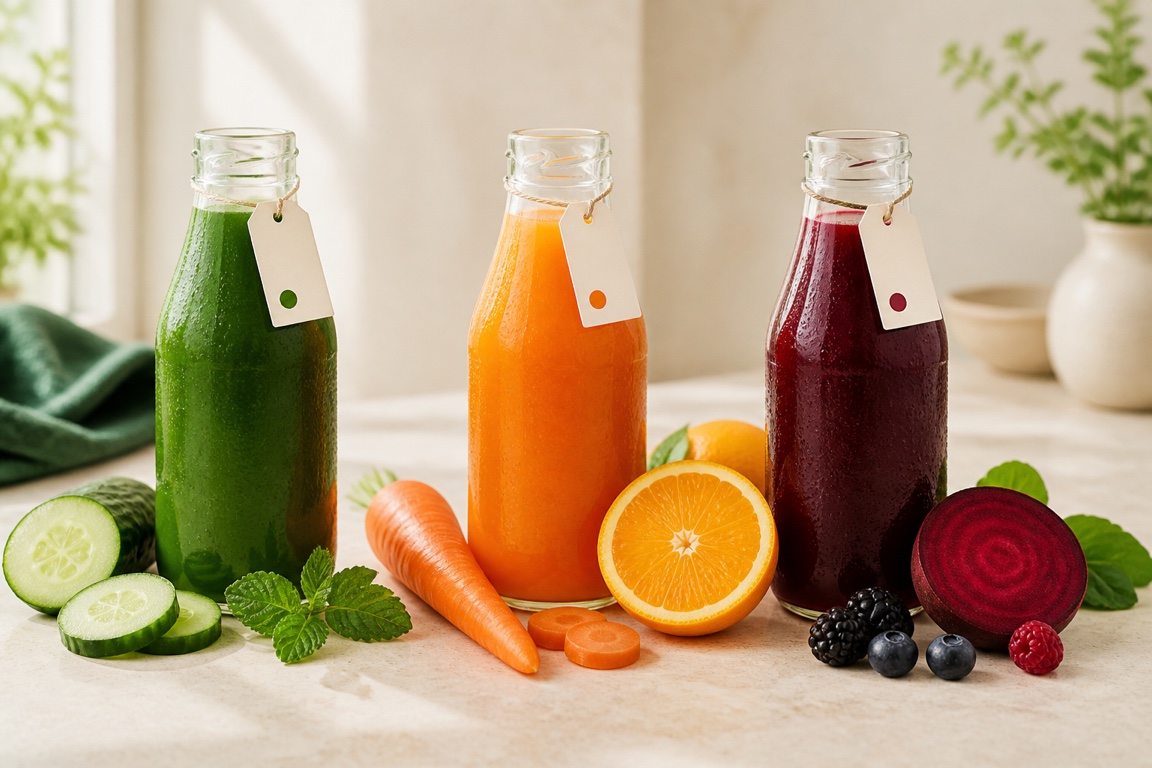
For home juicing, plan around three practical windows: delicate green and herb-forward juices are best the same day, bright citrus blends often hold their flavor for about 24 to 36 hours, and root-forward blends can keep their color and sweetness for roughly 24 to 48 hours. Those are planning ranges to help you shop and batch sensibly, not safety promises stamped on a bottle.
The honest answer is that no single number fits every juice, because the result depends on produce freshness, kitchen hygiene, bottle cleanliness, how full you fill the container, fridge temperature, and how quickly the juice got cold after pressing. A grassy green juice and a beet-carrot blend pressed on the same morning will not age at the same rate. Use the window for planning, but discard juice after unsafe storage, uncertain storage history, or spoilage cues. Never taste juice to test whether it is safe.
- Delicate greens and herbs: best the same day.
- Citrus-forward blends: often best within 24 to 36 hours.
- Root-forward blends: often best within 24 to 48 hours.
- When in doubt, press a fresh batch rather than stretch an old one.
Why raw cold-pressed juice is so perishable
Cold-pressing separates liquid from pulp without heat, which is exactly why people like it and also why it does not keep. There is no pasteurization step and no preservative, so the juice leaves your juicer carrying whatever was on the produce and in the kitchen. Oxygen exposure, natural enzymes, and any microbes present all keep working from the moment the juice hits the bottle.
That is also why oxidation shows up so fast. Cut a green juice loose in a half-empty bottle and the top layer dulls within hours; the bright, just-pressed flavor is the first thing to fade. Treating raw juice as a fresh food you plan around, rather than a shelf-stable drink you stockpile, is the single mindset shift that keeps storage simple. If you are deciding how many bottles to make, plan the batch around when you will actually drink it.
Storage windows by blend type
The table below is the same canonical window set this site uses on recipe pages, so guidance never contradicts itself. Match your juice to the closest blend type and treat the listed window as a default you confirm by smell and taste.
In my kitchen, a swing-top bottle of celery-and-greens juice pressed at 7 a.m. is noticeably duller and flatter by the next evening even when it stays cold the whole time, which is why I keep greens in the same-day column. A beet-and-carrot blend pressed on a Sunday, by contrast, held its color and earthy sweetness convincingly into Monday night.
| Blend type | Practical window | Notes |
|---|---|---|
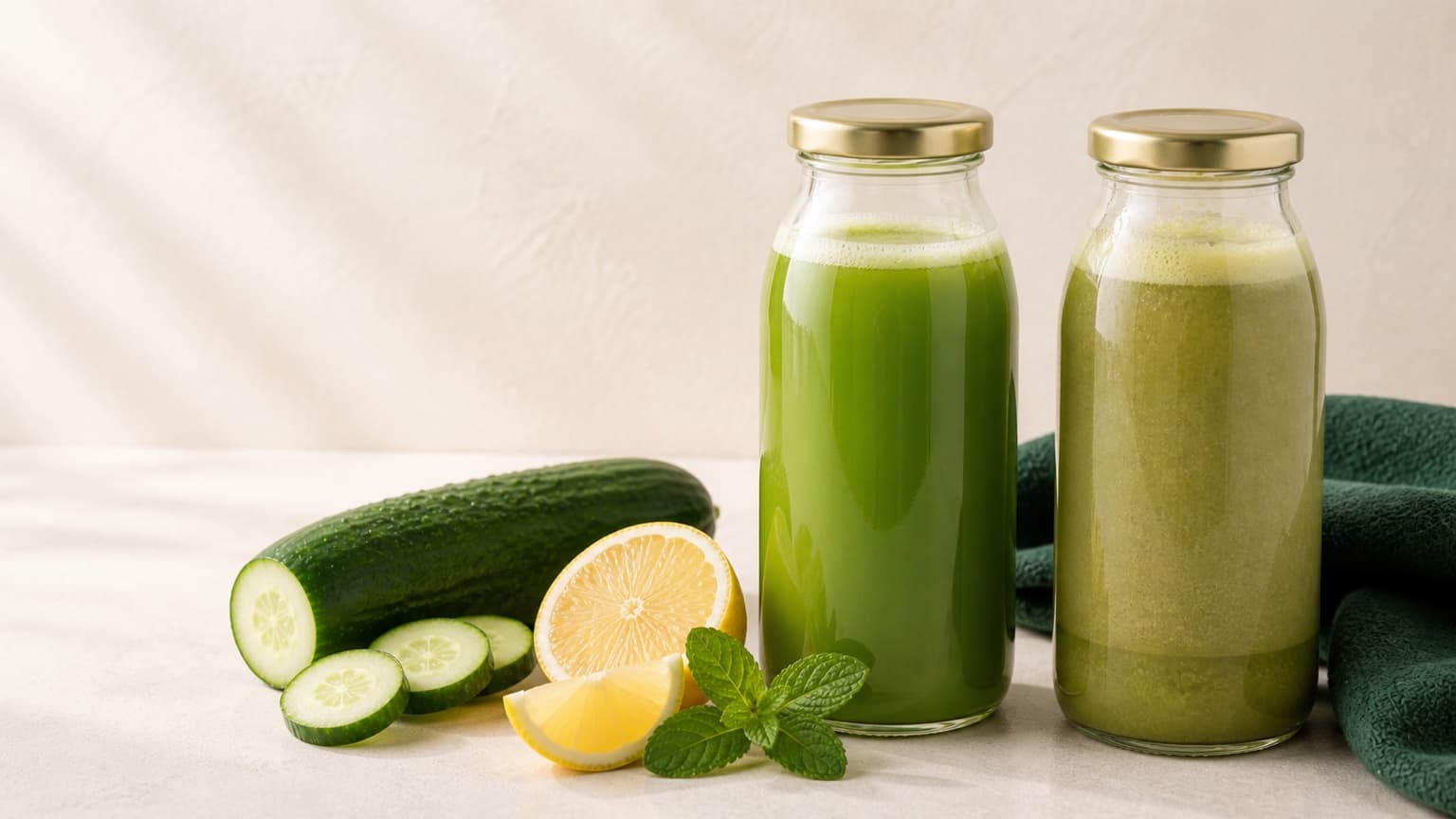
| Delicate greens and herbs | Same day | Leafy, grassy, and herb-forward juices fade fastest in flavor and color, so drink them soon after pressing. |
| Bright citrus blends | 24–36 hours | Citrus acidity helps hold brightness a little longer when the juice is bottled full and chilled promptly. |
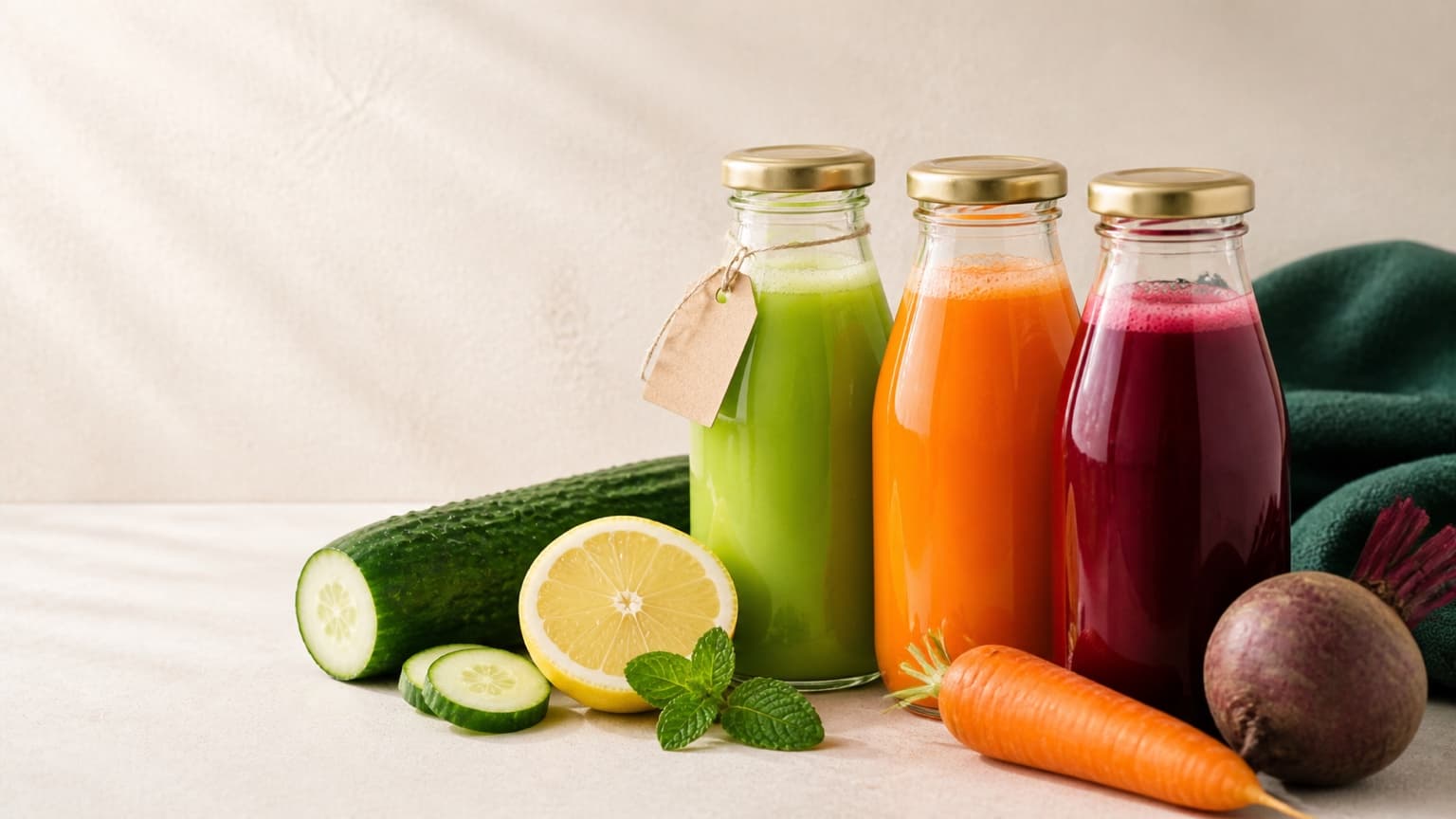
| Root-forward blends | 24–48 hours | Carrot, beet, and other roots tend to keep their color and sweetness the longest of the common blends. |
Practical planning ranges for home juicing, not safety guarantees.
Homemade vs store-bought: why bottles say 3 to 5 days (or more)
If a store bottle lists a date weeks out while this guide suggests same-day drinking for greens, both can be right, because they are not the same product. Commercial cold-pressed juice usually goes through a processing step that home juice never gets. The most common is high-pressure processing (HPP), which uses intense cold pressure rather than heat to reduce microbes, letting bottles ship with much longer use-by dates while still being marketed as raw. Flash-pasteurized and pasteurized juices use heat instead, trading some raw character for shelf stability.
Home juice has no equivalent guarantee. You control freshness through clean equipment, fast chilling, and an honest drink-by window, not through a validated processing line. So when you read a label window, remember it reflects the manufacturer's processing and testing. The comparison below lays out what each type typically promises and what is actually worth checking.
| Juice type | Typical label window | Why it differs | What to check |
|---|---|---|---|
| Homemade raw | Same day to about two days (planning range) | No processing step, so quality depends entirely on your produce, kitchen hygiene, and chilling. | Smell, color, taste, fizz, and how cleanly it was bottled and chilled. |
| Commercial HPP (high-pressure processed) | Often around 30 to 45 days unopened | Cold high-pressure step reduces microbes without heat, so bottles carry longer printed dates. | The printed use-by date and a cold supply chain; use quickly once opened. |
| Pasteurized or flash-pasteurized | Weeks to months unopened | Heat treatment improves shelf stability but changes the bright raw character. | Use-by date and intact seal; refrigerate after opening and use within a few days. |
Label windows are set by manufacturers and their processing; home juice has no equivalent guarantee. Practical planning ranges only.
Habits that stretch the window
You cannot turn a same-day green juice into a week-long bottle, but a few habits reliably protect the flavor and quality you do have. Most of them come down to limiting air, heat, and time between pressing and the first cold hour in the fridge.
None of these are preservatives and none extend a safety guarantee. They simply slow the oxidation and warming that dull fresh juice fastest, which often nudges a blend toward the longer end of its planning range instead of the shorter end.
- Bottle into clean, airtight glass and refrigerate within minutes, not after you finish cleaning the juicer.
- Fill bottles close to the top so there is little air sitting above the juice.
- Match bottle size to one serving so you are not repeatedly opening and resealing the same juice.
- Add a squeeze of lemon or lime to greens for brightness, knowing it helps color and flavor, not safety.
- Label each bottle with the recipe and the time you pressed it so the oldest gets used first.
Signs your juice has already turned
Storage windows are planning tools, not safety guarantees. Discard stored juice after unsafe storage, uncertain storage history, a sour or yeasty smell, unexpected fizzing or pressure, container swelling, leakage, mold, or unusual changes beyond normal settling. Harmful contamination may not be visible or detectable by smell, so never taste juice to test whether it is safe.
Natural separation is not the same as spoilage. A bottle of green juice that splits into layers overnight and stirs back together with a shake is settling, which is normal. For the full look, smell, taste, and texture checklist, including why fizzy juice should always be discarded, see the dedicated guide on telling if fresh juice has gone bad.
Freezing as a planning escape hatch
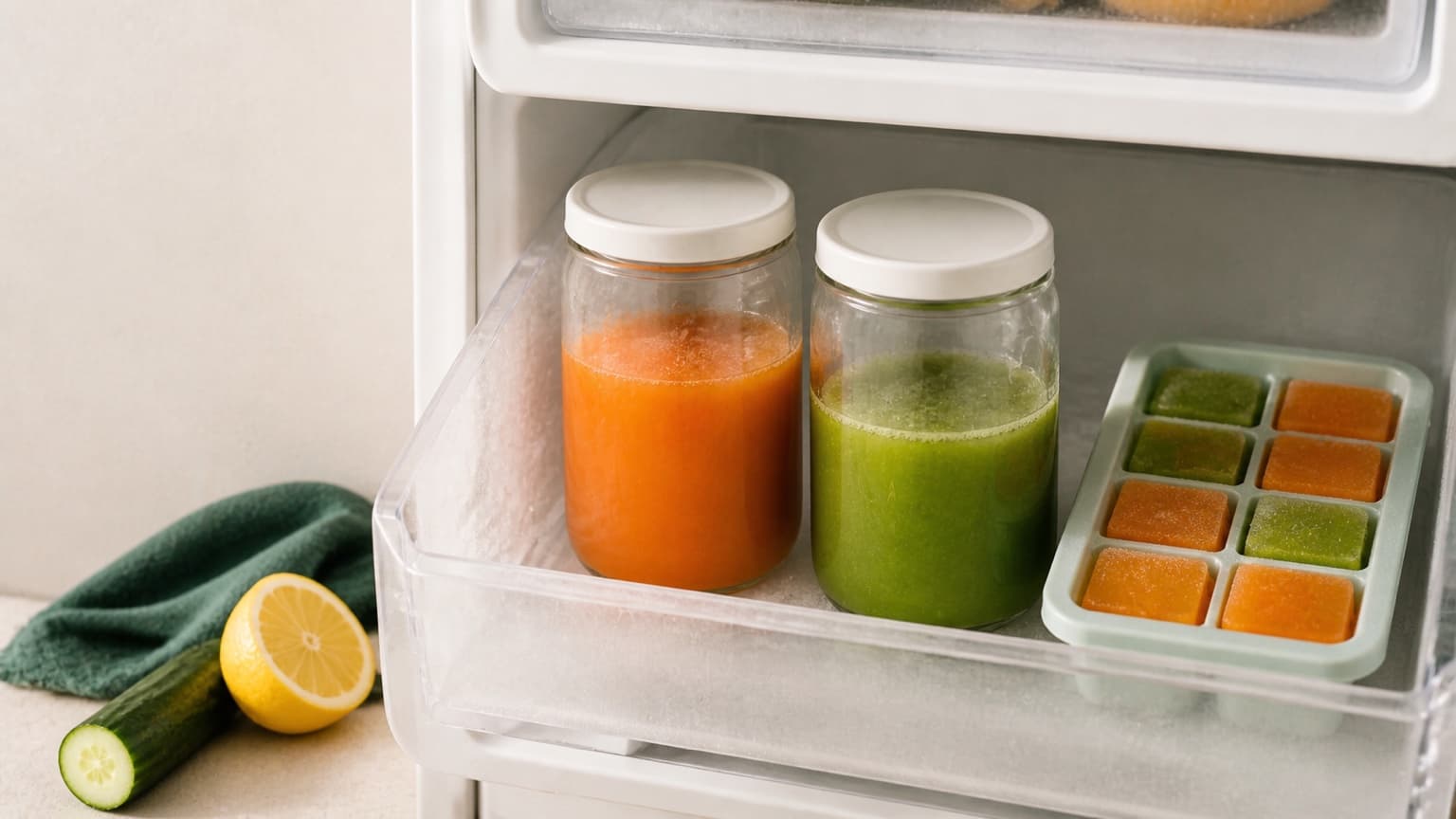
If you press more than you can drink in your blend's window, freezing is the honest backup, but treat it as a flavor-and-convenience choice rather than a way to extend fresh quality. Use only freezer-safe containers, leave headspace because liquid expands as it freezes, label the recipe and freeze date, and thaw in the refrigerator rather than on the counter.
Expect changes: thawed juice often separates more and tastes a little flatter, especially delicate greens. I keep a couple of root-forward bottles in ice-cube trays for busy mornings precisely because they tolerate the round trip better than herb juices do. The full freezing workflow, including container choices and thawing, lives in the freezing guide.
Plan before you press
The simplest way to avoid the how-long question entirely is to make the amount you will actually drink in the window. Decide your bottle count and fridge space before you shop, and let a tool combine recipes into one grocery list with a realistic bottle estimate.
If you are batching several recipes, a printable storage label keeps the fridge honest about which bottle is oldest. Plan the batch around your schedule, drink delicate greens first, and the storage math takes care of itself.
Frequently asked questions
Can you drink cold-pressed juice after 3 days?
For home-pressed raw juice, three days is past the conservative window this site uses, so we would not plan on it. Some store-bought HPP bottles are dated much longer because of processing. With homemade juice, discard anything outside your safe storage plan or with uncertain storage history; never taste it to decide whether it is safe.
How long does cold-pressed juice last unrefrigerated?
Not long at all. Raw juice is perishable, and time at room temperature works against it quickly, so plan to refrigerate within minutes of pressing. If a bottle has sat out for an extended stretch, treat it cautiously and rely on smell and appearance rather than the original timeline before deciding.
How do you know if cold-pressed juice is bad?
Use your senses before the calendar. A sour, yeasty, or fermented smell, fizzing or pressure when you open the cap, cloudiness or a dramatic color change, or a sharp off taste all signal the juice should be discarded. Normal settling that stirs back together with a shake is not spoilage by itself.
Does lemon juice help cold-pressed juice last longer?
A little lemon or lime can help some blends hold their color and bright flavor, which is why it is a common addition to greens. It is not a preservative, though, and it does not extend safe storage. Keep relying on clean bottles, a full fill, prompt refrigeration, and a conservative drink-by window.
Why does store-bought cold-pressed juice last longer?
Because most commercial bottles are processed. High-pressure processing (HPP) uses cold pressure to reduce microbes without heat, and pasteurization uses heat, both giving longer dated windows than raw home juice. The bottle is not fundamentally fresher than yours; it has simply been through a step your kitchen cannot replicate.
Does freezing extend cold-pressed juice?
Freezing can give you a longer planning runway for convenience, but it changes flavor and texture and is not a fresh-quality guarantee. Use freezer-safe containers with headspace, label the freeze date, and thaw in the fridge. Root-forward blends usually survive the round trip better than delicate green and herb juices do.
Keep exploring
Recipes to try
Planning tools & products
This website provides general recipe and nutrition education only and is not medical advice. Calories are estimates. Fresh raw juice is perishable — refrigerate promptly and discard questionable juice. Use juices as part of a normal eating routine, not as a cleanse, fast, or meal-replacement program.