Storage guide
How To Tell If Fresh Juice Has Gone Bad
Discard fresh juice after unsafe or uncertain storage, or if you notice mold, swelling, unexpected fizz, leakage, slime, or an off odor. These signs can show that juice has gone bad, but their absence cannot prove safety: harmful bacteria may leave no visible change. Never taste a questionable bottle to decide whether to keep it.
On this page
The fastest way to tell if juice has gone bad
A date label is a planning aid, not a safety test. Before drinking stored juice, confirm that it stayed within your planned cold-storage window and discard it after unsafe storage, uncertain storage history, container swelling, leakage, mold, unexpected fizzing, or other spoilage cues. Harmful contamination may not change appearance or smell, so never taste juice to test whether it is safe.
Run the checks in order: storage history, container, appearance, smell, and texture. If any one clearly fails, the bottle goes in the sink. These checks can identify reasons to discard, but they cannot prove that raw juice is safe; harmful bacteria may not change how it looks or smells.
Five discard checks: storage, container, look, smell, texture
The table below separates normal quality changes, such as settling, from clear reasons to discard. Start with what you know about time and temperature, then inspect the sealed container before opening it.
Treat these as discard cues, not a safety certification. A juice can look ordinary and still be unsafe, so uncertain storage history is enough reason to throw it out. Never take a test sip.
| Check | What is normal | Discard signals |
|---|---|---|
| Storage history | Juice was bottled cleanly, refrigerated promptly, and stayed at 40°F (4°C) or below. | Unknown storage history, extended time warm, or a refrigerator that was above 40°F (4°C). |
| Container | A clean, sealed bottle with no leakage, swelling, or unexpected pressure. | A leaking, bloated, swollen, damaged, or pressurized container. |
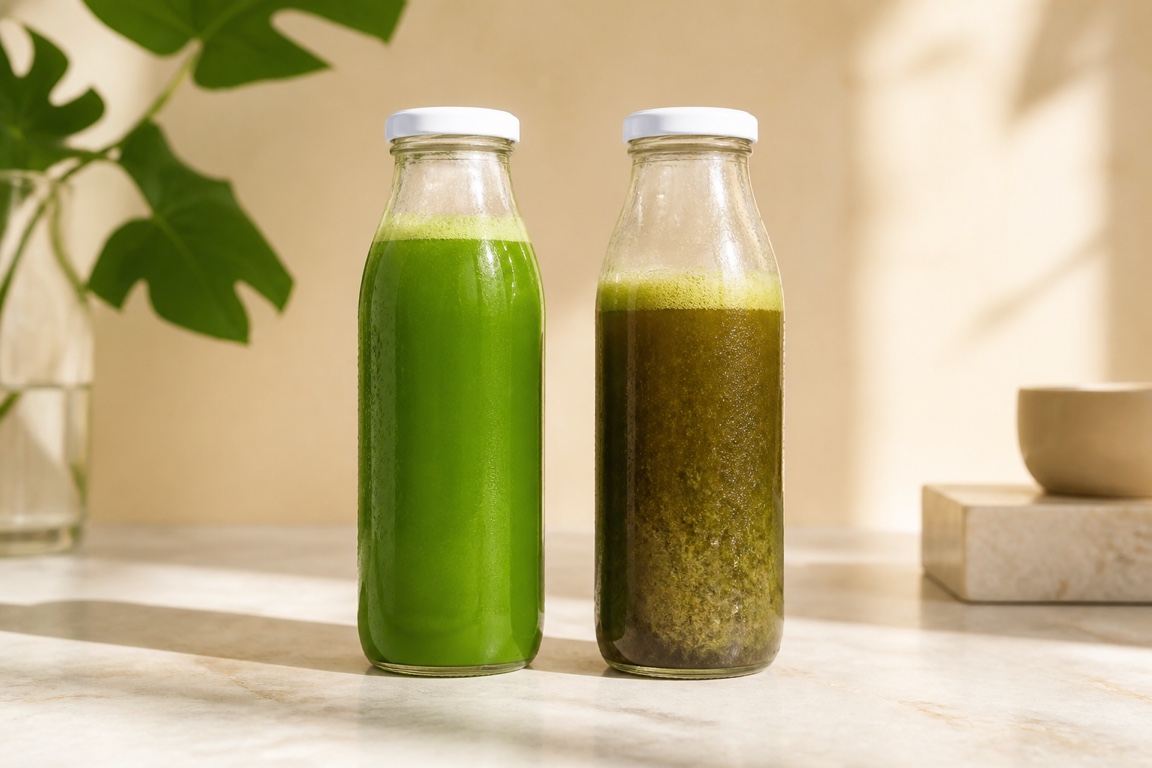
| Look | Gentle settling into layers; slight color softening that stirs back together. | Dramatic color change, haze or slime, any visible growth, or a bloated, pressurized container. |
| Smell | A clean, fresh, vegetal or fruity aroma that matches the produce. | A sour, yeasty, fermented, or alcohol-like smell, or anything sharply unpleasant. |
| Texture | Natural separation a shake recombines; light sediment at the bottom. | Unexpected fizz, thickening, sliminess, or pressure when opening the cap. |
Use these cues alongside a conservative drink-by window. Sensory checks cannot prove safety, so discard when storage history is uncertain or anything seems off.
Why fizzy or carbonated juice means discard
Of all the cues, fizz is the one to take most seriously. Fresh juice should be still. When a bottle hisses, builds pressure, or shows unexpected bubbling, fermentation may have started, and the bottle should be discarded without tasting it.
Do not deliberately open a swollen or pressurized bottle to smell or sample it. The container is already a reason to discard the contents. Unexpected gas in a juice that should be still is not something to correct with dilution, citrus, or a flavor-rescue tool.
- A hiss or pop when you open the cap.
- Visible bubbles rising in a juice that should be still.
- A bloated, swollen, or pressurized bottle.
- A yeasty, sour, or alcohol-like smell paired with any fizz.
Is separation normal? Settling versus spoilage
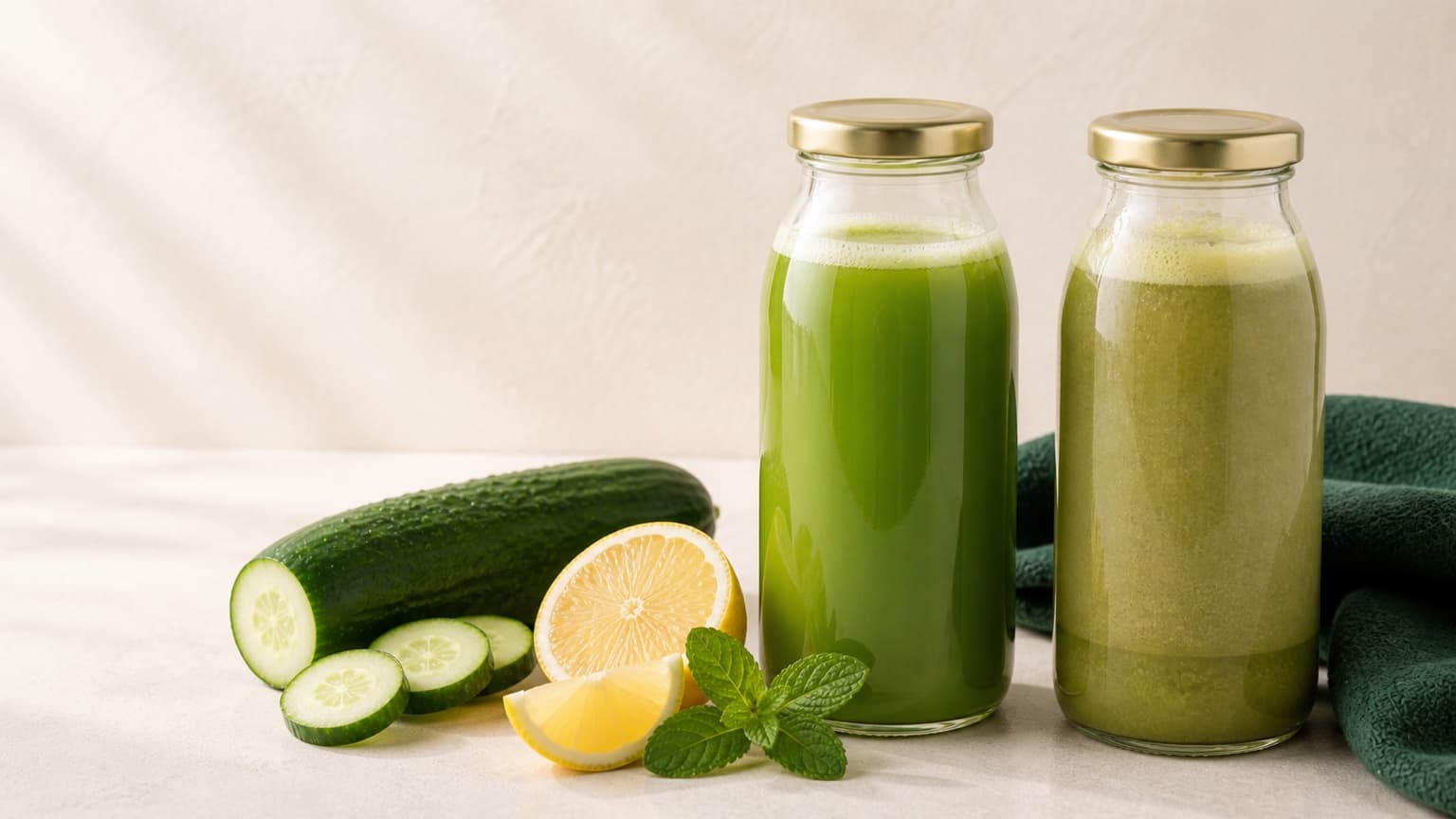
Raw juice can naturally settle because heavier particles drift down while lighter liquid rises. A shake may recombine those layers, but that quality change alone cannot confirm that a bottle is safe.
Judge the full context instead: storage time and temperature, container condition, leakage, swelling, unexpected pressure, mold, a sour or yeasty smell, haze, or slime. Normal-looking separation does not cancel a failed storage check or another discard cue.
How spoilage differs by blend
Recipe storage labels such as same day, 24–36 hours, and 24–48 hours are quality-planning windows used on this site, not validated safety limits. They do not measure contamination and cannot override unsafe time or temperature history.
Green color fading or root-juice color persisting tells you little about microbial safety. Apply the same handling rules to every blend. Keep a written pressed time and check the refrigerator temperature rather than using ingredient type to justify keeping an uncertain bottle.
When in doubt, throw it out
There is no prize for finishing a questionable bottle. Raw juice is inexpensive to remake and not worth second-guessing, so when the cues are ambiguous and you are genuinely unsure, the safe move is to discard it. Spoiled food can carry risk, and a borderline juice is not the place to test your luck.
This guide is general education and not medical advice, and it is deliberately conservative for that reason. For more on handling raw juice safely at home, see the raw juice safety hub, which covers clean handling, who should be especially cautious, and why home juice has no processing step to fall back on.
Prevent it next time: storage habits that help
Keep storage simple: use clean containers, chill promptly, keep the refrigerator at or below 40°F (4°C), and label the pressed time. FDA’s general perishable-food guidance sets an outer limit of two hours unrefrigerated, or one hour above 90°F; these are discard limits, not suggested countertop storage times.
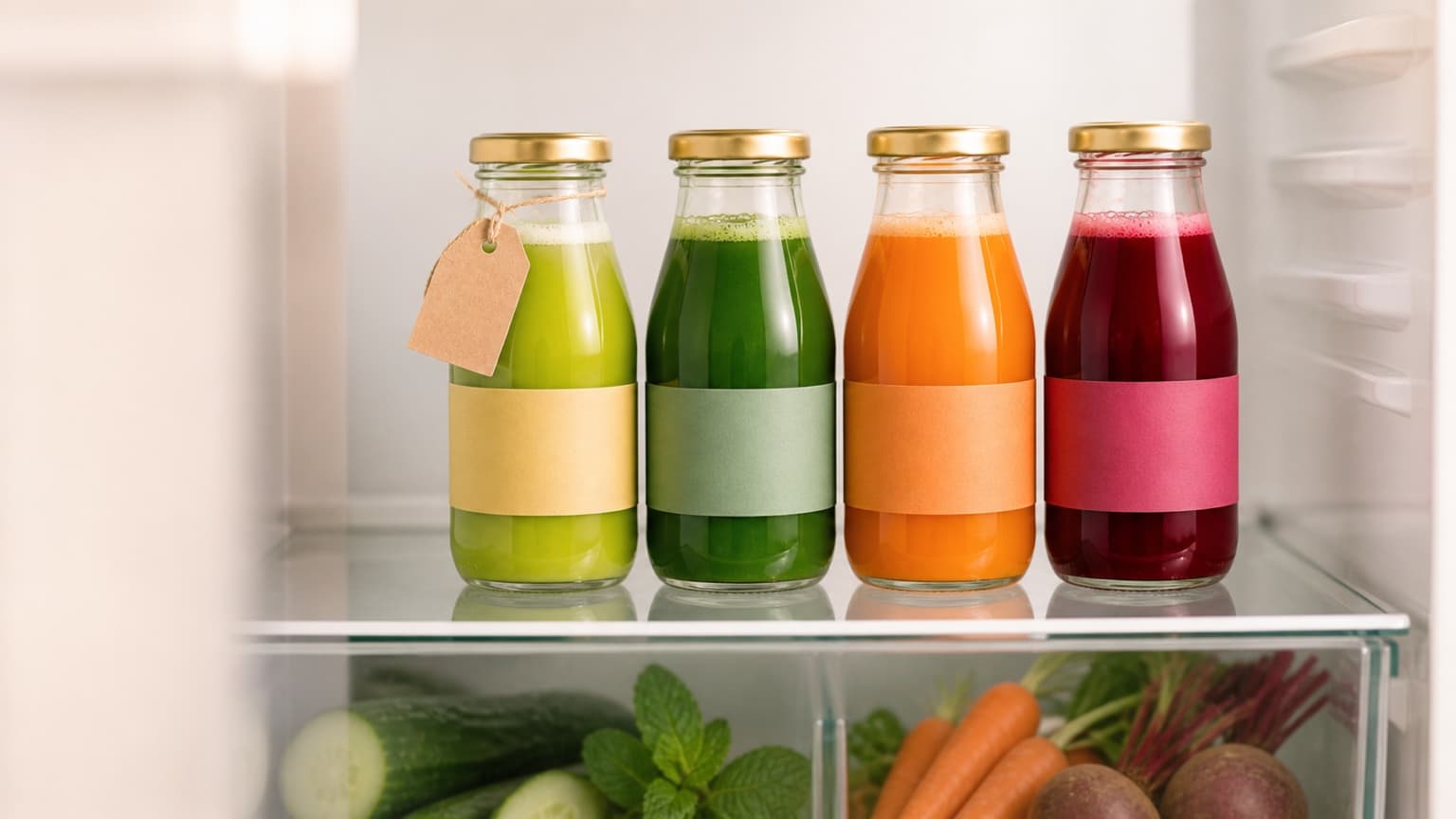
Bottle into clean, airtight containers, fill them close to the top, refrigerate within minutes, and label each one with the recipe and time so the oldest gets used first. The storage and bottle-cleaning guides walk through the full routine, and a printable label keeps the fridge honest about what to drink next.
- Refrigerate within minutes of pressing, not after the cleanup is done.
- Fill containers near the top to cut down on flavor-dulling air.
- Label every bottle with the recipe and prep time.
- Drink delicate greens first and arrange bottles oldest to newest.
Frequently asked questions
What does bad juice smell like?
Spoiled juice may smell sour, yeasty, fermented, or faintly alcohol-like, a sharp departure from the clean, vegetal, or fruity aroma of a fresh blend. If the smell makes you hesitate, discard the bottle without tasting it. Smell can identify a reason to discard, but a normal smell cannot prove safety.
Is fizzy juice safe to drink?
No — treat fizz as a stop sign. Fresh juice should be still, so bubbling, a hiss when you open the cap, or unexpected carbonation may mean fermentation has begun. Discard the bottle without tasting it. A bloated or pressurized container is the same warning.
Can bad juice make you sick?
Untreated juice can contain harmful bacteria, and contamination may not change its appearance or smell. Discard juice with uncertain storage history or any clear spoilage cue, and never taste it to test safety. This is general education, not medical advice.
Is it normal for fresh juice to separate?
Raw juice can settle because heavier particles move to the bottom, and a shake may recombine the layers. That can be a normal quality change, but appearance alone cannot confirm safety. Discard it if storage history is uncertain or separation comes with swelling, leakage, unexpected pressure, mold, a sour smell, haze, or slime.
How fast does juice go bad at room temperature?
Raw juice is perishable, so refrigerate it promptly rather than leaving it out. USDA guidance says perishable food should be refrigerated within two hours, or within one hour when the temperature is above 90°F (32°C). If that limit was exceeded or the timing is uncertain, discard the juice rather than tasting it.
How do you know if cold-pressed juice is off?
Check storage history first, then look for a bloated container, leakage, mold, unexpected haze or color change, and smell for sour or yeasty notes. Unexpected carbonation or sliminess also means discard. Normal settling may be a quality change, but it does not prove safety. Never taste juice to test whether it is safe.
Keep exploring
Related ingredients
Recipes to try
Planning tools & products
This website provides general recipe and nutrition education only and is not medical advice. Calories are estimates. Fresh raw juice is perishable — refrigerate promptly and discard questionable juice. Use juices as part of a normal eating routine, not as a cleanse, fast, or meal-replacement program.