Batch prep guide
Batch Juicing: How Many Days Can You Realistically Prep?
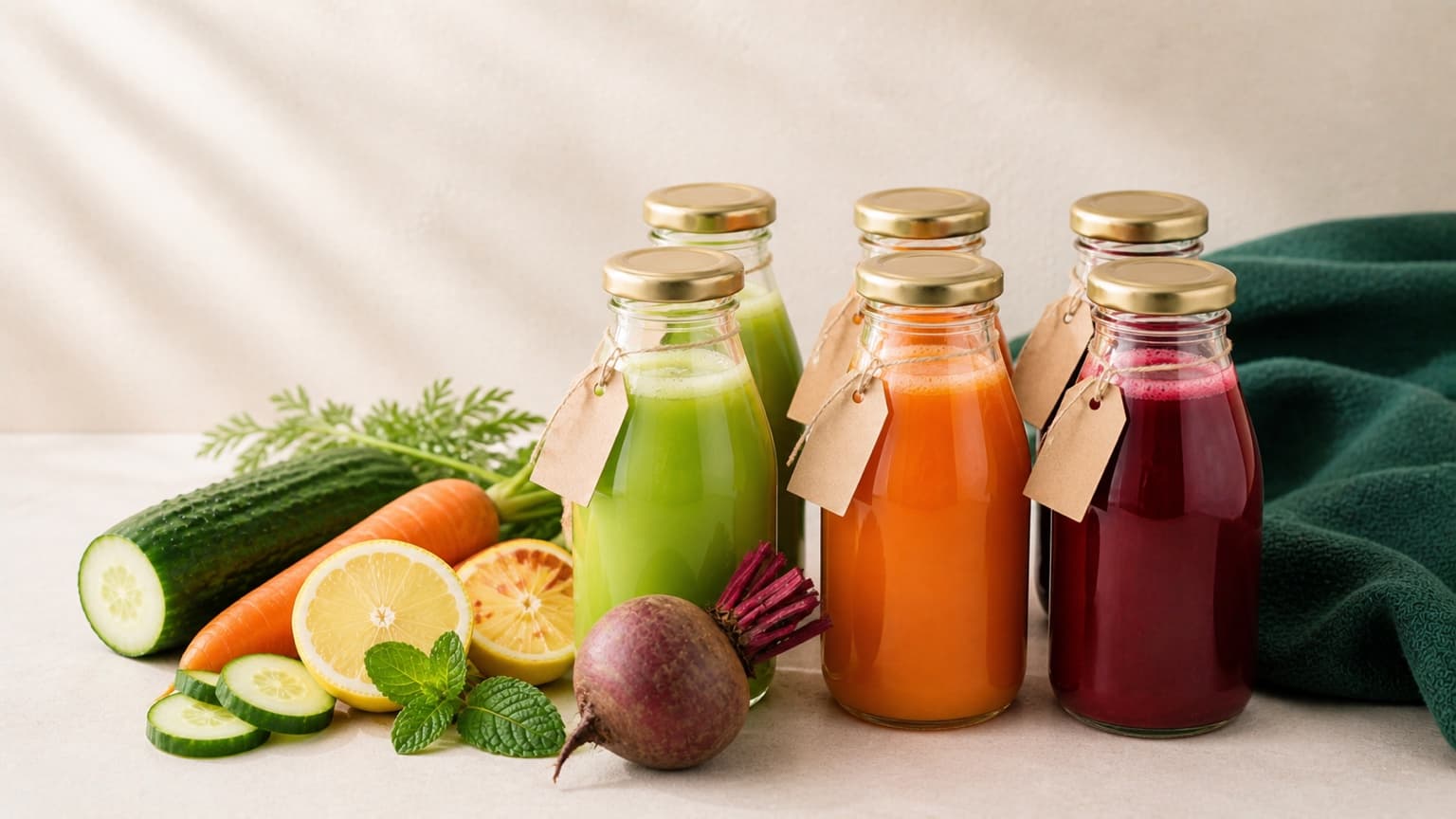
Batch juicing works best in 2 to 3 day cycles, not a full week — fresh raw juice is too perishable for seven fridge days. Press once, bottle four to six servings, drink the most delicate blends first, and press again midweek. This guide covers the workflow, the bottling details, a realistic 3-day plan, and what to do when you genuinely need a week covered.
On this page
How many days of juice can you batch at once?
The honest answer: a realistic batch is 2 to 3 days of juice, not a week. Fresh cold-pressed juice is raw and unpasteurized, so the conservative storage windows used across this site — same day for delicate greens, roughly 24 to 36 or 24 to 48 hours for sturdier blends — set the ceiling on making juice ahead of time, no matter how efficient the session is.
That does not make batching pointless. It just changes the rhythm: two or three short pressing sessions a week instead of one giant Sunday production. Each session stocks the fridge for the next couple of days, while the produce for later sessions waits whole in the crisper, where it keeps far better than finished juice ever will. The shorter cycle also keeps every bottle closer to its best flavor, which is what makes the habit survive past the first enthusiastic week.
The case for batching: one cleanup, multiple bottles
The math that sold me on batch juicing is cleanup time. In my kitchen, breaking down and washing the juicer — auger, screen, pulp bin, the lot — takes about 12 to 15 minutes whether I pressed one bottle or six. Each extra bottle only adds a few minutes of feeding the chute, so two bottles cost me roughly 25 minutes all-in while six cost around 40. The per-bottle time falls fast.
Batching also rescues busy mornings: open the fridge, grab a labeled bottle, go. The catch is sizing the batch to what you will actually drink inside a conservative storage window — which is exactly why every plan in this guide stops at three days. One more habit that pays off: stage your empty bottles, caps, labels, and funnel on the counter before pressing, because hunting for a lid while finished juice sits out in the jug undoes the efficiency you just earned.
Produce prep day: a batch workflow that flows
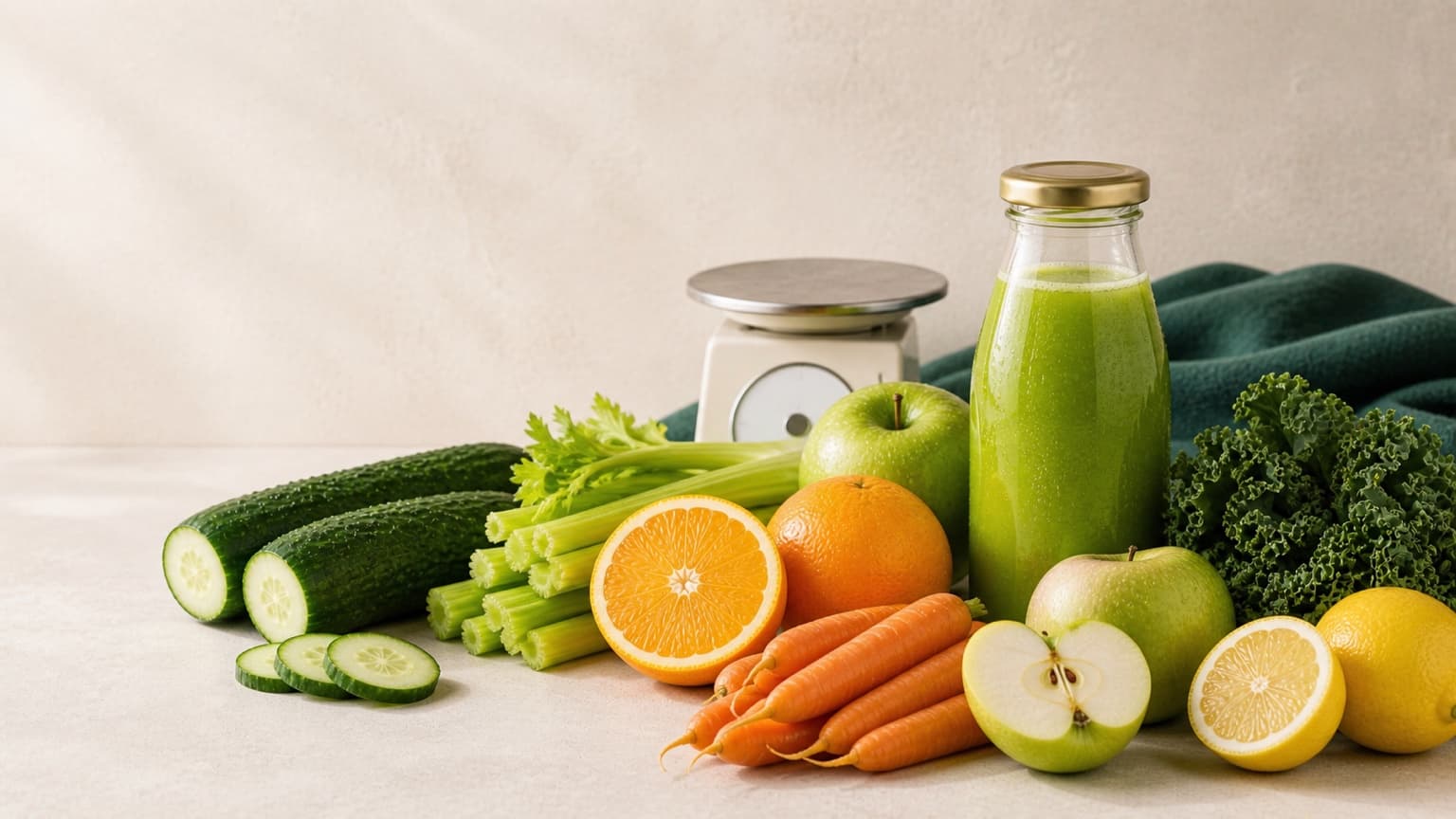
A smooth batch session is mostly about sequencing. Do all the washing, trimming, and chopping before the juicer comes out, and group the prepped produce by recipe in bowls or trays so pressing becomes a simple assembly line.
Press your palest, mildest blend first and your strongest last. Beet and turmeric tint everything they touch, and a quick water rinse through the machine between recipes keeps a cucumber blend from tasting like the ginger bottle before it.
- Wash, trim, and chop everything first, grouped by recipe.
- Press mild, pale blends before strong or deeply colored ones.
- Bottle and cap each blend as it finishes instead of letting juice sit out in the jug.
- Run a splash of water through the juicer between recipes as a quick rinse.
- Clean the machine once, at the very end of the session.
Bottling for the fridge: fill to the top, then label
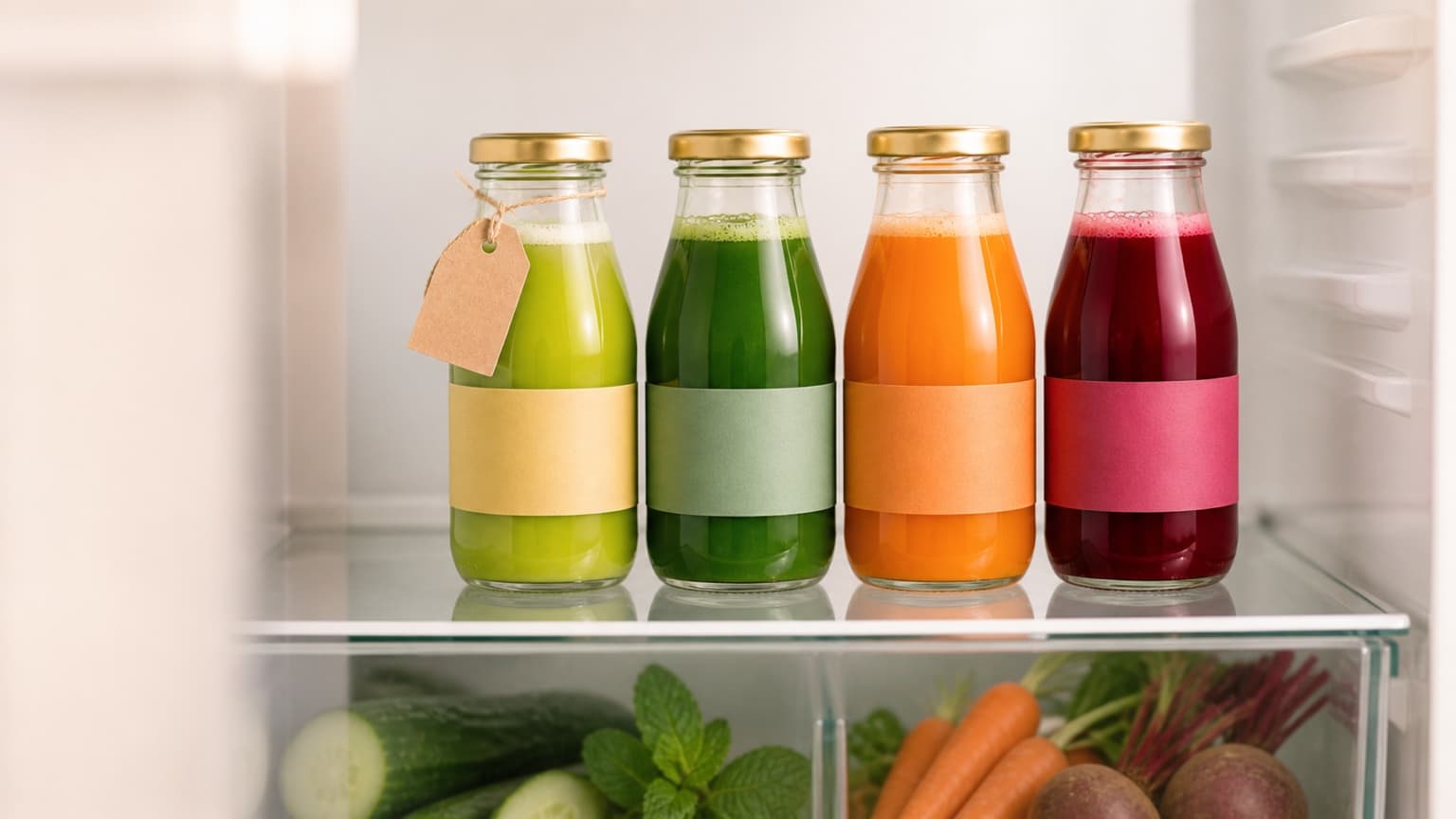
Air is the quiet enemy of a batch. Fill each bottle as close to the top as practical so there is minimal headspace, cap it tightly, and move it straight into the coldest part of the fridge — not the door. A nearly full, well-sealed bottle simply holds its flavor and color better than a half-full one.
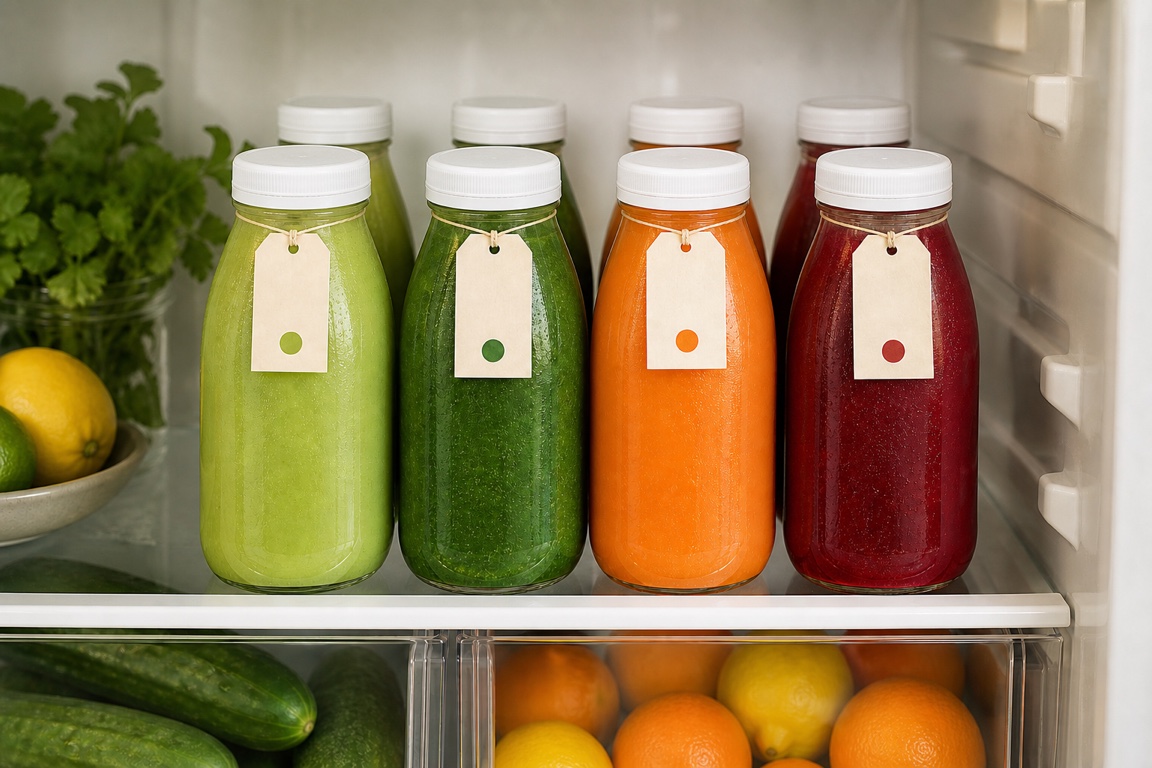
Then label, because memory fails by day two: was the dark red bottle pressed yesterday morning or the day before? Contents plus pressed date and time answers it instantly, and the free storage label builder turns those fields into a clean printable label in seconds.
- Blend name or the two or three main ingredients.
- Date and time pressed.
- A drink-by note that matches the recipe's storage window.
- A drink-order number so the oldest bottle stands at the front of the shelf.
A realistic 3-day cold-press batch plan
Here is the two-bottles-a-day pattern I use most: press everything on Day 1 in the early evening, then drink through Day 3 in order of delicacy. Greens go first while they are at their best, and the sturdy root blends — which hold their flavor longest in my fridge — anchor the final day.
The table reads as one pressing session on a Sunday around 6 pm. Shift the times to match your own schedule; the order is the part that matters.
| Day | Bottle | Blend style | Drink-by note | Label text |
|---|---|---|---|---|
| Day 1 | Bottle 1 | Delicate green (spinach, cucumber) | Same day — greens fade fastest | Green blend — Sun 6 pm — drink today |
| Day 1 | Bottle 2 | Light cucumber-citrus | Same day, or first thing Day 2 | Citrus cooler — Sun 6 pm — drink first |
| Day 2 | Bottle 3 | Carrot-apple | Within 24 to 36 hours of pressing | Carrot apple — Sun 6 pm — drink by Mon night |
| Day 2 | Bottle 4 | Citrus-root mix | Within 24 to 36 hours of pressing | Orange carrot — Sun 6 pm — drink by Mon night |
| Day 3 | Bottle 5 | Sturdy root (beet, carrot) | Within 24 to 48 hours of pressing | Beet root — Sun 6 pm — drink by Tue evening |
| Day 3 | Bottle 6 | Apple-beet-ginger | Within 24 to 48 hours of pressing | Apple beet ginger — Sun 6 pm — drink by Tue evening |
Drink-by notes are practical planning ranges, not safety guarantees. Discard juice when storage history or freshness is questionable; do not taste-test it to decide.
Can you prep a full week of juice?
Not in the fridge — for raw, unpasteurized juice the honest answer is no. A Friday bottle from a Sunday session would sit far outside the conservative windows this site uses, and the decline is visible well before that: in my fridge, day-two green juice already pours darker, tastes flatter, and separates faster than it did the morning after pressing.
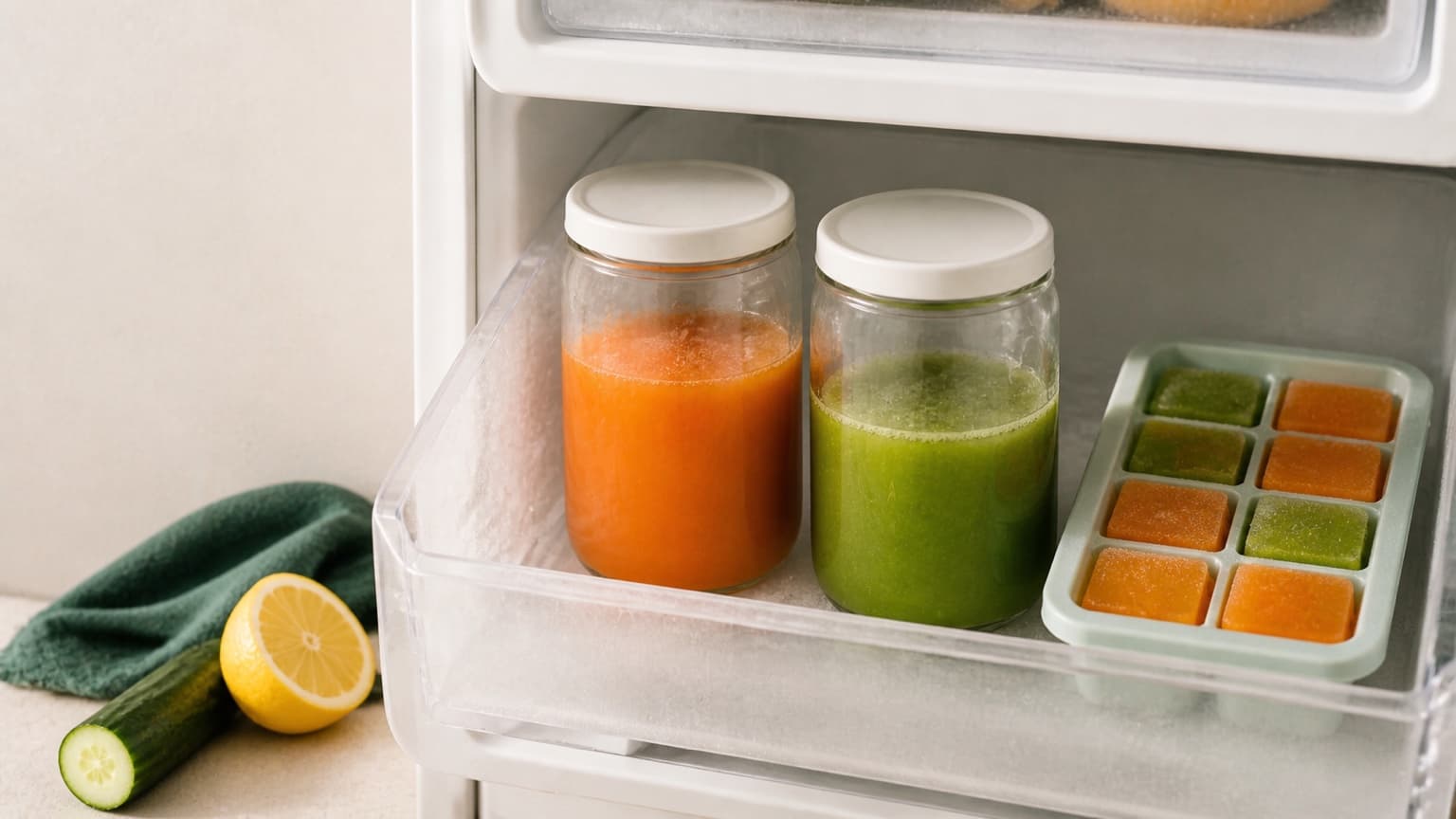
If a full week is genuinely the goal, split the batch instead of stretching it. Refrigerate the first two days of bottles, and freeze the rest immediately in freezer-safe containers with headspace for expansion. Thawed juice trades a little brightness and texture for convenience — our freezing guide covers containers, thawing, and what to expect. Sturdy root-forward blends tend to come back from the freezer with the least complaint, which is one more reason greens belong at the front of the fridge plan rather than the back of the freezer.
Batch-day grocery planning
Batch shopping is multiplication plus merging. Six 16 ounce bottles is roughly 96 ounces of juice, which at an estimated 1.5 to 2 pounds of produce per bottle means buying somewhere around 9 to 12 pounds of fruit and veg for one session — see our produce planning guide for per-ingredient yield estimates.
Pick the two or three recipes first, multiply each ingredient line by the number of bottles, then merge the overlaps: the cucumber from the green blend and the cucumber from the citrus cooler become one line at the store. The grocery list generator does this combining automatically, and buying slightly more than the math says covers the inevitable soft carrot or undersized apple.
- Pick 2–3 recipes, then multiply each ingredient line by the bottle count.
- Merge overlapping ingredients into single shopping lines before you go.
- Estimate 1.5–2 lb of produce per 16 oz bottle as the budget baseline.
- Buy a small margin of extra produce to cover soft or undersized pieces.
Frequently asked questions
Can I make juice for the whole week?
Not as seven fridge days of raw juice — that sits well past the conservative storage windows for unpasteurized juice. A practical week is two or three short pressing sessions, or one session where you refrigerate the first two days of bottles and freeze the rest in freezer-safe containers with headspace.
How many days of juice can I batch?
Plan around 2 to 3 days per pressing session. Delicate green blends are best the same day, while sturdier carrot, apple, beet, and citrus blends are commonly planned inside roughly 24 to 48 hours when bottled full, capped tightly, and kept cold. Treat these as planning ranges, not guarantees.
Should I batch green juice?
Greens are the most delicate thing you can press — spinach and kale blends lose color and brightness fastest in the fridge. Batch your mild, sturdy blends instead, and either press green juice fresh on the day you drink it or schedule green bottles as the very first ones out of any batch.
How do I keep batch juice organized?
Label every bottle with contents, pressed date and time, and a drink-by note, then line bottles up in drink order with the oldest at the front of the shelf. Keep them in the coldest part of the fridge rather than the door, and use a label template tool to make the habit fast enough to stick.
Is it cheaper to batch juice?
Batching saves more time than money, since produce costs the same per pound either way. The savings come indirectly: buying whole produce in larger amounts, wasting less of it, and skipping store-bought bottles on busy days. One cleanup spread across several bottles is the real efficiency win.
Keep exploring
Related ingredients
Recipes to try
Planning tools & products
This website provides general recipe and nutrition education only and is not medical advice. Calories are estimates. Fresh raw juice is perishable — refrigerate promptly and discard questionable juice. Use juices as part of a normal eating routine, not as a cleanse, fast, or meal-replacement program.