Yield planning
How Much Fruit and Veg Do You Need to Make Juice?
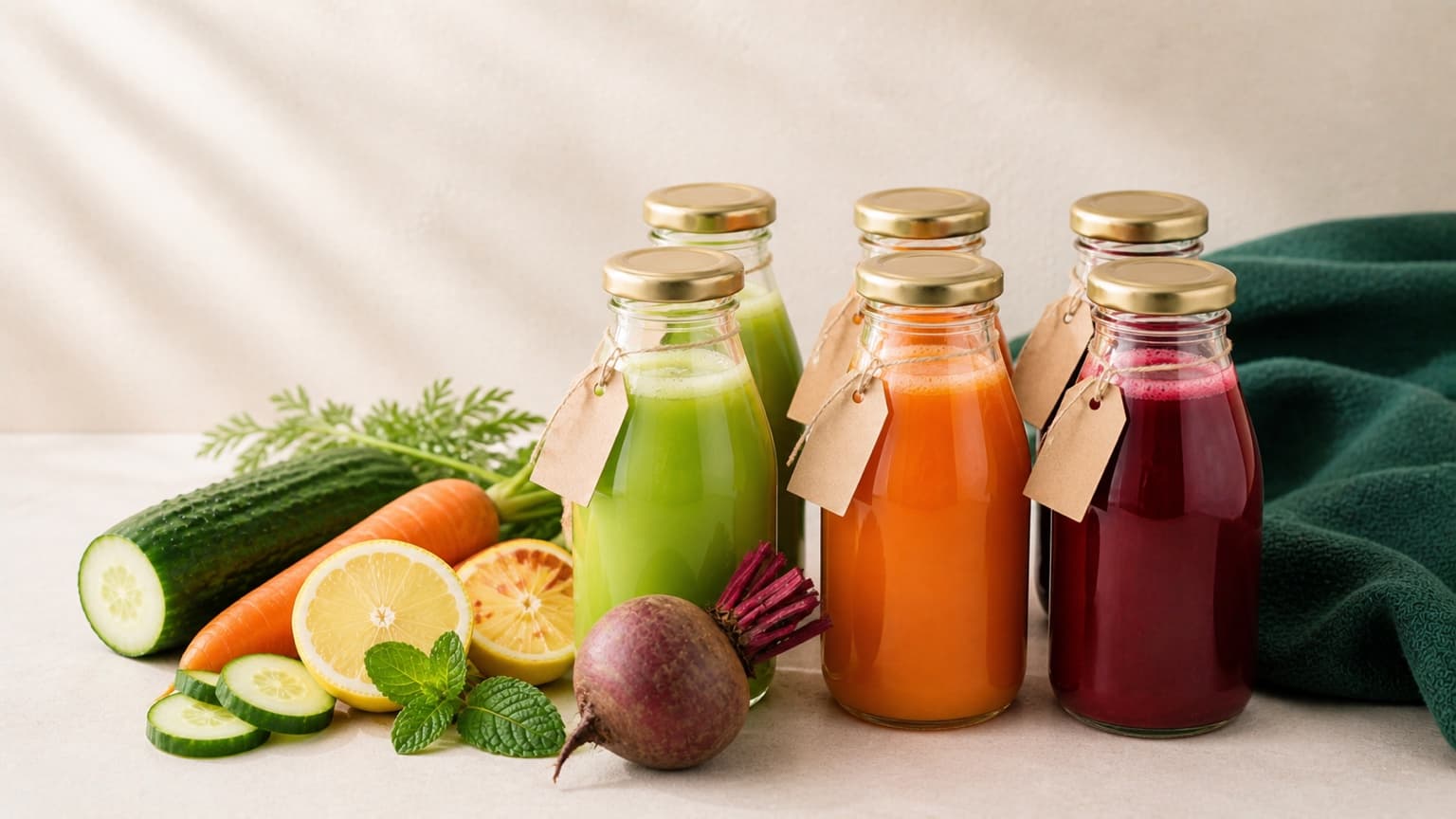
Wondering how much fruit and veg to make juice? As a rough planning rule, about one pound of fresh produce yields 8 to 12 ounces of cold-pressed juice, so a 16 ounce bottle usually takes 1.5 to 2 pounds. High-water ingredients like cucumber and watermelon land near the top of that range, while leafy greens land near the bottom. Treat every number here as an estimate, not a promise.
On this page
How much fruit and veg does it take to make juice?
Here is the planning rule I use in my own kitchen: roughly one pound of fruit and veg makes an estimated 8 to 12 ounces of cold-pressed juice. That means a standard 16 ounce bottle usually takes somewhere between one and a half and two pounds of produce, and a small 8 ounce glass takes close to a pound.
The range is deliberately wide because real yields swing with the machine, the produce, and the recipe. A pound of watery cucumber or orange presses out near the top of the range, while a pound of kale or spinach gives far less liquid. Use the rule to budget your shopping trip, then refine it after a week of pressing on your own juicer — your numbers will quickly become more useful than anyone's chart.
Why juice yield per pound of produce varies
Juice yield per pound of produce is not a fixed number, and three things move it more than anything else. The machine comes first: slow augers typically squeeze pulp drier than fast centrifugal juicers, so the same bag of carrots can give noticeably different amounts on two different machines.
Freshness matters almost as much. Produce loses water from the moment it is picked, and a rubbery week-old carrot simply has less juice to give than a firm one. Water content sets the baseline: most produce is mostly water, but a wedge of watermelon is closer to a glass of juice than a beet will ever be.
- Juicer type: slow press augers usually leave drier pulp than centrifugal spinners.
- Freshness: firm, recently bought produce out-yields anything that has gone soft or bendy.
- Water content: cucumber, melon, and citrus carry far more free liquid than roots and leaves.
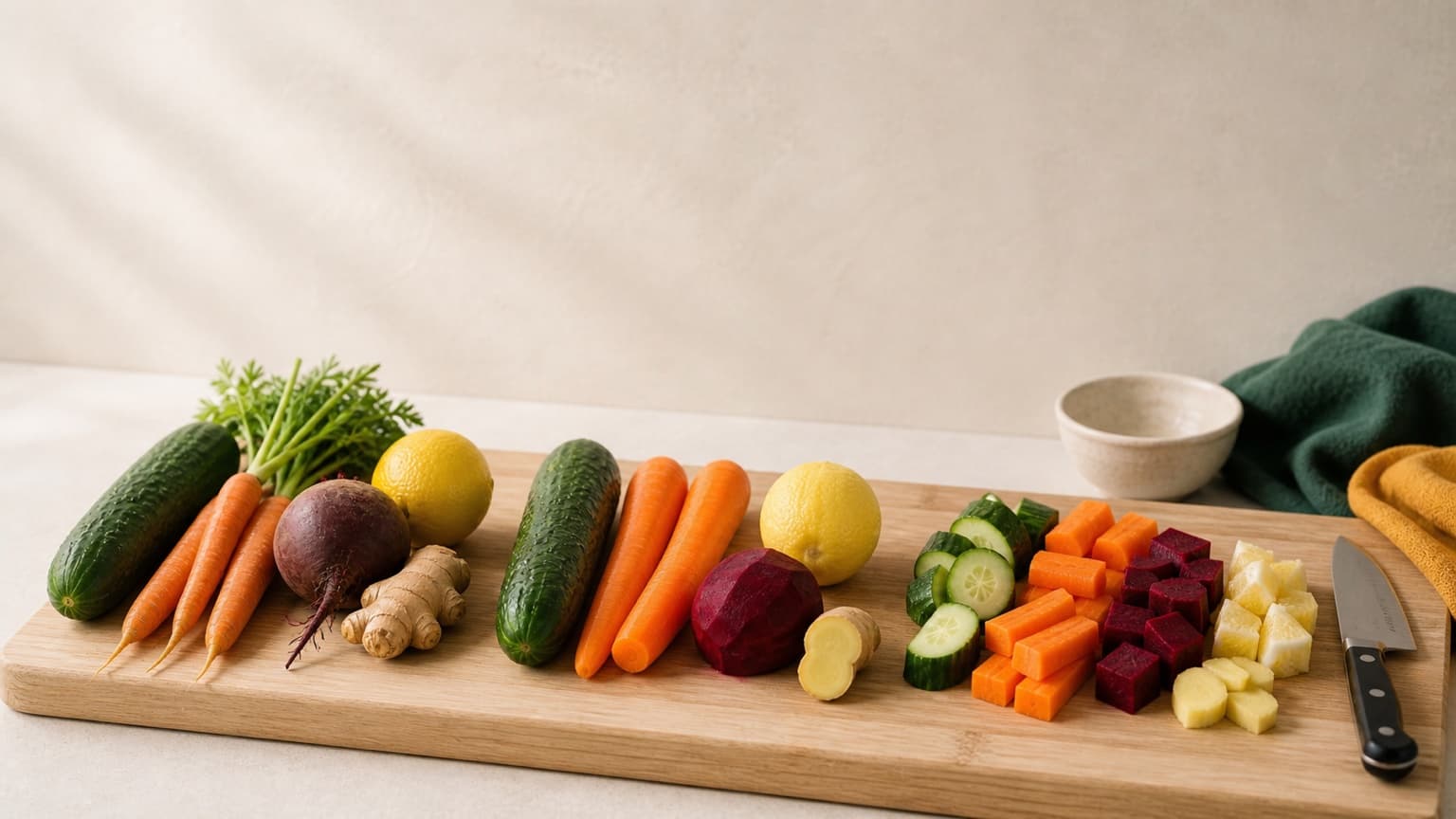
- Prep: stems, peels, and trim that never enter the chute never become juice — plan weights accordingly.
How much juice does each ingredient make?
The table below is the planning chart I wish I had when I started. The ranges come from pressing these ingredients repeatedly on a home auger juicer, rounded into honest estimates rather than precise promises.
Most of these ingredients have their own pages in our library with prep and flavor notes — cucumber, celery, carrot, green apple, orange, lemon, kale, spinach, beet, and watermelon are all covered if you want to go deeper on any single one.
| Ingredient | Typical unit | Estimated yield | Notes |
|---|---|---|---|
| Cucumber | 1 large | 6–8 oz | A high-water base — one cucumber is nearly half a bottle |
| Celery | 1 bunch (9–10 stalks) | 8–12 oz | Yields well when stalks are crisp, much less once they bend |
| Carrot | 1 medium | 1.5–2.5 oz | Plan roughly 3–4 carrots per cup of juice |
| Apple | 1 medium | 3–5 oz | Easy volume and sweetness; green apple keeps blends crisper |
| Orange | 1 medium | 2.5–4 oz | Expect 2–3 oranges for one small glass |
| Lemon | 1 medium | 1–2 oz | An accent, not a base — peel before pressing |
| Kale | 1 bunch | 3–5 oz | Leaves press down to far less than they look |
| Spinach | 2 packed cups | 1.5–3 oz | Adds flavor and color more than volume |
| Beet | 1 medium | 2–4 oz | Dense root; its earthy flavor goes a long way |
| Watermelon | 1 wedge (about 1 lb) | 9–12 oz | The highest-yield ingredient on this list by far |
Estimates vary by juicer, produce size, and freshness — practical planning ranges, not promises.
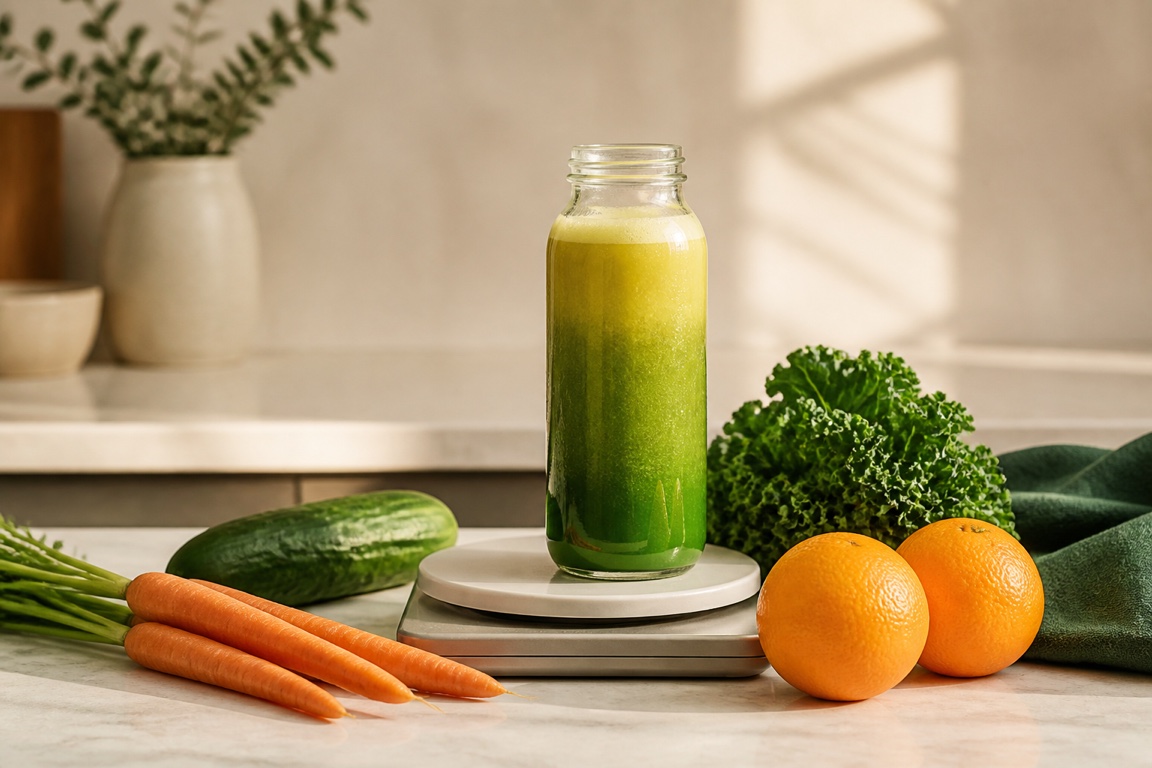
How much produce for 16 oz of juice? Two worked examples
Here is how the chart works in practice. For a cucumber-forward green bottle, I use one large cucumber (6–8 oz), half a bunch of celery (4–6 oz), two packed cups of spinach (1.5–3 oz), and half a lemon (about 1 oz). On my juicer that lands in the 12 to 17 ounce range, so a small apple goes in whenever the produce is running on the dry side.
For a carrot-orange bottle, my count is usually four to five medium carrots plus two oranges, which presses out at an estimated 12 to 15 ounces, topped up to 16 with a chunk of cucumber. If you have ever searched how many carrots to make a cup of juice, my kitchen answer is three to four medium carrots — and how many oranges for a glass of juice usually works out to two or three, depending on their size and your squeeze.
Scaling down works the same way. For a single 8 ounce glass, halve everything and lean on one high-yield ingredient — half a cucumber plus an orange covers most of a glass on its own. Scaling up for guests, multiply a bottle plan you trust rather than improvising at the chute.
How to plan produce for a week of juicing
A week of one 16 ounce bottle per day works out to roughly 10 to 14 pounds of mixed produce — heavier on cucumber, apple, and carrot, lighter on lemons and greens by weight. Rather than estimating at the store, pick your recipes first and let the grocery list generator merge and group the amounts for you.
Remember that a week of produce is not the same as a week of juice. Fresh raw juice is perishable, so plan to press every two to three days and keep the rest of the produce whole in the crisper between sessions — whole fruit and veg holds its water far better than juice holds its freshness. Our batch prep guide covers that pressing rhythm in detail.
- Choose 3–4 recipes you will actually repeat, then multiply ingredients by servings.
- Build one combined grocery list so overlapping ingredients merge into single line items.
- Buy firm, whole produce and refrigerate it well — yield starts at the store, not the juicer.
- Use 1.5–2 lb of produce per 16 oz bottle as your budget baseline, then adjust to your machine.
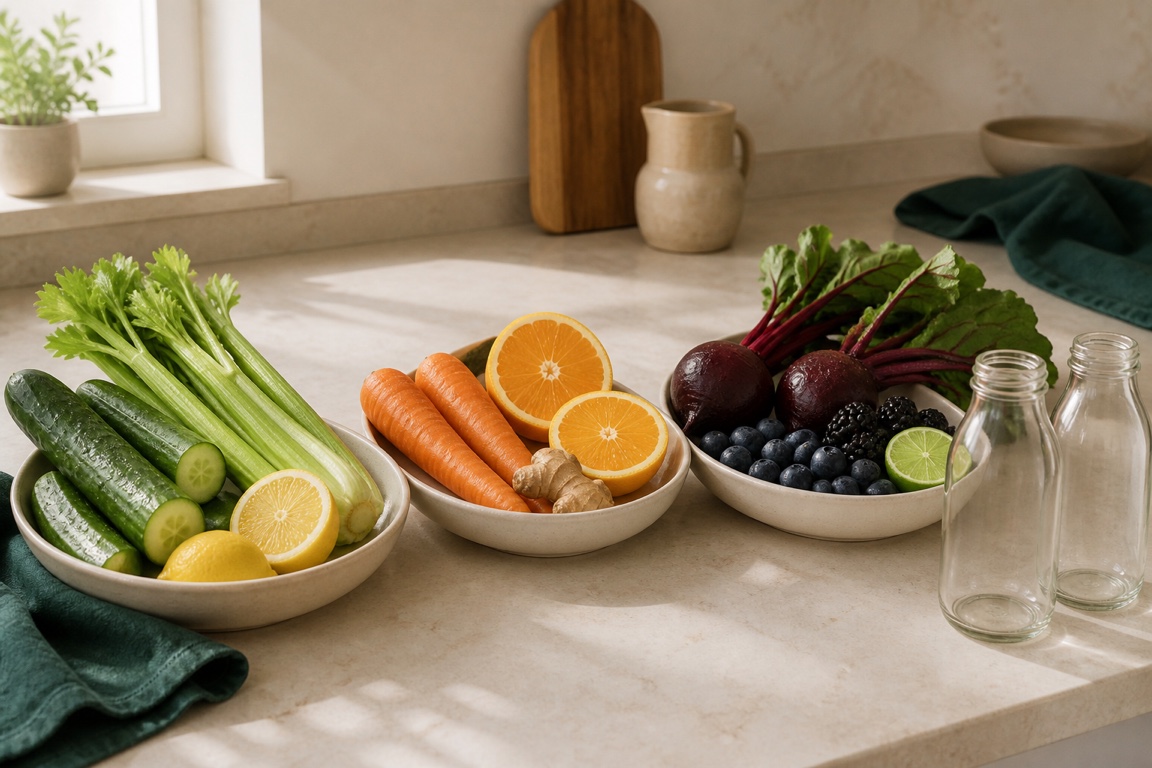
How to waste less of the produce you buy
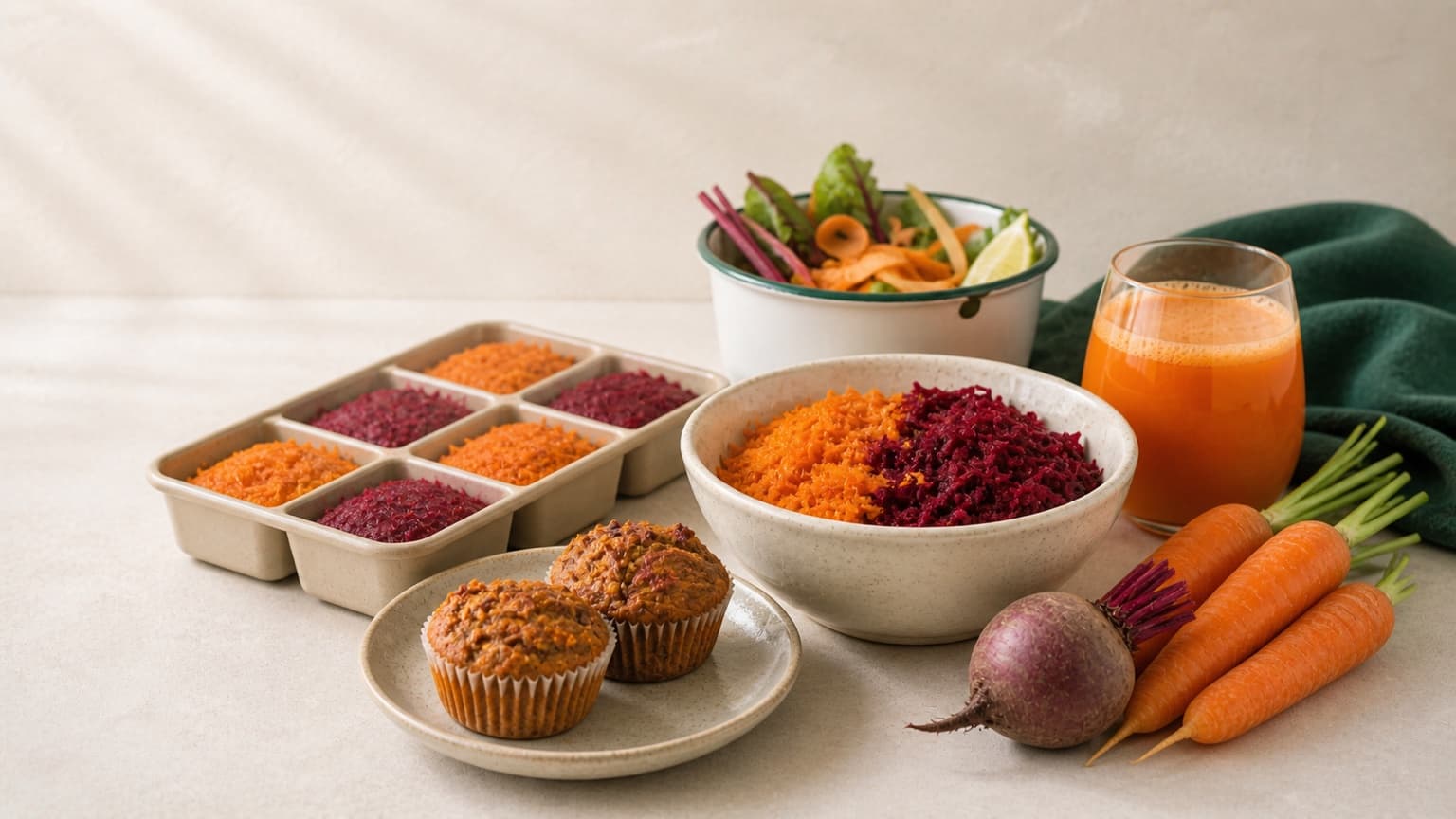
Some loss is built into juicing. Juicing removes much of the fiber from whole produce, and that fiber leaves in the pulp — so the goal is not zero waste, it is knowing your numbers and putting the byproduct to work. Our pulp guide covers same-day kitchen uses, freezing, and composting.
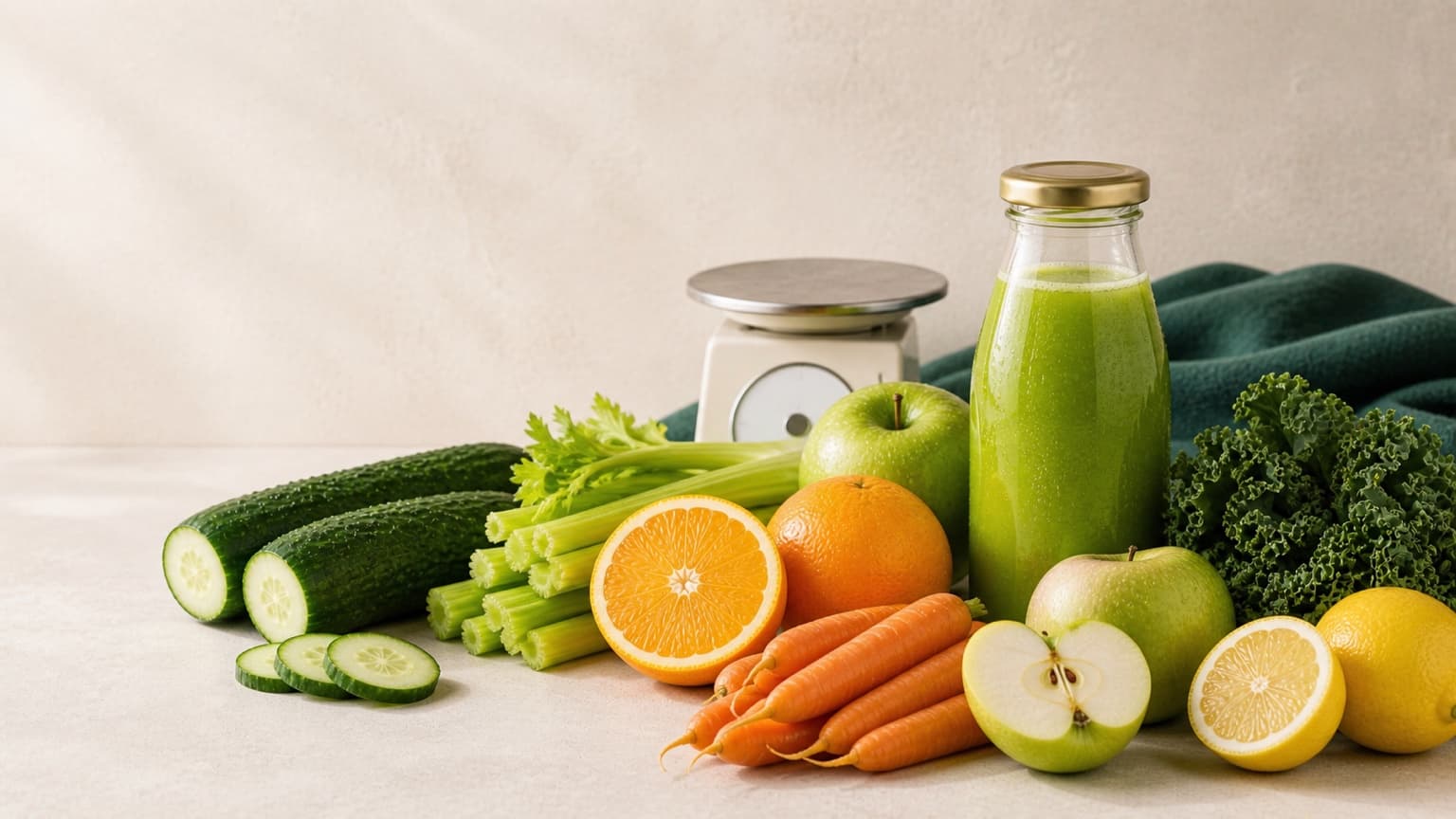
The habit that helped me most was weighing for a week: produce in, ounces out, on a cheap kitchen scale. It showed me my juicer pressed celery far better than kale, so I stopped over-buying greens. And when pulp comes out visibly wet, I run it through a second time — on my machine a re-press of wet celery pulp adds another half ounce or so per bottle, which quietly adds up across a batch. Even the trim has planning value — celery bases and kale stems can ride along in the broth bag with the pulp.
Frequently asked questions
How many oranges for 16 oz of juice?
Plan on roughly four to six medium oranges for a full 16 ounce bottle of straight orange juice, since one orange usually presses out at an estimated 2.5 to 4 ounces. In mixed recipes, most people use two to three oranges and let cucumber or apple supply the remaining volume. Sizes vary, so treat this as a planning range.
How much juice does one cucumber make?
One large cucumber usually gives an estimated 6 to 8 ounces of juice on a home cold-press juicer — close to half a 16 ounce bottle. Smaller or older cucumbers give less, and firm, fresh ones give more. That high, reliable yield is exactly why cucumber is such a common base for green blends.
How many pounds of produce per quart?
A quart is 32 ounces, so using the rough rule of one pound of produce per 8 to 12 ounces of juice, plan on an estimated 3 to 4 pounds of mixed produce per quart. Lean toward 4 pounds if the recipe is heavy on greens and roots, and toward 3 pounds for watery cucumber or melon blends.
Why does my juicer produce less juice?
The usual culprits are produce that has dried out, a chute fed too fast, or a machine that leaves wet pulp. Try fresher, firmer produce, feed slowly, alternate soft and hard ingredients, and re-press pulp that comes out soggy. If yields stay low even with fresh produce, the juicer itself is probably the limit.
How do I plan produce for a week of juicing?
Pick your recipes first, estimate 1.5 to 2 pounds of produce per 16 ounce bottle, and combine everything into one grocery list. Buy whole produce for the week, but press only every two to three days, because fresh raw juice keeps for a much shorter window than whole fruit and veg does.
Keep exploring
Recipes to try
Planning tools & products
This website provides general recipe and nutrition education only and is not medical advice. Calories are estimates. Fresh raw juice is perishable — refrigerate promptly and discard questionable juice. Use juices as part of a normal eating routine, not as a cleanse, fast, or meal-replacement program.