Maintenance guide
How to Clean Juice Bottles, Caps, and Seals
Clean juice bottles after each use with warm, soapy water, a suitable brush, and a thorough rinse. Remove caps and any seals designed to come apart, then let every part air-dry before storage. Check the manufacturer’s directions before using a dishwasher, heat, or other cleaners: the bottle and lid may need different care.
On this page
How do you clean juice bottles properly?
Rinse after emptying, then wash before reuse. Start by checking the bottle and lid instructions: glass, plastic, stainless steel, coatings, and seals may have different temperature and dishwasher limits. Do not assume a heat-safe bottle means its cap is also heat-safe.
Pay particular attention to the shoulder below a narrow neck, the cap threads, and the channel beneath a removable gasket. These can retain visible residue even when the main bottle looks clear. This is a cleaning checklist, not a report of a timed kitchen test or a validation of microbial safety.
The daily juice bottle wash routine
Set the bottle, cap, and any user-removable seals beside the sink. Rinse away visible juice and wash with dish soap and water at the temperature the manufacturer permits. A preliminary water rinse is not a substitute for washing before the next fill.
Inspect and wash caps with every use. Remove gaskets only if their instructions allow it; do not pry apart sealed components. A normal smell is not proof that cleaning has made a bottle safe. If a part remains dirty, damaged, or persistently odorous, replace it before reusing the bottle.
- Rinse the bottle and cap with water as soon as they are empty, even if the real wash comes later.
- Wash with dish soap and water as directed — bottle, cap, and removable gasket separately.
- Run a brush around the inside of the neck and shoulder where residue collects.
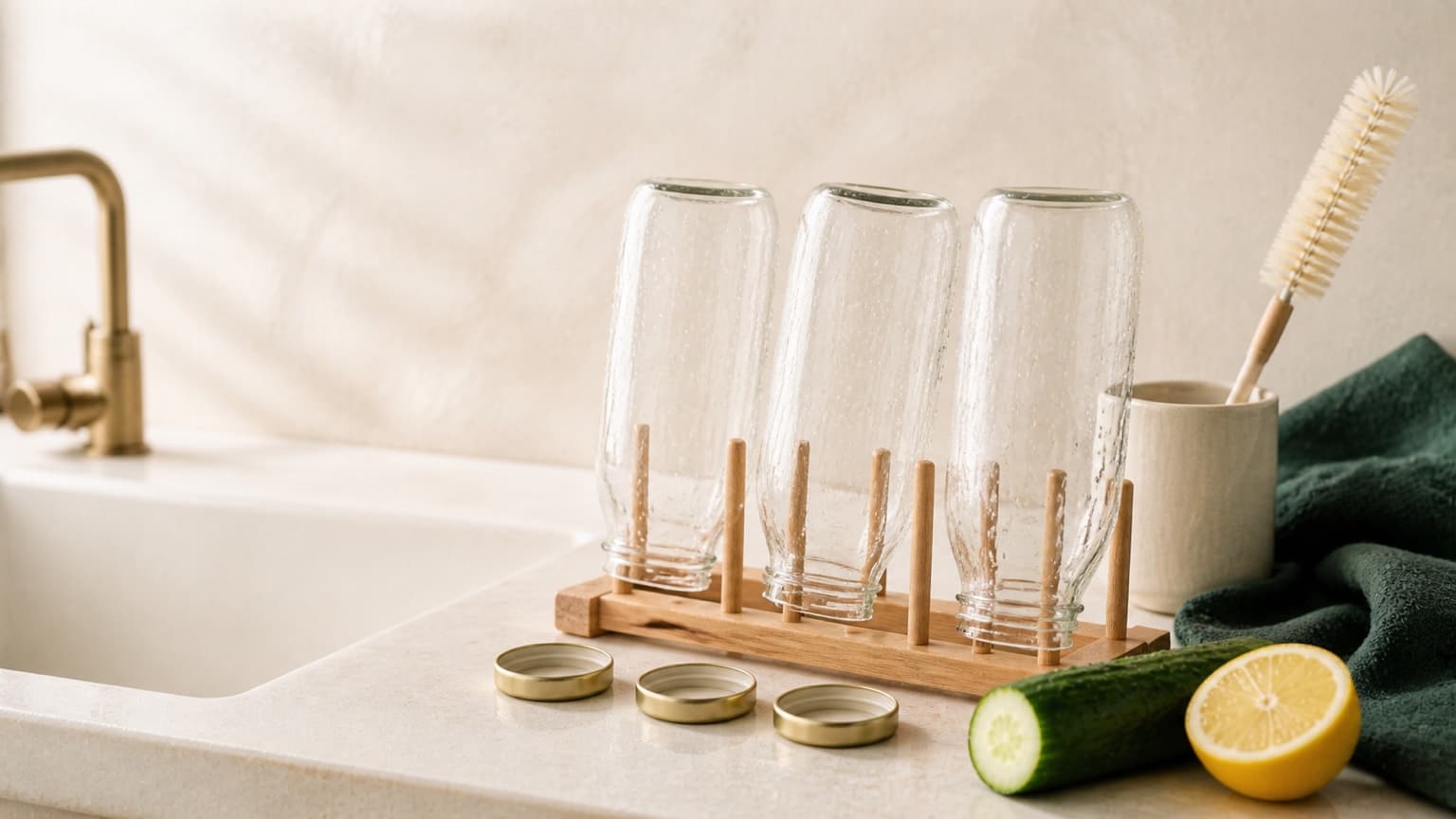
- Rinse until no soap scent remains, then stand the bottle upside down to drain.
Deep cleaning: check the material and the manufacturer
For residue that survives a normal wash, follow the manufacturer’s approved deeper-cleaning method and rinse thoroughly afterward. Vinegar or baking soda may be suggested for certain materials, but neither should be presented as a universal disinfectant or a way to make contaminated juice safe.
The comparison below separates routine washing from optional surface treatments. Never mix cleaning products, and do not add boiling water or abrasive material unless the exact bottle’s instructions permit it.
| Method | Best for | Cautions |
|---|---|---|
| Hot soapy wash | Everyday cleaning right after emptying | Far less effective once juice has dried on — wash promptly |
| Dishwasher | Wide-mouth bottles and caps on a hands-off routine | Check the bottle is dishwasher-safe; jets can miss narrow necks |
| Manufacturer-approved descaling treatment | Mineral film where the maker permits the treatment | Rinse thoroughly afterward and never mix with other cleaners |
| Manufacturer-approved odor treatment | Lingering smells in bottles and plastic lids | Follow material-specific instructions; persistent odor needs further action |
| Bottle brush | Necks, shoulders, and dried-on residue | Replace it once the bristles splay; a worn brush just smears |
Cleaning removes residue; this table does not validate sanitizing or sterilizing. Follow the instructions for the exact bottle, cap, coating, and seal.
Brushes and narrow-neck bottles
Use a bottle brush long enough to reach the base and shoulder without scratching the surface. A small detail brush may help with a drinking spout or cap thread. Clean and dry the brushes too; a dirty brush can reintroduce residue. If you cannot reach an interior surface, choose a container with a wider opening.
Beet and turmeric can leave strong color on some materials. Color alone does not tell you whether a surface is clean or contaminated, so inspect for remaining residue and follow the maker’s stain guidance. Do not scrub harder with an abrasive that might damage plastic, glass, coatings, or seals.
Drying and storage: fully dry before capping
Capping a damp bottle is how musty bottles happen. Trapped moisture in a sealed container is exactly the environment that breeds stale smells, so the rule is simple: nothing gets capped until every part is completely dry.
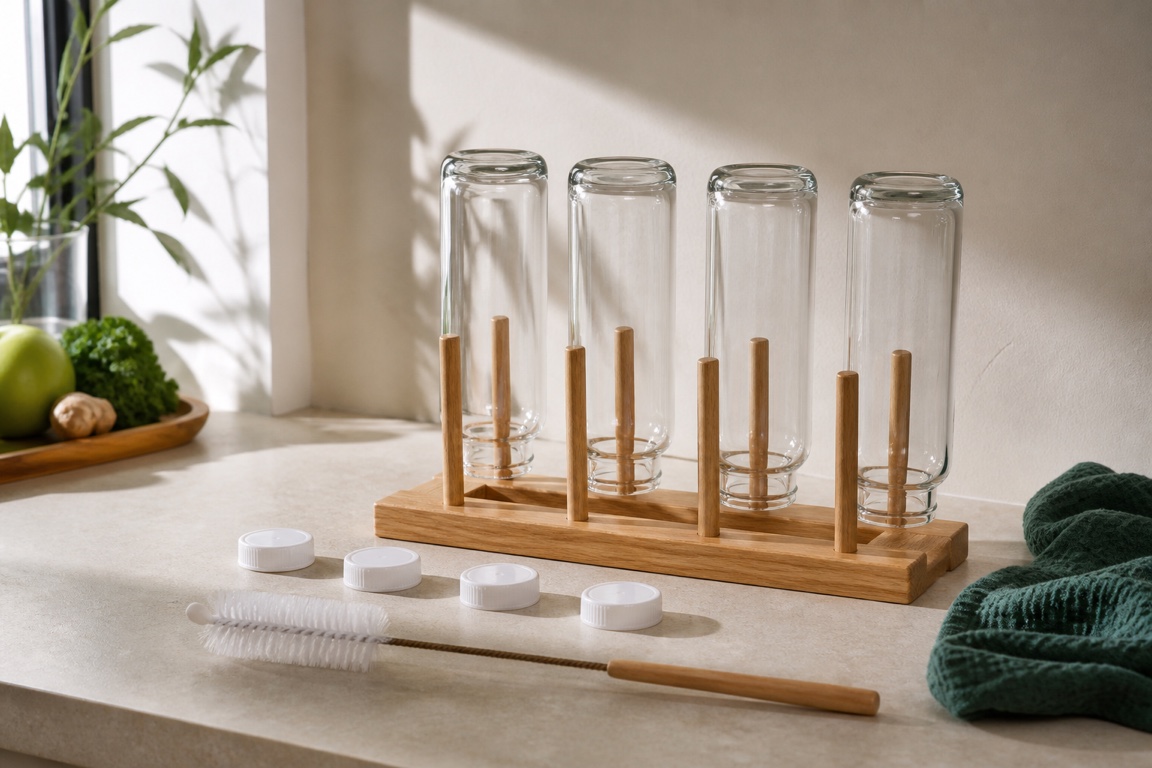
Air-drying does the work if you set it up right. Use a clean rack with enough space for air to circulate. Keep the bottle opening from resting flat against the counter, where water can collect. Let caps and seals dry separately, inspect their grooves before reassembly, and check that each seal is seated according to the maker’s instructions. Check for trapped droplets too. An incorrectly refitted gasket can leak even when every part is clean.
- Stand bottles upside down at an angle on a rack so air reaches the base.
- Leave caps and gaskets off until every piece is bone dry.
- Store bottles uncapped, or with caps resting loosely on top.
- Shake swing-top hardware before shelving it — water hides in the hinge.
Juice bottle labeling that actually helps
Two fields do nearly all the work on a juice bottle label: what is inside, and when it was pressed. With those, the oldest bottle is always obvious and a mystery bottle never lingers at the back of the fridge until it becomes a science project — add a drink-by note when you batch.
Masking tape and a marker work fine. If you want something cleaner that you can reprint in seconds, the free storage label builder formats contents, pressed date, and a drink-by line for you, and reusable bottles take fresh tape better when the old label came off during the wash. However you label, the test is simple: anyone opening the fridge should know what a bottle holds and how old it is without asking you.
Frequently asked questions
How do you clean juice bottles without a brush?
Check the manufacturer’s cleaning instructions first. Soaking may loosen residue, but shaking alone may miss the shoulder, base, or cap threads. Avoid rice, salt, and other abrasives unless approved for the material. If you cannot reach every surface, use a suitable bottle brush or choose a wider-mouth reusable container.
How do you get smell out of plastic juice bottles?
Wash the bottle and each removable cap component according to the manufacturer’s directions, then dry fully. Use only a compatible odor treatment if recommended. If smell persists or there is damage, replace the affected part or bottle. Removing a smell does not prove that the surface has been sanitized.
Should juice bottles be sterilized?
Cleaning and sterilizing are different processes. Wash bottles and removable parts after use, and follow any manufacturer sanitizing directions exactly. Do not improvise a boiling-water treatment: heat can damage bottles, coatings, and seals. A clean bottle does not pasteurize the raw juice placed inside it.
How often should you replace juice bottles?
Inspect bottles and seals regularly rather than relying on a fixed replacement schedule. Stop using chipped or cracked glass and replace damaged, poorly sealing, or persistently dirty components. Check the maker’s advice for scratches or cloudiness in plastic. A reusable food container should remain intact and fully cleanable.
What should a juice bottle label say?
At minimum, the contents and the date and time pressed. Add a drink-by note when you batch, so the oldest bottle never hides behind newer ones. Tape and a marker do the job; a label tool just makes the habit faster and easier to repeat every time you bottle.
Keep exploring
Recipes to try
Planning tools & products
Official sources
This website provides general recipe and nutrition education only and is not medical advice. Calories are estimates. Fresh raw juice is perishable — refrigerate promptly and discard questionable juice. Use juices as part of a normal eating routine, not as a cleanse, fast, or meal-replacement program.