Pulp guide
What to Do With Juice Pulp: Use It, Freeze It, or Compost It
The short answer for what to do with juice pulp: use it the same day or freeze it, because pulp is every bit as perishable as the juice it came from. Mild carrot and apple pulp suits baking, vegetable pulp suits broths and fritters, and bitter or spice-heavy pulp can simply be composted without guilt. This guide sorts the options by pulp type.
On this page
What should you do with juice pulp?
Use it the same day or freeze it — that is the whole rule. Juice pulp is fresh raw produce that has been shredded and squeezed, which leaves it moist, full of surface area, and at least as perishable as the juice itself. I once left a bowl of green pulp uncovered in the fridge overnight, and by the next evening it smelled sour and grassy — it turned faster than the bottle of juice it came from. Plan for volume, too: a 16 ounce bottle of juice typically leaves behind a few cups of damp pulp, so the bin fills faster than most people expect.
Beyond timing, the decision is mostly about flavor. Mild, sweet pulps like carrot and apple are genuinely pleasant in food, while ginger, citrus pith, and bitter greens fight back in anything you add them to. The sections below sort the realistic options — kitchen, freezer, and compost — and the table at the end matches each pulp type to its best exit.
Kitchen uses for juice pulp
The easiest savory use is a broth bag: collect the day's cucumber, celery, carrot, or fennel pulp, simmer it briefly in water with whatever aromatics you like, then strain. The shredding has already done the prep work, so the flavor releases quickly — and the spent solids can still go to compost afterward. A spoonful of mild pulp also disappears into a smoothie or a pot of oatmeal without changing the flavor much, which is the least effortful kitchen use there is.
Sweet pulps fold into baking, and vegetable pulps bind into pan-fried or oven-dried snacks. The best juice pulp recipes are adaptations — concepts folded into dishes you already trust rather than precise formulas — and the perishability rule stays in force throughout: same-day pulp only, kept cold until you cook.
- Broth bags: simmer same-day vegetable pulp into a light stock base, then strain.
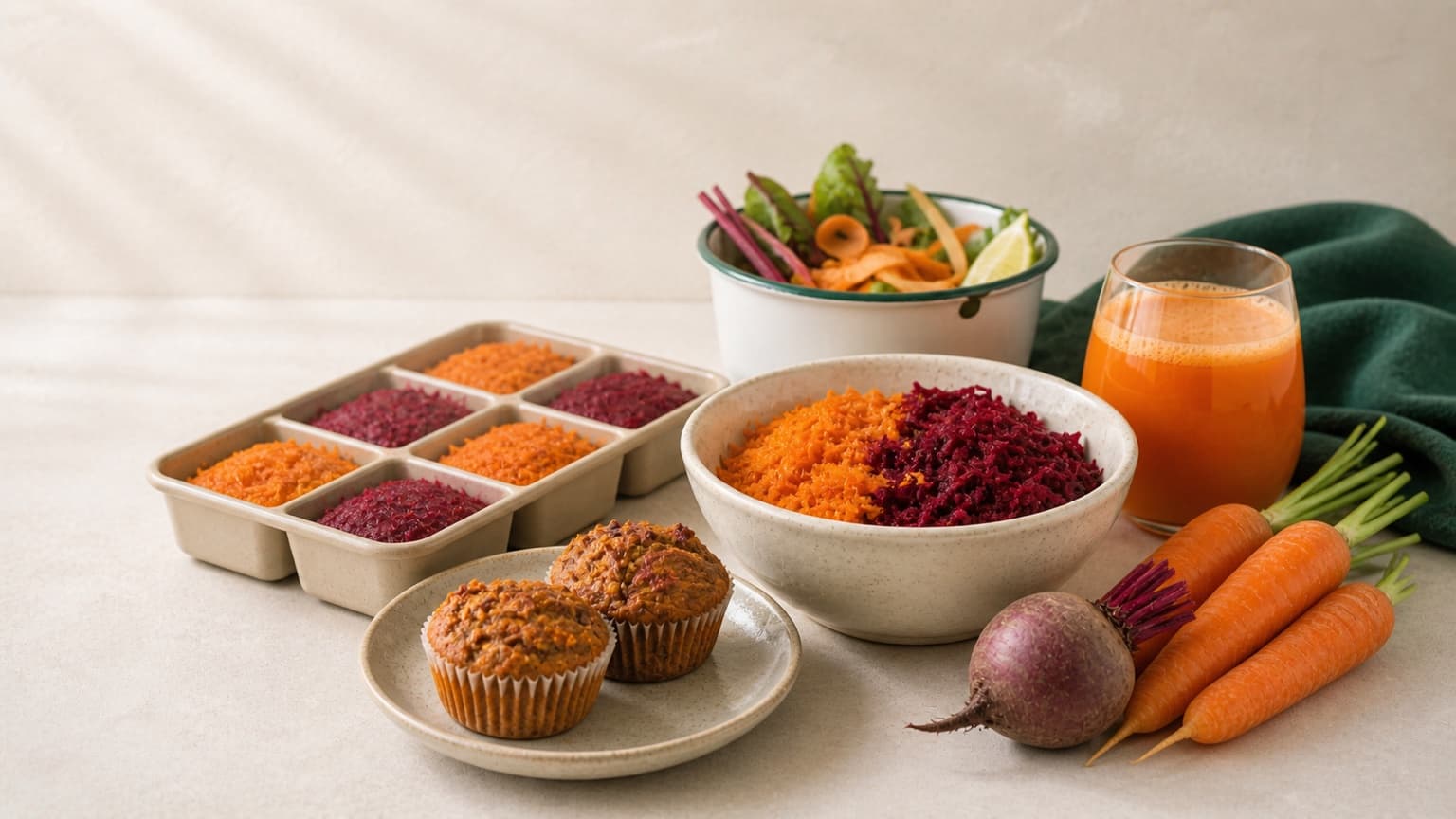
- Baking add-ins: swap part of the grated carrot or apple in muffins and quick breads for pulp.
- Fritters: bind vegetable pulp with egg and flour, season well, and pan-fry.
- Crackers: season green or mixed vegetable pulp, spread it thin, and bake until crisp.
- Spoonfuls: stir a little mild pulp into smoothies or oatmeal you already make.
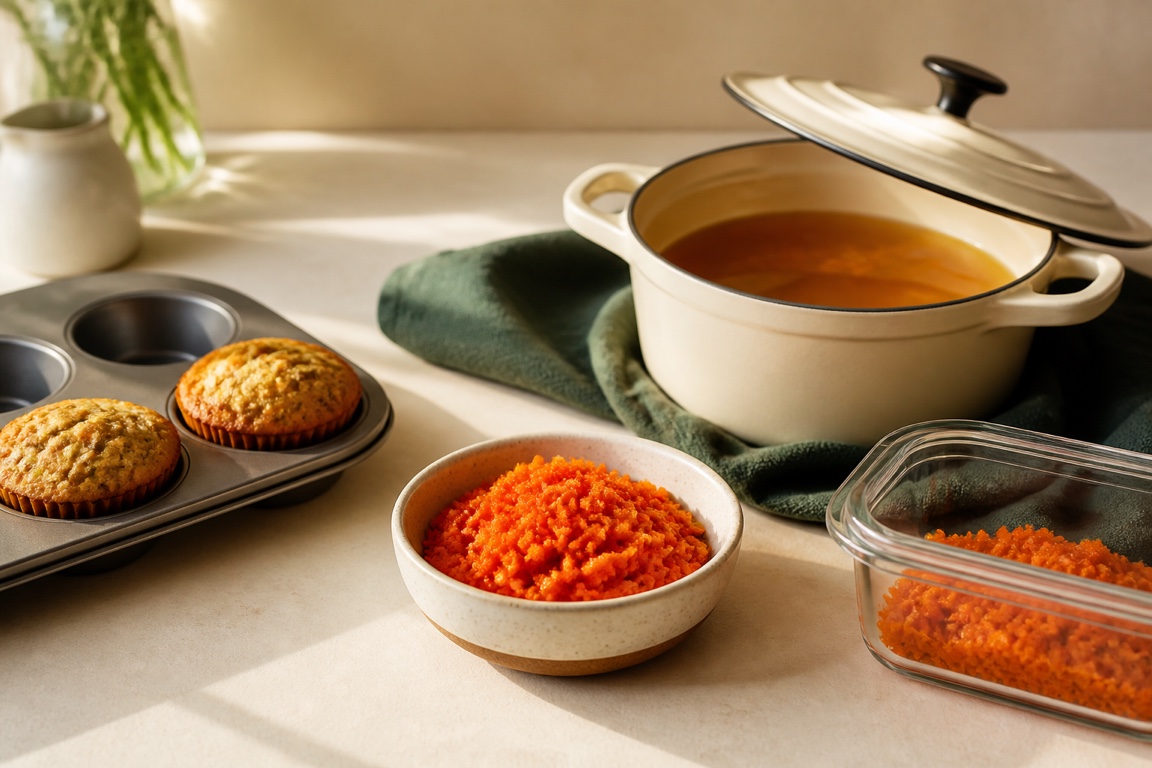
Freezing juice pulp in portions
An ice-cube tray changed my pulp habit. I press the day's pulp into a silicone cube tray, freeze it overnight, and pop the cubes into a labeled freezer bag the next morning — each cube is a roughly two-tablespoon portion, so a muffin batch or a pot of broth gets exactly what it needs without thawing the whole stash. A flat zip bag works just as well: freeze it thin, then snap off a corner per recipe.
Two details make frozen pulp useful instead of mysterious. Freeze it the day it is pressed, not after it has lingered in the fridge, and label the bag with contents and date — a cube of frozen ginger-carrot pulp looks identical to plain carrot until it hits the pan. Thawed pulp turns soft, so plan on cooked uses rather than raw ones.
What you bank also depends on what you press. Root-and-fruit blends leave dense, fine pulp that packs neatly into trays, while celery and cucumber pulp comes out wetter and looser — I give that kind a squeeze over the sink first so the cubes hold together instead of turning to slush. And date the bag by month as well as contents: frozen pulp is best worked through within a few months for flavor, as a planning range rather than a rule.
The fiber question, answered honestly
Juicing removes much of the fiber from whole produce, and the pulp is where that fiber goes. So when you fold pulp into fritters or a batch of muffins, you are putting part of the whole produce back to work instead of binning it — a practical reason to reuse pulp that has nothing to do with grand claims.
Keep the framing honest, though: pulp reuse is about reducing waste and adding moisture and texture to food, not about turning juice back into a whole vegetable. Whole fruit and veg still belong in your meals alongside whatever you press — pulp-boosted muffins and fritters are simply a quiet way to serve a little extra produce variety in food form.
Composting juice pulp
If your kitchen plans are full, the garden takes the rest. Pulp is finely shredded and moist, which makes it one of the fastest-composting kitchen scraps you can produce — it counts as a nitrogen-rich green input, so balance it with browns like dried leaves, straw, or torn cardboard to keep the pile from going soggy.
No pile? Small amounts can be trenched directly into a garden bed, and many areas now run municipal food-scrap collection that takes pulp happily. Through a winter of weekly pressing, my small countertop caddy filled almost entirely with pulp, and it vanished into the pile faster than any other scrap I add.
- Mix pulp with dry browns — leaves, straw, shredded cardboard — to keep the pile balanced.
- Bury fresh pulp under a few inches of material so it does not attract flies.
- Go easy on citrus-heavy and spice-heavy pulp in worm bins.
- Trench small amounts straight into garden beds if you do not keep a pile.
Which pulps suit which use?
Not all pulp deserves the same effort. This table is the sorting logic I actually use at the pulp bin: a quick look, a quick sniff, sometimes a taste of a pinch, then one of three exits — kitchen, freezer, or compost. If pulp comes out unusually wet, that is a yield problem more than a reuse problem; run it through the juicer a second time before sorting it.
When one bottle mixes types, judge by the loudest ingredient. A green blend with a knob of ginger produces ginger pulp for all practical purposes, and it should be labeled that way if you keep it.
| Pulp type | Best uses | Skip or compost when |
|---|---|---|
| Carrot and apple | Muffins, pancakes, quick breads, oat bites | It sat in the fridge past the same day or smells sour |
| Cucumber and celery | Broth bags, chilled soups, fritter filler | The texture has gone watery and slimy |
| Leafy greens | Crackers, savory pancakes, small doses in broth | The blend was bitter to drink — the pulp will be more so |
| Citrus | A zest-like baking accent, in small amounts | Pith-heavy pulp tastes bitter; most citrus pulp composts best |
| Ginger and turmeric | Tiny flavor boosts in broth or dressings — label clearly | It is mixed into mild pulp, where it overpowers everything |
Flavor and freshness vary batch to batch — taste a pinch before committing any pulp to a recipe.
Frequently asked questions
Is it OK to eat juice pulp?
Generally yes, treated like any fresh raw produce: it is simply the shredded fruit and veg minus most of the liquid, used the same day it was pressed and handled cleanly. Most people prefer it cooked into food rather than eaten plain. Skip pulp that has sat out, smells off, or came from a bitter blend.
How long does juice pulp last in the fridge?
Plan on the same day as a conservative window. Pulp is wet, finely shredded produce with enormous surface area, so it fades at least as fast as fresh juice does. Refrigerate it promptly in a covered container, and freeze anything you will not realistically use by that evening.
Can you freeze juicer pulp?
Yes — freezing is the best way to bank pulp for later. Freeze it the day it is pressed, either in cube trays or flat in freezer bags, labeled with contents and date. Thawed pulp turns soft, so plan on cooked uses like broths, muffins, and fritters rather than raw ones.
What can I bake with juice pulp?
Carrot and apple pulp are the easy wins: fold modest amounts into muffins, pancakes, oat bites, or quick breads, where the pulp adds moisture and texture. Green pulp works in savory crackers. Start by replacing part of the grated produce in a recipe you already make rather than inventing one from scratch.
Is juice pulp good for compost?
Very. Pulp is finely shredded and moist, so it breaks down quickly, and it counts as a nitrogen-rich green input — balance it with browns like dried leaves or cardboard. Add citrus-heavy pulp to worm bins sparingly. Composting bitter or mixed pulp is often more practical than forcing it into a recipe.
Keep exploring
Recipes to try
Planning tools & products
This website provides general recipe and nutrition education only and is not medical advice. Calories are estimates. Fresh raw juice is perishable — refrigerate promptly and discard questionable juice. Use juices as part of a normal eating routine, not as a cleanse, fast, or meal-replacement program.