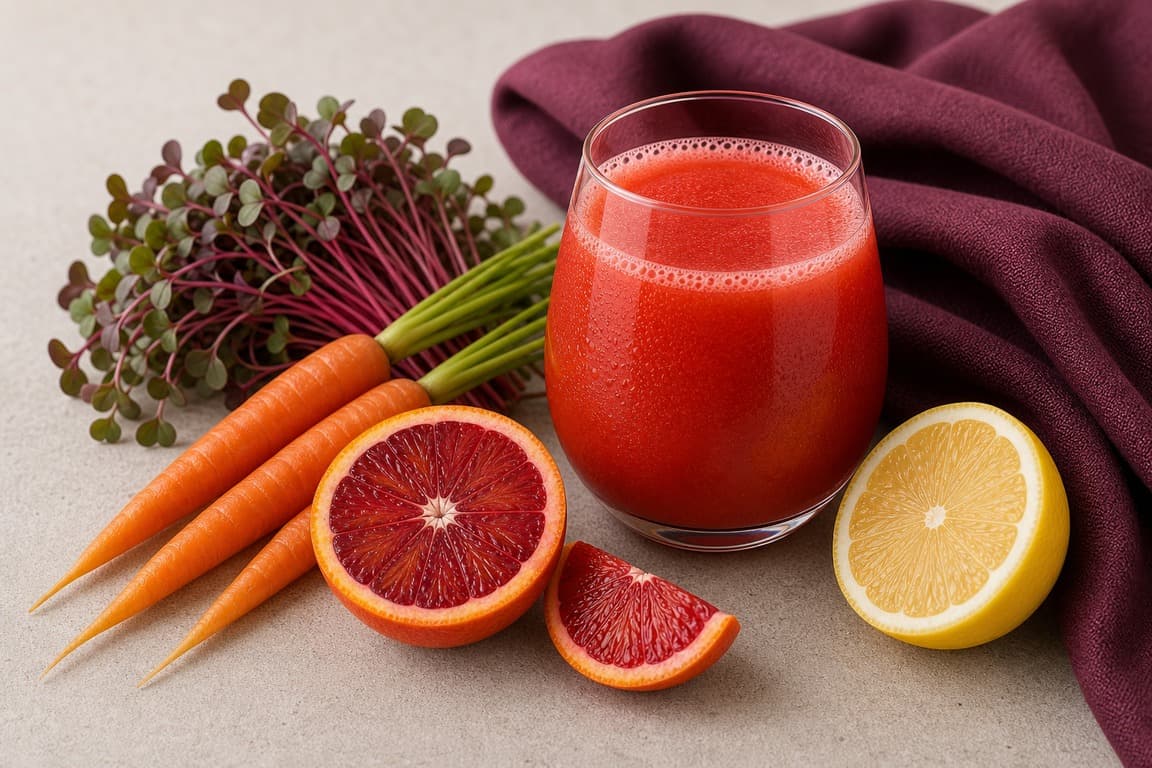
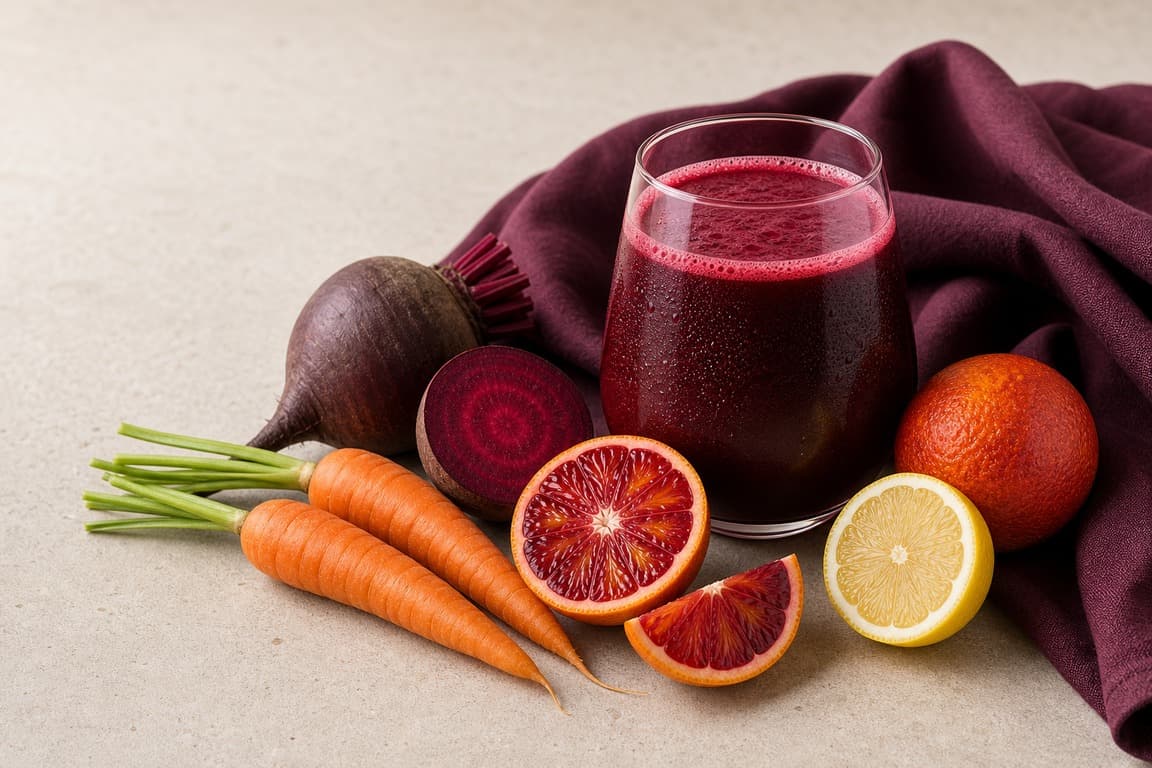
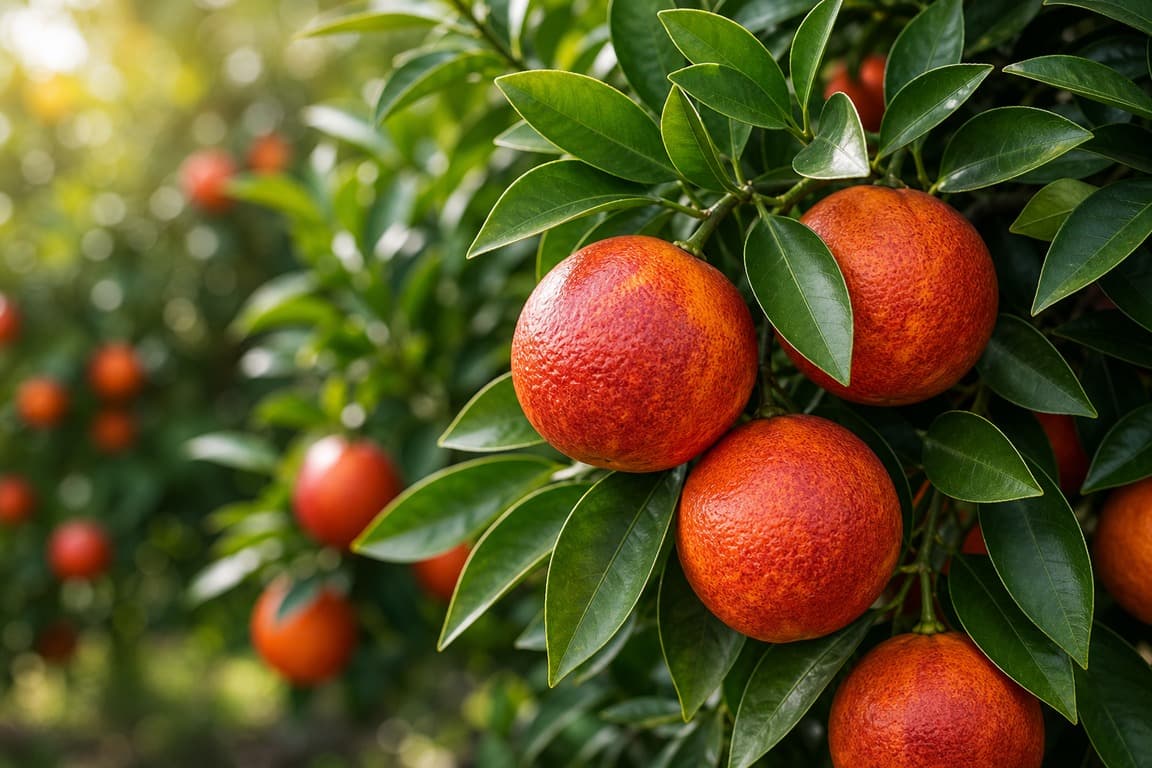
Choose blood orange
- Heavy fruit with taut skin.
- Red blush on the peel when available.
- Avoid dry skin or light fruit.
We use cookies and a Meta pixel for analytics and ads measurement. Choose whether that’s okay.
Blood Orange is a sweet citrus used as a sweetener in cold-press bottles, with practical value for flavor, pairings, prep, and grocery planning.
Ingredient at a glance
Shop, store, prep
Cold-press behavior
Yield
Medium
Blood Orange adds sharpness and liquid, but it is usually used for flavor balance more than volume.
Difficulty
Easy
Peel or trim bitter rind and pith before pressing when needed.
Texture
Bright + thin
Keeps the bottle crisp and helps sharper flavors feel cleaner.
Foam
Low
Usually low foam, especially when stirred gently before bottling.
Watch for
Pith bitterness
Too much rind or pith can make blood orange taste bitter.
Best order
Late or last
Press blood orange near the end so the bright finish stays clear.
Flavor role
Blood Orange helps a bottle by adding sweet sweetener. It usually works well with beet and carrot.
Pair blood orange with citrus, herbs, cucumber, or apple when the bottle needs clearer balance.
Best pairings
Starter formulas
Carrot + Blood Orange + Beet Microgreens + Lemon
Use this when you want a sweet and citrus-forward bottle built around the curated recipe collection.
Open recipeBeet + Carrot + Blood Orange + Lemon
Use this when you want a earthy and sweet bottle built around the curated recipe collection.
Open recipeSwap blood orange
Use these swaps before juicing when you need a similar role or a quick flavor correction.
Recipes using blood orange
Carrot · 11 min · 24 to 48 hours
A carrot citrus juice with beet microgreens, blood orange, and lemon.
Sweet Veg ~11 min prep~16 oz
Beet · 12 min · 24 to 48 hours
A ruby beet and carrot juice balanced with blood orange and a small lemon lift.
Sweet Veg ~12 min prep~16 oz
General recipe and ingredient education only, not medical advice. Fresh raw juice is perishable; refrigerate promptly and discard juice that smells, looks, or tastes questionable. Read the disclaimer.
Build from blood orange
Use the free tools to build around blood orange, compare pairings, or find a recipe that fits what you already have.
Member planning details
Broad nutrient tags with usage notes — what to pair with, what each tag actually means in cold-press juice.
Where this ingredient sits in the rainbow rotation — useful for color-variety planning.
Which ingredients pair well and *why* (citrus brightens, herbs balance, fat aids absorption).
Practical swaps when this ingredient is unavailable, expensive, or out of season.
How to reduce sweetness without flattening flavor — citrus, herbs, hydrating bases.
Estimated grocery cost (conventional vs. organic) — helps build affordable shopping maps.
Best months for this ingredient — when to buy, when to swap.
Refrigeration window, freezer rules, and discard cues for this specific ingredient.
How this ingredient holds up over a 2–3 day batch (oxidation, separation, taste).
What to do with the pulp instead of throwing it out.
Founding Member Access
The core recipe and ingredient libraries stay free. During beta, choose monthly, annual, or lifetime Founding Member Access to unlock the Complete Juice Control Bundle, all ten connected planning dashboards, advanced planning details, higher save limits, and included member tools while helping shape what we build next.