Juicer comparison
Cold Press vs Centrifugal Juicer: What You'll Actually Notice
A cold press (masticating) juicer crushes produce slowly with an auger; a centrifugal juicer shreds it against a fast-spinning basket. At home that translates to quieter, slower pressing with drier pulp and less foam from the cold press, and faster, louder juice from the centrifugal. Beginners can be happy with either — the right pick depends on greens, patience, and budget.
On this page
The direct answer
A cold press (masticating) juicer and a centrifugal juicer both make real juice — the difference is how, and what that does to the glass. The cold press crushes produce slowly with an auger and squeezes it against a screen; the centrifugal shreds it against a spinning basket and slings the juice out by force. At home, the cold press gives you quieter sessions, drier pulp, noticeably better results from leafy greens, and less foam; the centrifugal gives you a finished glass in a fraction of the time, usually for less money.
Heat and oxidation differences are commonly cited in this comparison; the differences you will reliably notice are texture, foam, yield, and noise. This guide sticks to those.
How each machine works: auger vs spinning blade
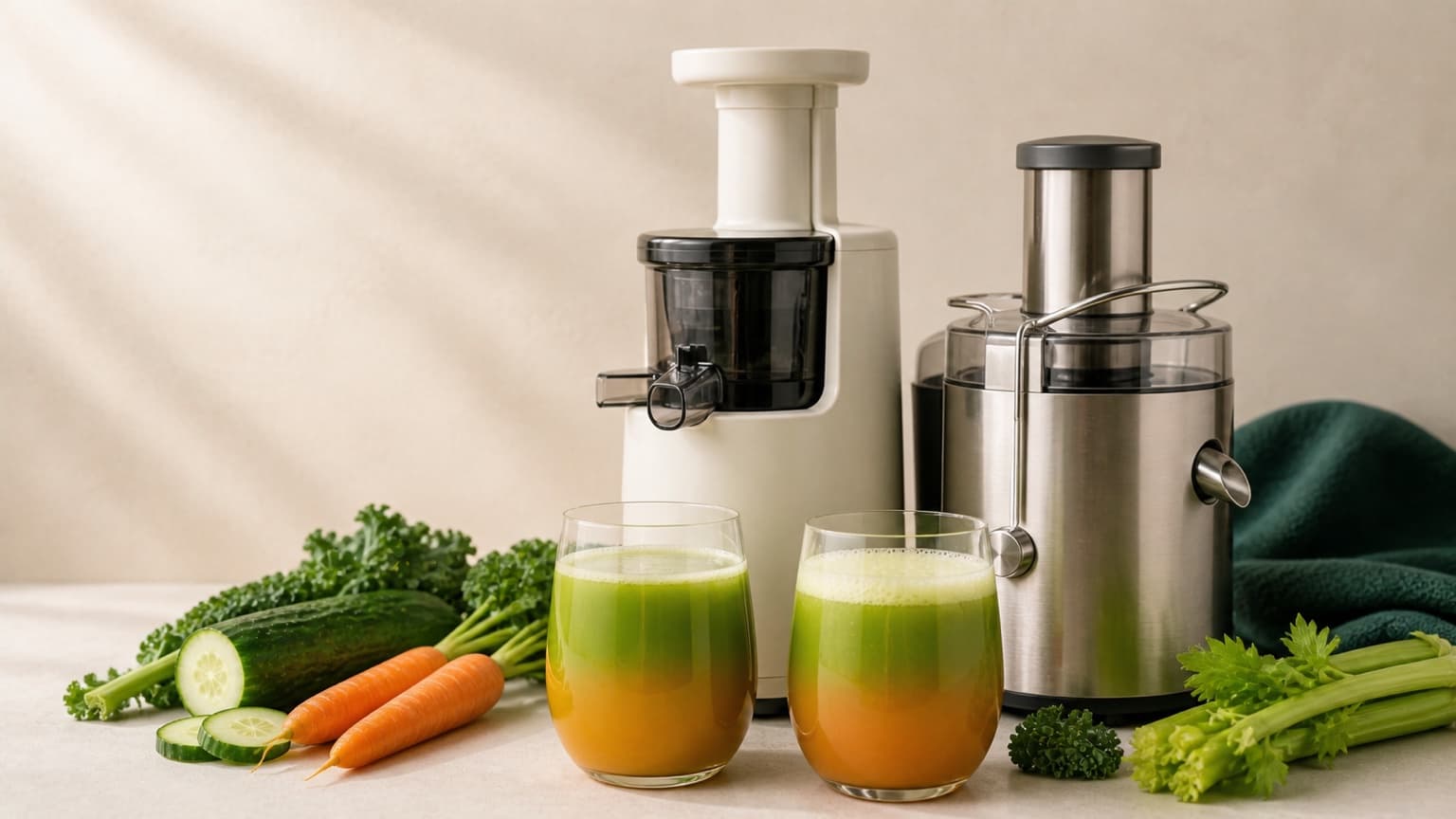
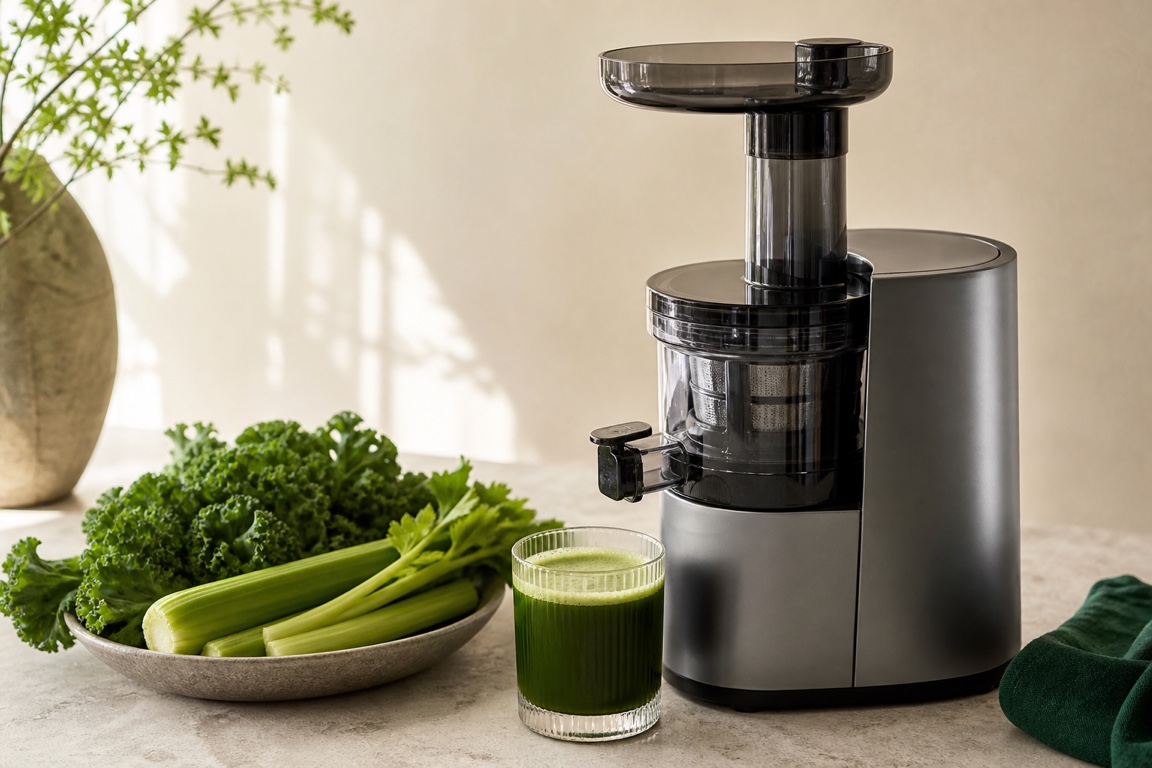
A masticating juicer — sold as a cold press or slow juicer — turns a thick auger at low speed, crushing produce and pressing it through a fine screen. Solids exit one chute as pulp while juice drips from another. It is the same logic as wringing out a wet towel: slow, thorough, quiet.
A centrifugal juicer — the classic fast juicer — spins a flat shredding disc inside a mesh basket at very high speed. Produce hits the disc, gets grated to slush, and the spinning basket flings juice through the mesh while the pulp collects or ejects. It is the salad-spinner approach: fast, forceful, and most effective on hard produce.
Two naming notes so shopping pages make sense: cold press, masticating, slow, and auger juicer all describe the same family of machine. Centrifugal is the fast-spinning one — and at the low end of the price range, it is usually what a listing means when it just says juicer.
What you'll notice at home
Spec sheets do not capture the daily experience, so here is what changed when I ran the same recipes through both styles of machine. The centrifugal finished a carrot-apple glass in about two minutes, but it sounded like a blender on high — early-morning juicing woke the house. The cold press takes me closer to ten minutes for the same glass once you count chopping produce into smaller pieces, and it hums quietly enough to talk over.
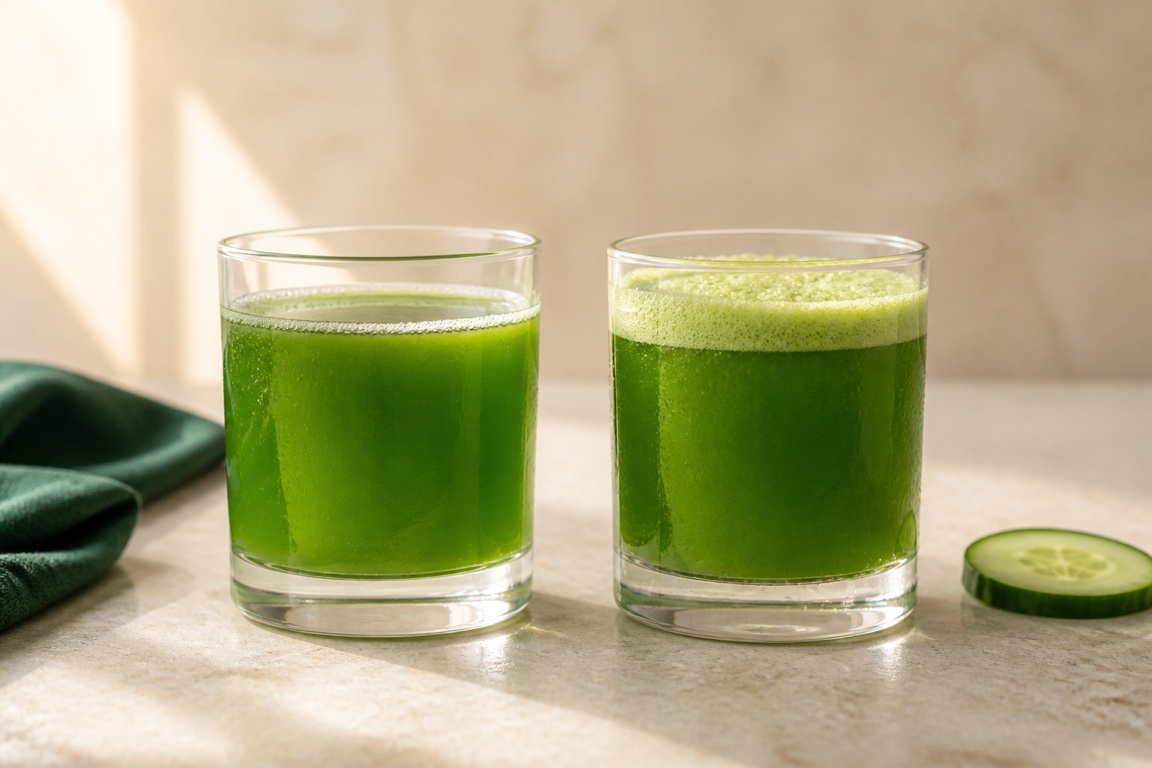
The pulp tells the yield story better than any percentage claim: pulp from my centrifugal came out wet enough to squeeze juice from by hand, while the cold press ejects something closer to damp sawdust. Foam differs the same way — the fast spin whips air into the juice and leaves a finger of foam on top of the glass, while the slow press leaves a thin film at most.
| Dimension | Cold press (masticating) | Centrifugal |
|---|---|---|
| Speed | Slower; chop produce smaller and feed gradually | Fast; a finished glass in a couple of minutes |
| Noise | Low hum, conversation-friendly | Blender-loud while running |
| Leafy-green handling | Presses kale, spinach, and herbs well | Weak point; leaves often pass through barely juiced |
| Foam | Thin film at most | Noticeable foam cap on most glasses |
| Pulp dryness and yield | Drier pulp; more juice from the same produce, especially greens | Wetter pulp; yield drops most on leaves and soft produce |
| Cleanup parts | Commonly five to seven parts; smooth pieces rinse fast | Commonly four to five parts; the mesh basket needs a brush scrub |
| Typical price band | Commonly about $100–$400 | Commonly about $50–$150 |
| Counter footprint | Often longer or taller, and heavier | Compact upright designs are common |
| Best-fit user | Greens-first juicers, batch preppers, quiet kitchens | Speed-first beginners and occasional juicers |
Typical patterns for home machines — individual models vary; treat price bands as rough planning ranges.
Leafy greens and the centrifugal problem
Leafy greens are where the two designs genuinely part ways. A shredding disc needs something with body to grate, and flat, light leaves like spinach and kale tend to ride the airflow into the pulp bin barely processed. The first time I fed spinach into a centrifugal, I watched most of the leaves shoot through intact and damp — a few teaspoons of juice from a couple of big handfuls.
Workarounds exist — roll the leaves into tight balls, or sandwich them between apple pieces — and they recover some juice, but only some. An auger, by contrast, chews leaves the way it chews everything else, and celery strings and herb stems feed through without drama. If kale, spinach, celery, or herb-heavy recipes are the reason you are buying a juicer, that decision is effectively made: cold press.
Celery deserves its own mention: it juices generously in either machine by volume, but the centrifugal version arrives foamier and gritty with fine pulp, while the auger pours a clearer, calmer glass.
Cleanup, honestly
Neither machine cleans itself, and the gap is smaller than the marketing suggests. My cold press breaks down into six parts — hopper, auger, screen, bowl, and two collection cups — and takes about eight to ten minutes to wash and dry. A typical centrifugal has four or five parts and takes about the same, because the mesh shredding basket needs a proper brush scrub; it is the one part I have never enjoyed cleaning.
The variable that actually matters is timing. Rinsed immediately, either machine is a few easy minutes. Left until after breakfast, pulp dries into the screens and the job doubles. Dishwasher claims vary by model, and the screens want a hand rinse first either way. Whichever you buy, clean it before you drink the juice — it is the single best habit for keeping a juicer in use.
- Cold press: more parts, but smooth pieces that rinse quickly under running water.
- Centrifugal: fewer parts, with one slow one — the fine mesh basket and its brush.
- Both: a rinse now beats a scrub session later, every single time.
Price bands and honest value
Treat prices as bands, not endorsements. Entry centrifugal machines commonly sit under about $100, which makes them the cheapest real-world test of whether juicing fits your life. Entry cold presses commonly run about $100–$200, well-built mid-range models about $200–$400, and premium machines climb from there. Spending more mostly buys quieter motors, wider feed chutes, and easier-cleaning parts — not a different category of juice. Secondhand listings are worth a look in this category, too: juicers are often bought with enthusiasm and sold barely used, and the auger design has few wear points.
The honest value framing: the best juicer is the one still on your counter in month three. A modest machine you use four mornings a week beats a premium one that intimidated you into storing it. If you are undecided, decide by recipes first — two weeks of real recipes will tell you which machine fits your routine faster than any specification sheet.
Which juicer should you buy?
Match the machine to the user, not the other way around:
Whichever direction you choose, pick three or four recipes you will actually repeat before the machine arrives. Equipment does not build the habit; repeatable recipes do.
- Speed-first beginner: centrifugal — a fast glass with minimal ceremony keeps the habit alive.
- Greens-first juicer: cold press — the only one of the two that treats kale and spinach as real ingredients.
- Noise-sensitive household or early riser: cold press — the hum is conversation-level.
- Batch prepper: cold press — drier pulp and better yield matter more when you press a week of bottles at once.
- Small-kitchen renter: a compact centrifugal earns its shelf space; measure the cabinet before falling for a tall vertical press.
- Budget tester: an inexpensive centrifugal now, knowing that a greens habit will eventually argue for an upgrade.
Frequently asked questions
Is a cold press juicer really better?
Better at specific things, not universally. A cold press is quieter, presses leafy greens far more effectively, leaves drier pulp, and makes less foam. A centrifugal is faster, usually cheaper, and simpler for hard produce like apples and carrots. Heat and oxidation are commonly debated; the reliable differences are texture, foam, yield, and noise.
What are the disadvantages of centrifugal juicers?
The consistent ones: real noise while running, a foam cap on most glasses, wetter pulp that signals juice left behind, and poor results with leafy greens, which often pass through barely pressed. None of these are dealbreakers for carrot-and-apple juicing — they mainly matter if greens or quiet mornings do.
Do cold press juicers work for leafy greens?
Yes — leafy greens are the cold press's strongest case. The slow auger crushes kale, spinach, romaine, and herbs instead of letting them fly past the blade, so the pulp comes out drier and the glass actually fills. Feed leaves in small bunches, alternating with firm produce like cucumber, for the smoothest run.
Are cheap centrifugal juicers worth it?
As a low-cost way to find out whether juicing fits your routine, yes — with open eyes. Expect noise, foam, and wetter pulp, and skip greens-heavy recipes. If the habit sticks, you will probably want to upgrade within a year; if it does not, you found out inexpensively. That is a fair trade.
Which juicer is easiest to clean?
Washed immediately, both styles take a similar five to ten minutes. Cold presses have more parts, but they are smooth and rinse easily; centrifugals have fewer parts, but the fine mesh basket needs a brush scrub every time. The bigger factor is habit — pulp left to dry doubles the job on either machine.
Can a blender replace a juicer?
Partly. A blender makes smoothies, not juice — but blending produce with a splash of water and straining it through a fine mesh or nut-milk bag gets you a juice-like glass. It is slow and messy, yet it is a sensible way to test the habit before buying a dedicated machine.
Keep exploring
Recipes to try
Planning tools & products
This website provides general recipe and nutrition education only and is not medical advice. Calories are estimates. Fresh raw juice is perishable — refrigerate promptly and discard questionable juice. Use juices as part of a normal eating routine, not as a cleanse, fast, or meal-replacement program.