Beginner guide
The Best Vegetables for Juicing (and What to Skip)
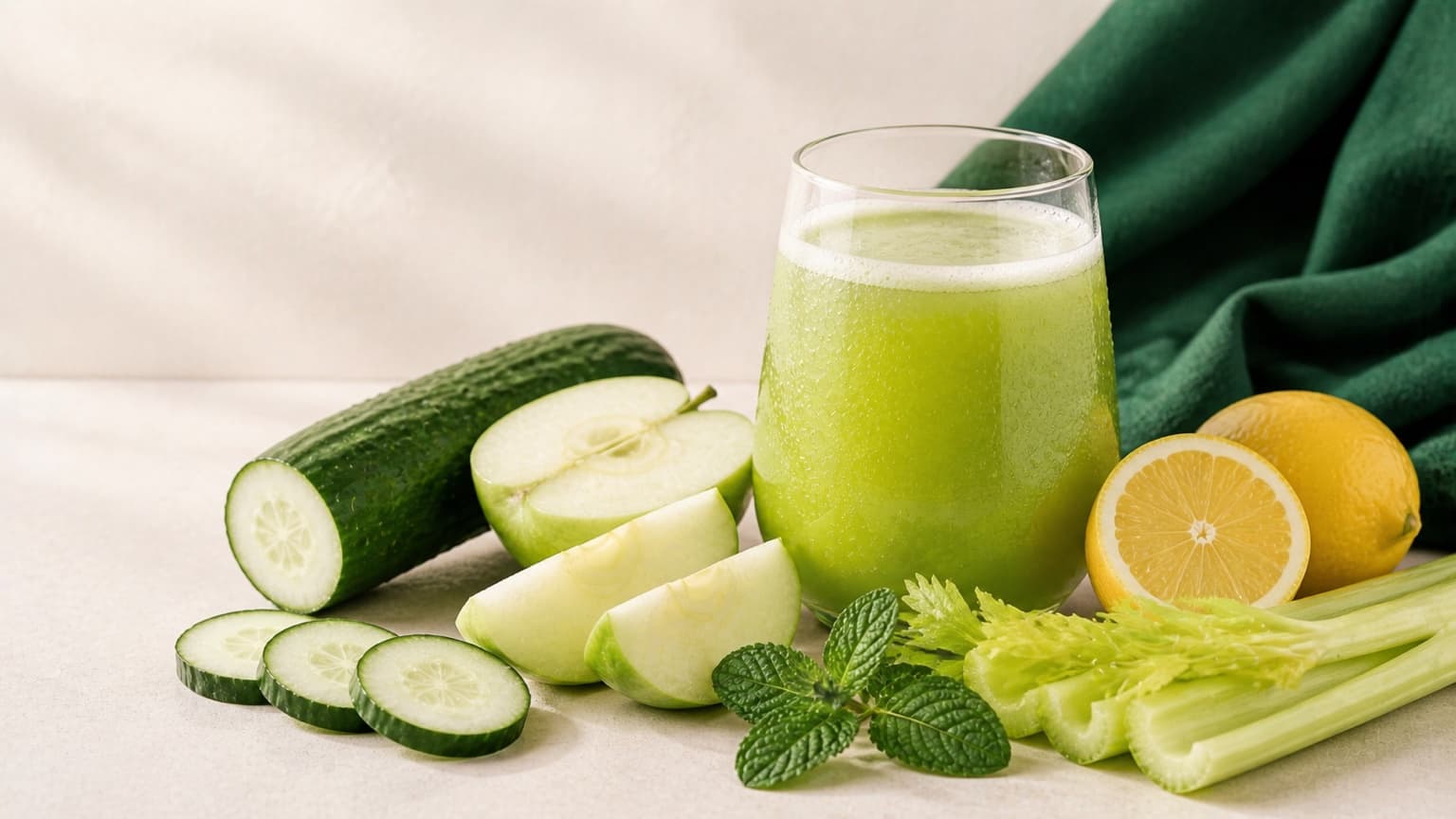
Start with cucumber for a mild base, carrot for a sweeter flavor, or celery for a savory direction; add a small amount of romaine or spinach if you want a gentle green. The best vegetables for juicing depend on your taste and machine. These qualitative comparisons help you choose ingredients; they are not measured yield rankings.
On this page
Which vegetables are best for juicing?
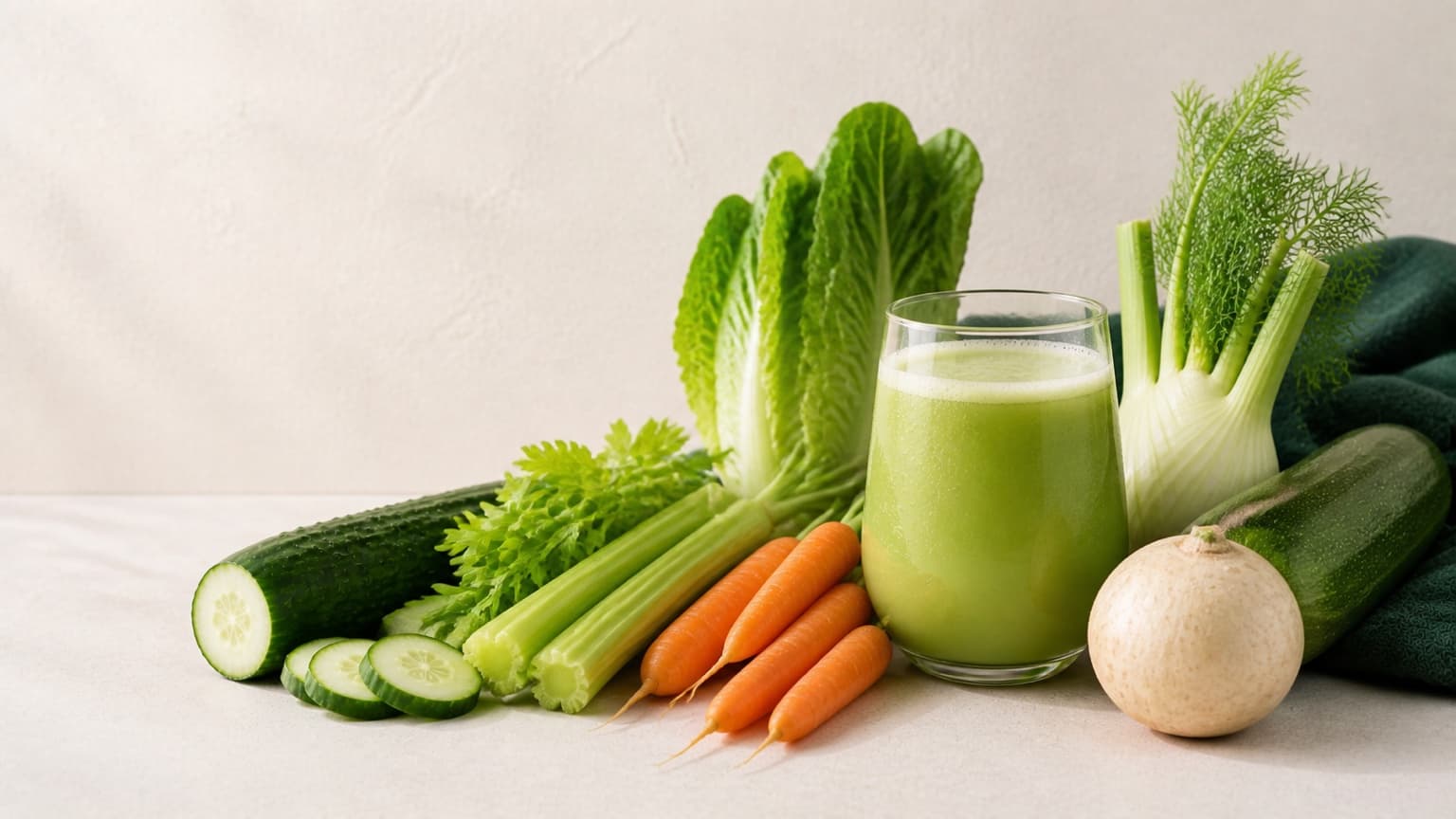
If you only remember a short list, make it this one: cucumber, celery, and carrot as everyday bases, romaine and spinach as gentle greens, kale once your palate adjusts, and beet, ginger, and fennel as small accents. Those nine cover almost every vegetable juice worth making in your first few months.
Start with flavor, preparation, and the role of the vegetable in a recipe. The table below gives qualitative planning comparisons for ten vegetables, not a controlled equipment test. For actual yield, weigh the prepared produce and measure what your own juicer produces.
| Vegetable | Flavor | Juice yield | Prep effort | Beginner-friendly? |
|---|---|---|---|---|
| Cucumber | Mild, fresh, watery | High | Low: wash and chop | Yes, the easiest base |
| Celery | Clean, savory, lightly salty | High | Low: rinse, trim the base | Yes |
| Carrot | Naturally sweet, earthy edge | Medium | Low: scrub, no peeling | Yes |
| Romaine | Mild, barely green | Medium-high | Low: chop the whole heart | Yes |
| Spinach | Soft, gentle, mineral | Low | Low: rinse well for grit | Yes, in small handfuls |
| Kale | Bold, bitter-green | Low | Medium: wash, bunch the leaves | Start with a few leaves |
| Beet | Sweet, deeply earthy | Medium | Medium: scrub hard, quarter | In small amounts |
| Fennel | Fresh anise, surprisingly sweet | Medium | Low: slice the bulb | Yes, as an accent |
| Jicama | Lightly sweet, nearly neutral | High | Medium: must be peeled | Yes, and underrated |
| Zucchini | Very mild, faint green note | Medium | Low: wash and chop | Yes |
Qualitative planning comparisons, not measured kitchen results. Yield depends on machine, produce, and preparation; no cup-per-pound outcome is promised.
How we judge a juicing vegetable
Use this comparison to choose a base and a small accent, then open a recipe for the actual amounts. It is an editorial selection framework; no numerical score or measured yield ranking is being claimed.
Check local prices rather than assuming one vegetable is cheapest. Compare cost per usable prepared weight, then record finished volume if cost per glass matters. Bag size, trimming waste, and what you can use in meals all affect value.
For an approachable first choice, favor flavors you already enjoy and preparation your machine handles. The Juice Builder matches catalog recipes to selected ingredients and preferences; it does not predict an exact yield or guarantee a particular taste.
- Juice yield: how much liquid you get per pound and per dollar. A delicious vegetable that yields a tablespoon is a garnish, not a base.
- Flavor in combination: almost nothing gets juiced alone, so what matters is how a vegetable behaves next to cucumber, citrus, and apple.
- Prep effort: anything that needs only a wash and a rough chop beats anything that needs peeling, no matter how well it juices.
The workhorses: cucumber, celery, and carrot
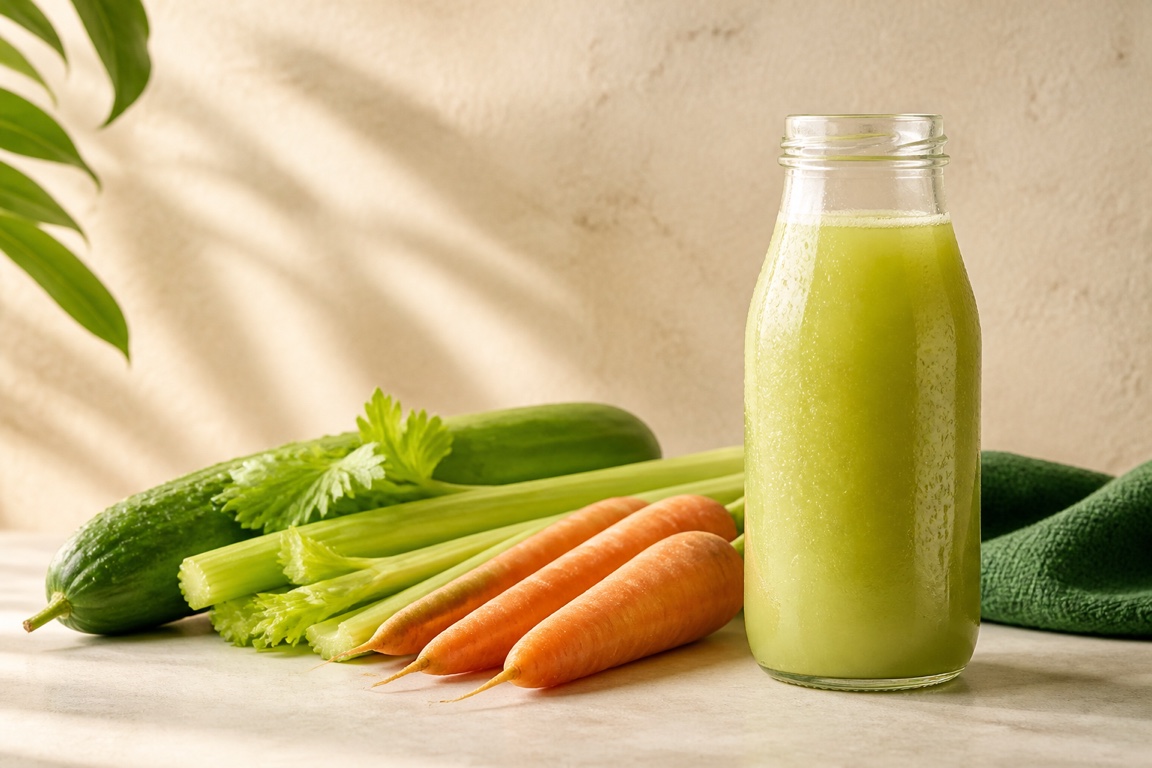
Cucumber supplies a mild, watery base that can soften a strong green flavor. Wash it well and cut it to suit the machine. Do not treat one cucumber as a fixed amount of juice: its size, water content, and extraction vary. Measure your batch if a bottle target matters.
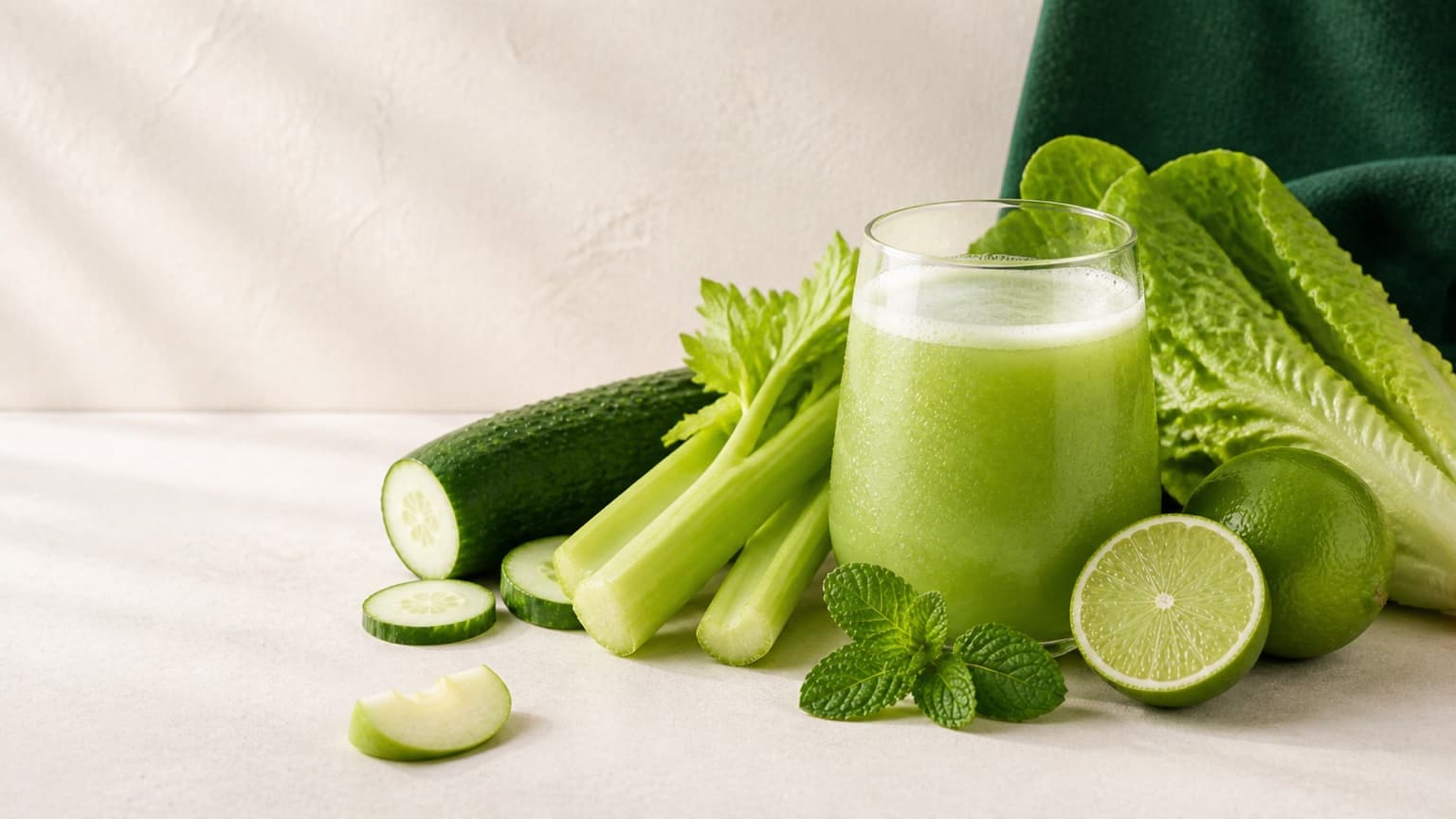
Celery is the savory twin: similar yield, a clean taste with a lightly salty edge, and the backbone of most green blends. Cut the ribs into short sticks before feeding them, because full-length ribs wind stringy ropes around an auger.
Carrot adds a naturally sweet, earthy note. Scrub well, trim, and cut to your juicer’s recommended size. Wet pulp can have several causes, including the machine, ingredient, and feeding method; it is not enough by itself to diagnose a fault or calculate retained juice.
Leafy greens: how romaine, spinach, and kale differ
Romaine has a comparatively mild flavor; spinach can add a soft green note; kale is a bolder choice. Wash all of them carefully and prepare them as the juicer manual directs. A small starting amount makes it easier to learn what you enjoy.
Spinach is soft, gentle, and low-yield. A large handful adds color and a mild mineral note rather than volume, which makes it the easiest way to turn any juice green without changing how it tastes. Kale is the opposite personality: bold and bitter-green, and a generous bunch of leaves presses down to a thin stream of juice while the pulp comes out almost fluffy. Start with two or three leaves, not a bunch. The stems, for the record, can go straight in; they juice better than the leaves and mostly taste of water and grass.
Wash produce thoroughly under running water, including leaves you plan to juice. Separate leafy layers so dirt is easier to remove. FDA advises against soap or detergent on produce. Discard rotten produce, and remember that washing does not pasteurize raw juice.
One practical rule covers all three: alternate leaves with firm produce such as carrot or cucumber so the auger keeps pulling them through instead of letting them mat above the screw.
Strong-flavor accents: beet and ginger
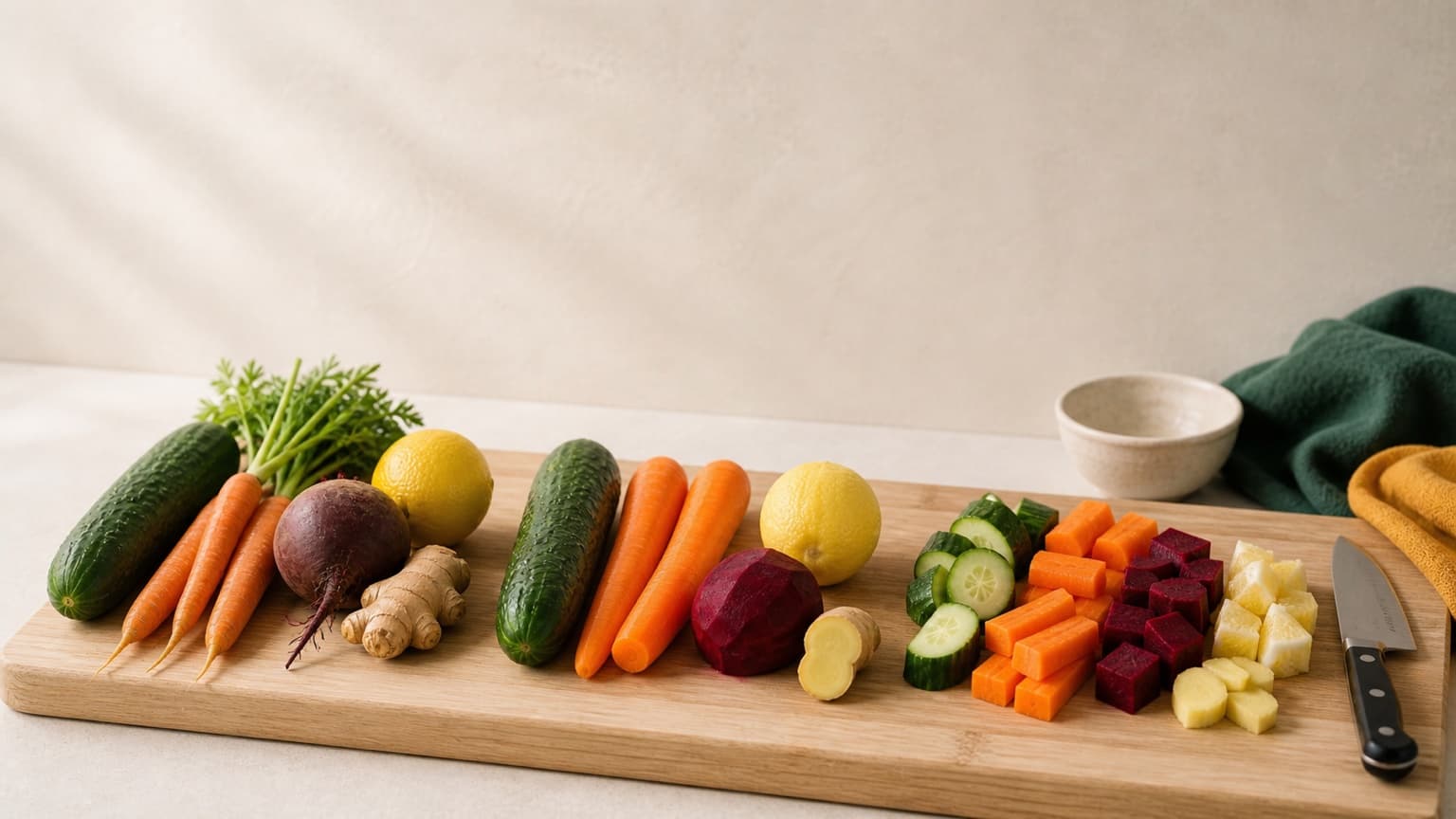
Beet and ginger earn their place in small amounts. Beet is sweet, deeply earthy, and it dyes everything it touches; a quarter of a medium beet flavors and colors a whole glass. Scrub it well and the skin can stay on. If earthiness is new to you, pair beet with citrus the first few times.
If red beet reads as too much, golden beet is the gentler cousin: similar sweetness, noticeably less of the earthy note people bounce off, and it will not dye your cutting board pink.
Ginger is the cheapest big upgrade in juicing. A thumbnail-sized piece warms an entire recipe, and the skin on young, smooth roots does not need peeling. Double the amount only after you have tasted the single dose, because there is no undo. One knob keeps for weeks in the crisper, so it covers a month of juices.
Use both as seasoning rather than base and they will keep mild recipes interesting for months without ever dominating them.
Underrated picks: fennel, jicama, and zucchini
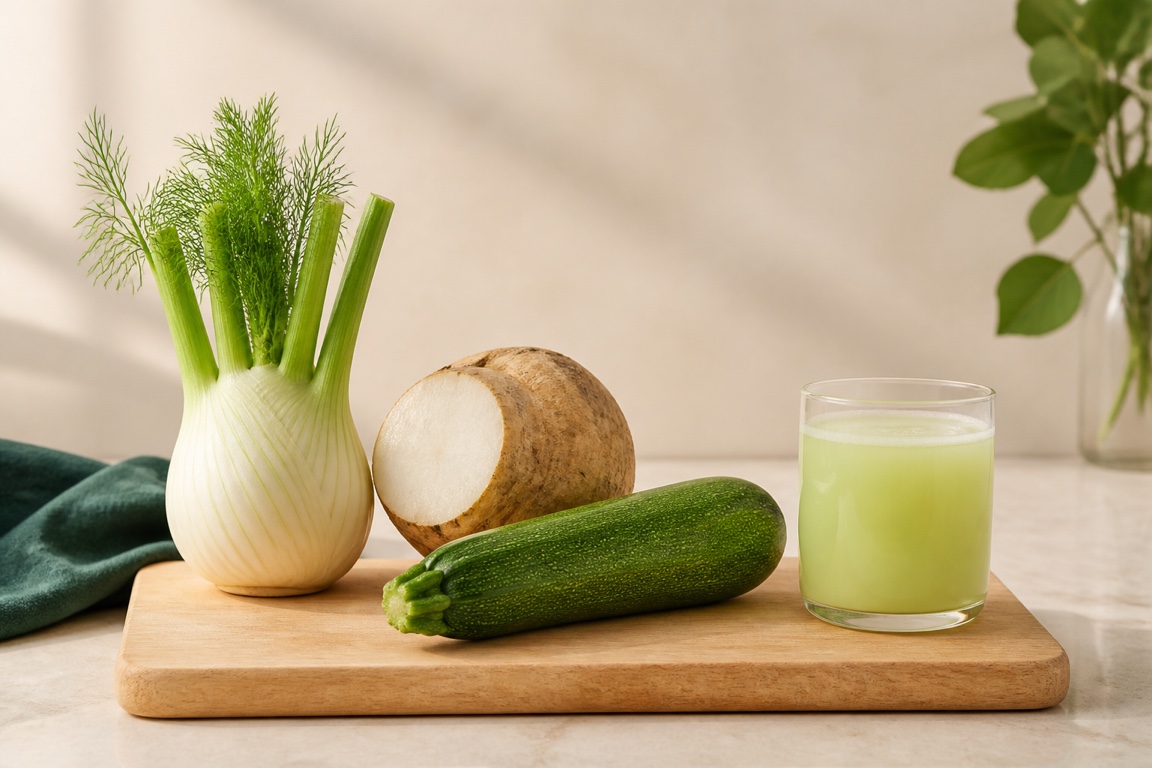
Fennel is the most pleasant surprise on the list. The raw bulb smells sharply of anise, but the juice comes out gentler and noticeably sweeter than the smell suggests, and half a small bulb brightens a green juice without announcing itself.
Jicama is the sleeper base: it juices like a watery apple, lightly sweet and nearly neutral, with a high yield once you get past its one real cost, peeling the papery brown skin. Zucchini is the quiet filler, very mild with a faint green note, and it disappears agreeably behind citrus when you want volume without flavor.
These are optional ingredients, not essentials for your first shopping trip. Availability and price vary by region and season. Start with one new item in a recipe you otherwise know; record its amount and whether you would use it again.
What should beginners skip at first?
Skipping the wrong vegetables early matters as much as choosing the right ones. Nothing here is forbidden; these are simply the picks that waste money or goodwill in week one. Two of them, the florets and the no-water fruits, are really machine problems; the rest are palate problems that solve themselves with time.
- Avocado and banana: almost no free water, so they paste up a press instead of juicing.
- Broccoli and cauliflower florets: they clog screens and taste sulfurous, while broccoli stems juice far better.
- Dandelion and mustard greens: juiceable and traditional, but aggressively bitter for a new palate. Shelve them for a month.
- A whole beet in one glass: half a glass of pure beet is a lot of earth for day one. Quarter it across several juices instead.
- Anything already limp: soft produce gives noticeably less juice and duller flavor than firm, fresh produce.
Building your first vegetable cart
Choose the recipe before buying a full week of vegetables. For a green direction, open Celery Citrus Green; for a carrot direction, open Carrot Fennel Lemon. The linked recipe pages list their actual ingredients and amounts, and the Grocery List can combine selected recipes and servings.
For a small first shop, select one of those recipes, check which ingredients you already own, and buy the missing amounts. Start with one batch rather than assuming an illustrative basket will fill a fixed number of bottles. Add another recipe only when you know how much you want to make.
For a useful home comparison, record the date, shop, ingredient cost, prepared weight, juicer model, and finished volume. Keep taste notes separate from measured amounts. This site’s recipe yields are planning estimates; the estimates and methodology guide explains the limits.
Frequently asked questions
What is the healthiest vegetable to juice?
There is no single healthiest vegetable to juice. Different vegetables bring different strengths, such as carotenoid-rich carrot and nitrate-rich beet, so variety beats any one pick. Rotating a few bases and greens through the week is a more useful habit than hunting for one champion vegetable.
What vegetables should you not juice?
Skip produce with almost no free water, such as avocado and banana, which paste up a press instead of juicing. Broccoli and cauliflower florets clog screens, though broccoli stems juice well. Strongly bitter greens such as dandelion are juiceable but overwhelming early on, so add them later in small amounts.
What is the cheapest vegetable to juice?
There is no universally cheapest vegetable per finished glass. Compare local price, the usable portion after preparation, and your measured yield. Cucumber, celery, and carrot are practical candidates to compare, but seasonal prices and your machine can change the result. Buy amounts you can use before quality declines.
Can you juice raw vegetables every day?
Many people enjoy a daily vegetable juice alongside normal meals, and mild blends are easy to repeat. Keep eating whole vegetables too, because juicing removes much of the fiber from whole produce. Rotate your ingredients for variety, and treat juice as an addition to meals rather than a replacement.
What vegetables juice the most liquid?
High-water ingredients such as cucumber and celery are useful candidates when you want a liquid base. Leafy greens typically function as accents rather than the main source of volume. Exact yield depends on prepared weight, freshness, and juicer; measure a batch rather than using a fixed cup-per-vegetable promise.
Do you need to peel vegetables before juicing?
Mostly no. Cucumber, carrot, beet, and zucchini juice fine with skins on after a good scrub, while jicama and other waxy or fibrous skins should come off. Citrus peel is the main exception worth removing. Our produce prep guide covers peel-or-not calls ingredient by ingredient.
Keep exploring
Planning tools & products
This website provides general recipe and nutrition education only and is not medical advice. Calories are estimates. Fresh raw juice is perishable — refrigerate promptly and discard questionable juice. Use juices as part of a normal eating routine, not as a cleanse, fast, or meal-replacement program.